

In this guide 33
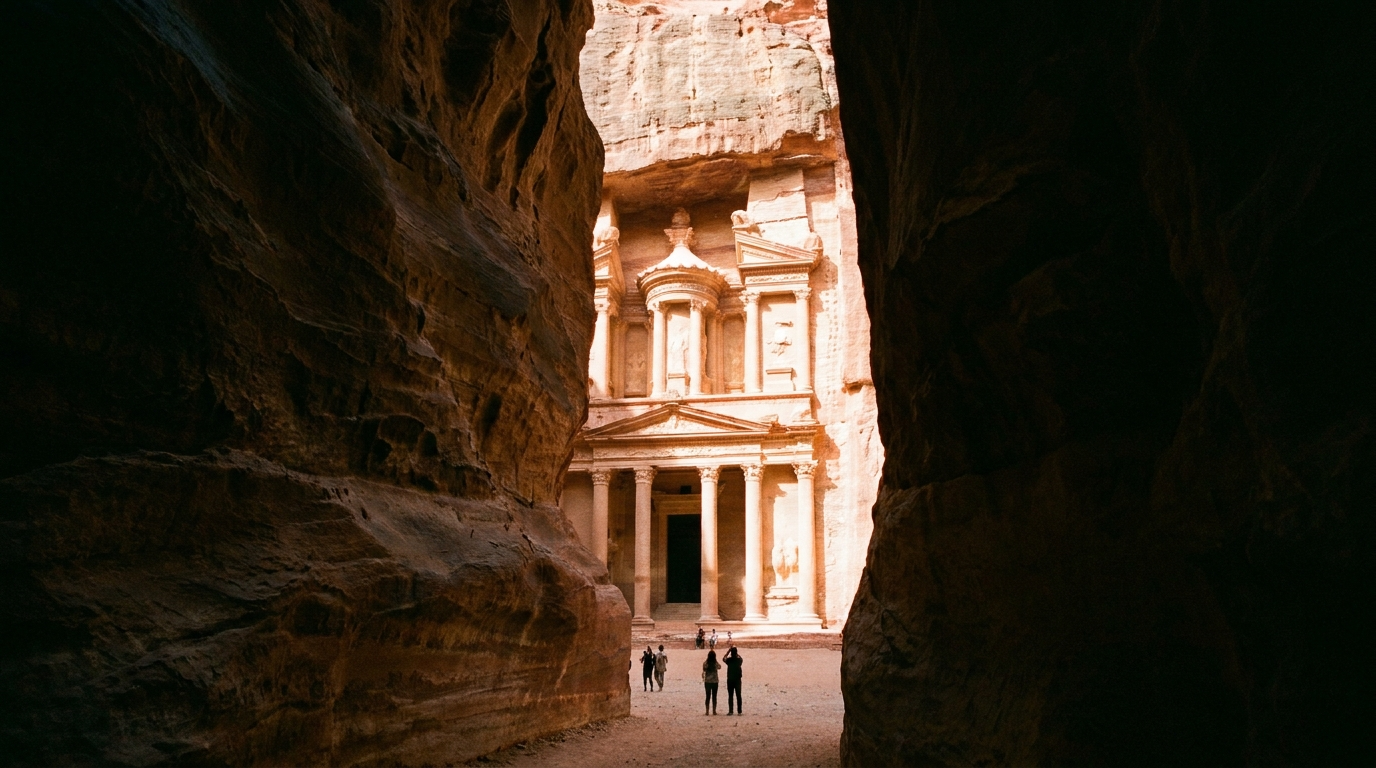
Petra Jordan stands as one of the world’s most extraordinary archaeological sites, carved into rose-red sandstone cliffs by the Nabataean people over two thousand years ago. Located in southern Jordan near the town of Wadi Musa, Petra served as the capital of the Nabataean Kingdom until the Roman annexation in 106 CE. The site covers a vast area with hundreds of rock-cut monuments, but most visitors concentrate on seven key structures that define the Petra Jordan experience.
Walking through the narrow Siq canyon to reach the Treasury at sunrise, climbing 850 steps to the Monastery, and exploring the Royal Tombs are the moments that justify the journey. This guide covers entrance fees, opening hours, transport options, the best season to visit, and practical tips drawn from official sources and recent visitor reports.
Some links in this guide are affiliate links. If you book through one, Roamdusk may earn a commission at no extra cost to you. It never decides what we recommend.
What Is Petra and Where Is It
Petra is an ancient city carved into sandstone cliffs in southern Jordan, about 240 kilometres south of Amman. The Nabataeans, an Arab people who controlled lucrative trade routes across the region, established Petra as their capital around the 4th century BCE. The city flourished as a commercial hub connecting Arabia, Egypt and the Mediterranean until Rome annexed the kingdom in 106 CE. Petra’s architecture blends Nabataean rock-cutting traditions with Hellenistic influences, visible in the Corinthian columns and ornate facades of monuments like Al-Khazneh. UNESCO designated Petra a World Heritage Site in 1985, and in 2007 it was named one of the New Seven Wonders of the World.
The site sits in the Wadi Musa basin, surrounded by mountains and accessible through narrow gorges that provided natural defence. Swiss explorer Johann Ludwig Burckhardt rediscovered Petra for the Western world in 1812, though local Bedouin communities had known and inhabited the area continuously. Today the Petra Development and Tourism Region Authority manages the site, balancing conservation with tourism. The nearest town, also called Wadi Musa, provides accommodation, restaurants and services for visitors. Most of Petra’s major monuments date to the 1st century BCE and 1st century CE, when Nabataean power and wealth peaked under rulers like Aretas IV.
Top Things to See in Petra
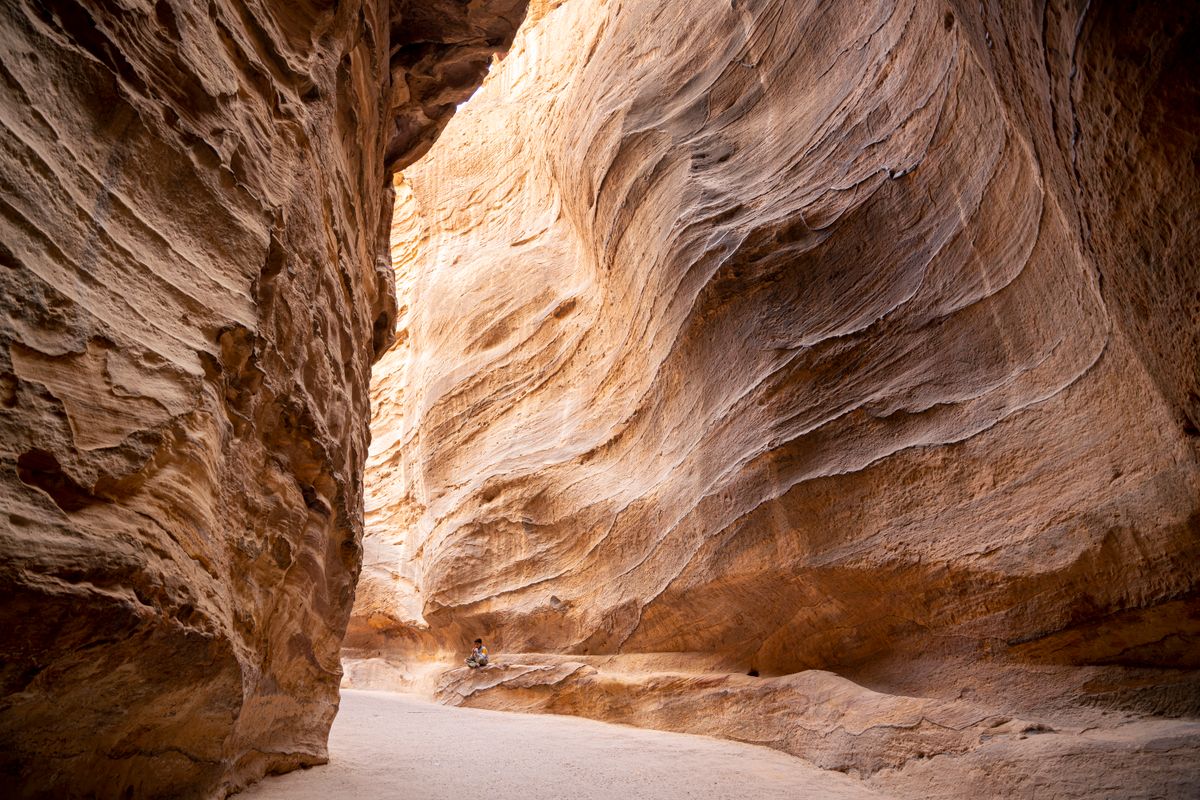
Petra contains hundreds of carved structures spread across a large archaeological zone, but seven sites form the core of most visits. The main trail runs from the visitor centre through the Siq to the Treasury, then continues past the Street of Facades and Royal Tombs to the Colonnaded Street. From there, trails branch to the Monastery, the High Place of Sacrifice and other viewpoints.
A single day covers the highlights if you start early, but two or three days allow deeper exploration and better light for photography. The walking distances are substantial, with the Monastery alone requiring a 4-kilometre round trip from the main complex, so plan your route based on fitness and available time.
The Siq and the Treasury
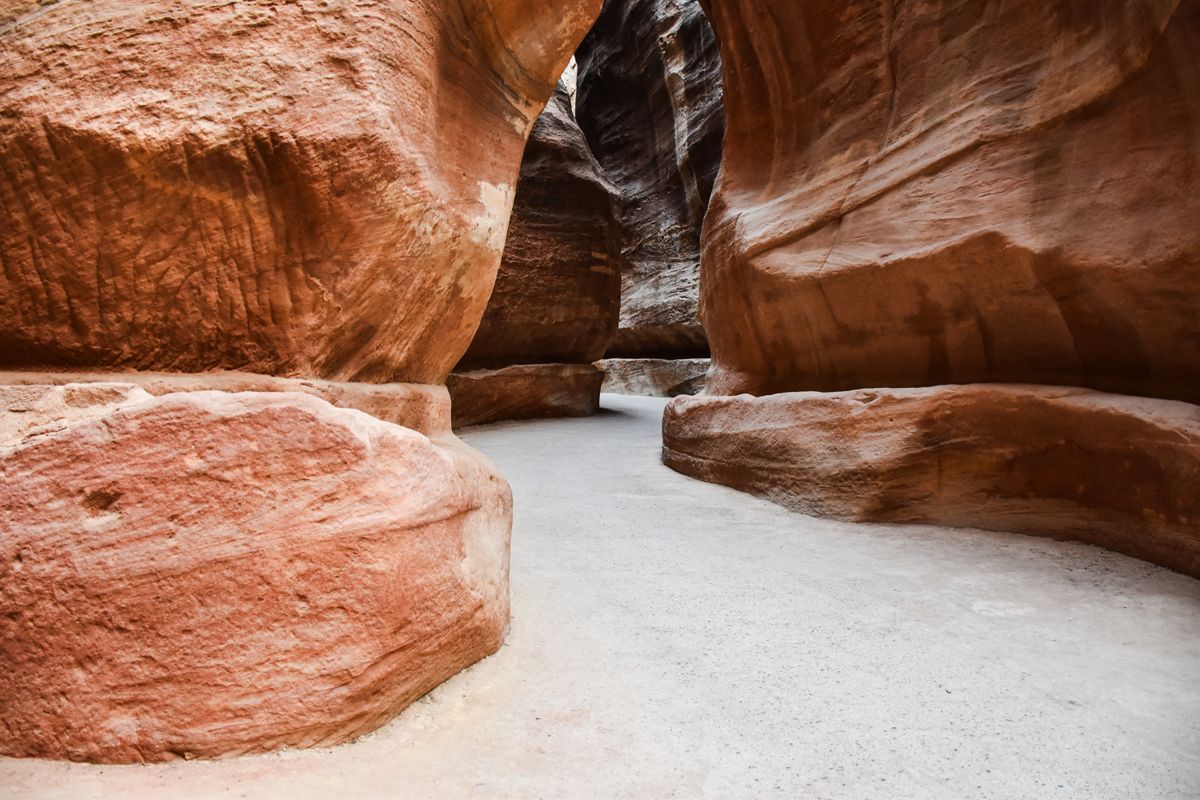
The Siq is a natural gorge that serves as the main entrance to Petra, stretching about 1.2 kilometres from the entrance gate to the Treasury. The canyon walls rise up to 80 metres on either side, narrowing in places to just a few metres wide. Ancient Nabataean water channels carved into the rock still run along the walls, evidence of the sophisticated engineering that supplied the city. Walking the Siq takes 20 to 30 minutes at a relaxed pace, and the gradually narrowing passage builds anticipation as you approach the first reveal of Al-Khazneh.
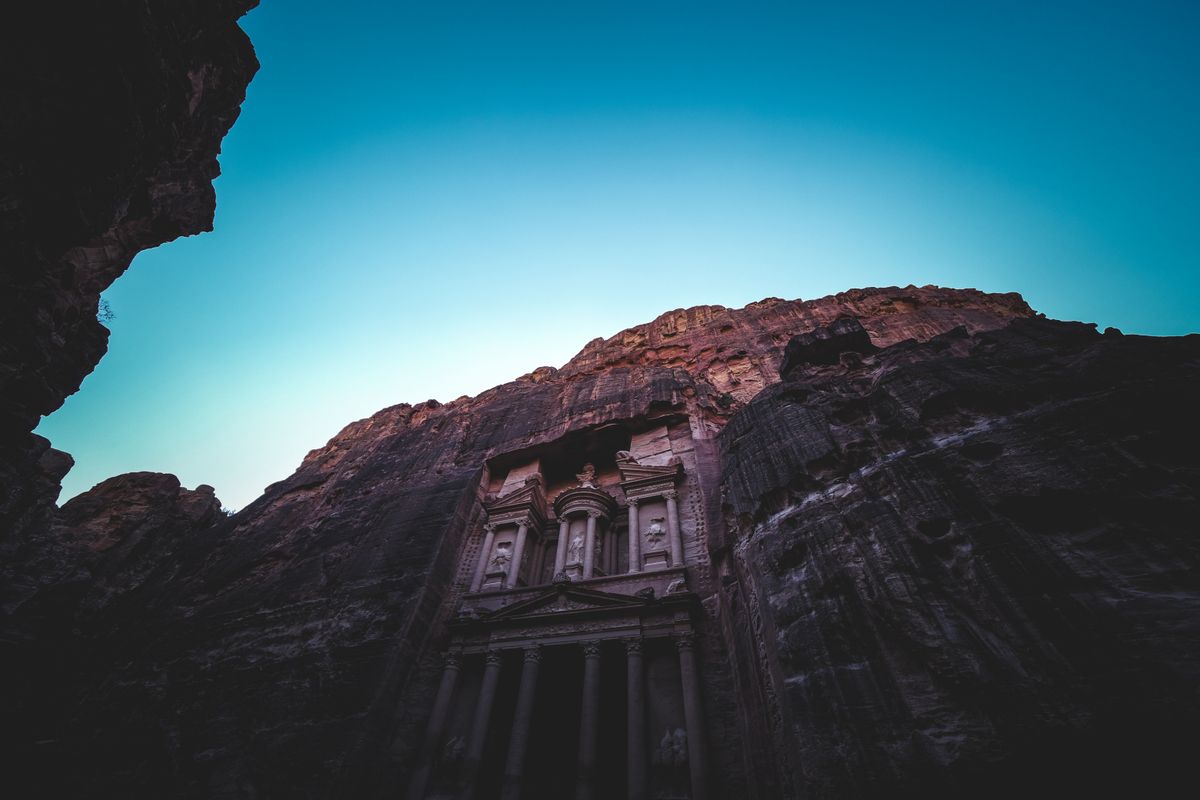
Al-Khazneh, known as the Treasury, appears suddenly at the end of the Siq, its 40-metre-high facade carved directly into the cliff face. Most scholars date the structure to the reign of King Aretas IV, who ruled from 9 BCE to 40 CE, and identify it as a royal mausoleum rather than an actual treasury. The name comes from a later legend that bandits hid treasure in the urn crowning the upper level.
The facade displays strong Hellenistic influence with six Corinthian columns, friezes of griffins and floral ornament, and three-dimensional sculptures of figures and animals. The best light for photography hits the Treasury between 9am and 11am, when the sun illuminates the entire facade. Excavations in 2003 revealed burial chambers beneath the plaza, confirming the monument’s funerary purpose.
Street of Facades and the Theatre
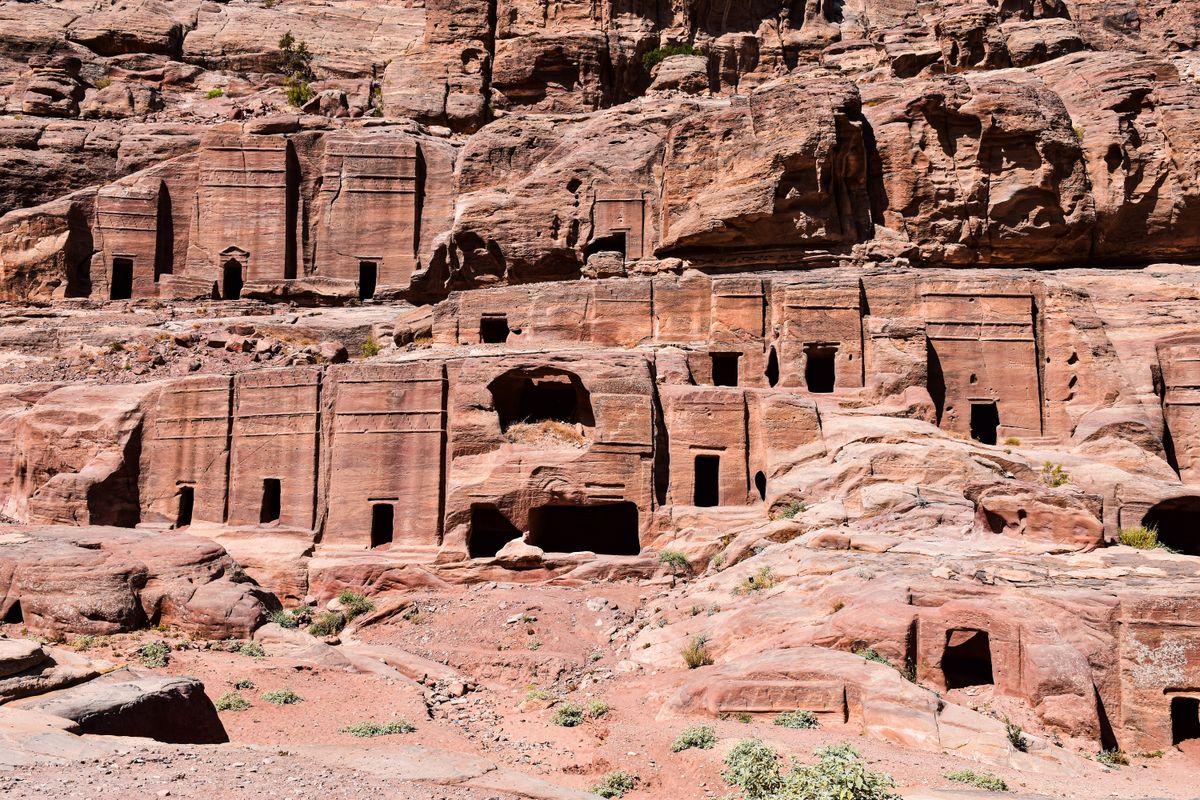
Beyond the Treasury, the path opens into a wider valley where dozens of rock-cut tombs line the cliffs on both sides. This area, called the Street of Facades, shows the variety of Nabataean funerary architecture, from simple cave openings to elaborate multi-story facades. Most of these tombs date to the 1st century BCE and were carved for Petra’s elite families. The facades feature crow-step designs, a distinctive Nabataean motif that appears throughout the site. You can walk through this section in 10 to 15 minutes, though the tombs reward closer inspection if you have time.
The Roman-style theatre sits carved into the hillside just past the Street of Facades, with seating for an estimated 3,000 to 4,000 spectators. The Nabataeans originally built the theatre, but Roman modifications expanded it after the annexation in 106 CE. The structure cut through several earlier tombs, visible in the back wall of the stage area. The theatre offers a good vantage point for photographs looking back toward the Royal Tombs across the valley. From here, the main trail continues toward the city centre and the Colonnaded Street, passing more tombs and scattered ruins along the way.
Royal Tombs
Four large tomb facades dominate the cliff face on the eastern side of the valley, collectively known as the Royal Tombs. The Urn Tomb is the most prominent, with a large courtyard and a facade that rises about 25 metres. In 446 CE, Christians converted the Urn Tomb into a cathedral, and you can still see Byzantine modifications inside.
The Silk Tomb next door displays striking bands of colour in the sandstone, ranging from pink and red to yellow and grey. The Corinthian Tomb shows elaborate architectural detail, though weathering has damaged much of the facade. The Palace Tomb, the largest of the four, rises in multiple stories and may have imitated Roman palace architecture.
You can climb up to the Urn Tomb via a staircase cut into the rock, and the interior chamber is large enough to explore. The view from the courtyard looks across the valley to the theatre and the path you walked in on. These tombs represent the peak of Nabataean funerary architecture and demonstrate the wealth and ambition of Petra’s ruling class. Visiting all four takes about 45 minutes to an hour, including time to climb up and photograph the interiors. The afternoon light on the Royal Tombs is better than morning light, so save this section for the second half of your day if possible.
Colonnaded Street and Great Temple
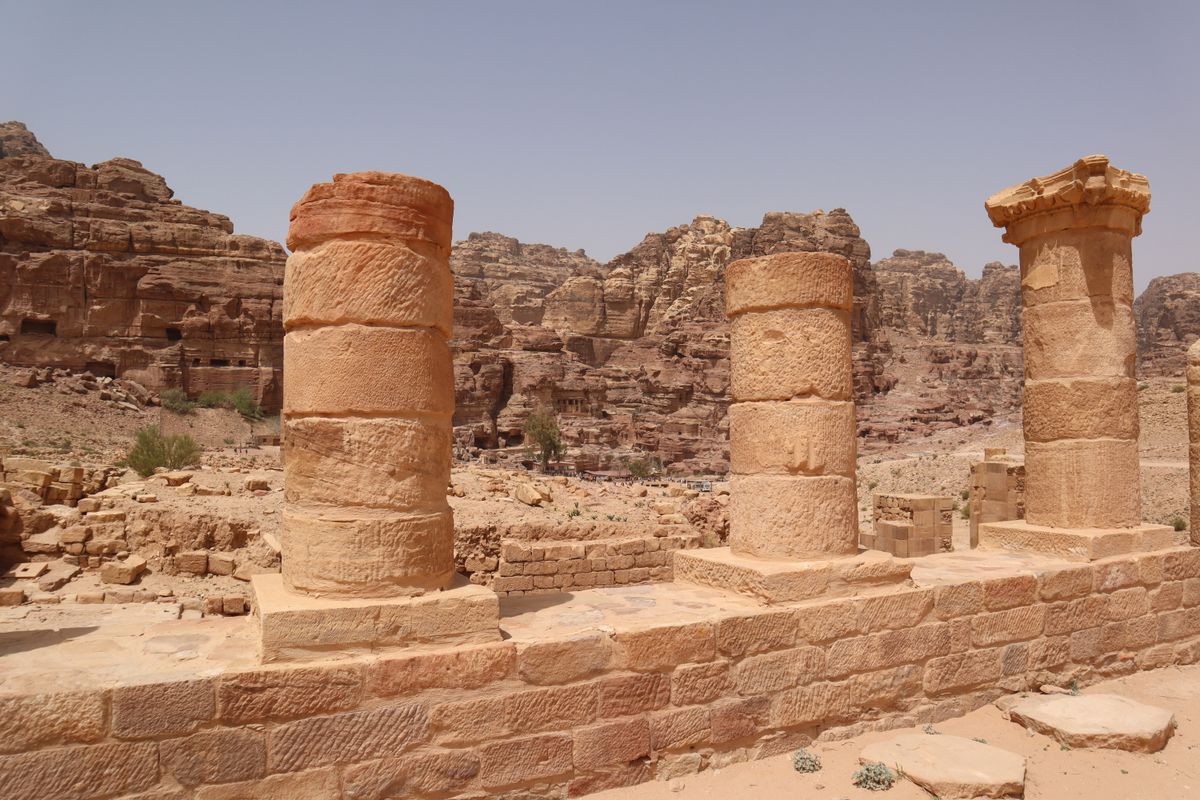
The Colonnaded Street marks the centre of ancient Petra’s commercial and civic life, running east to west through the valley floor. Roman engineers paved the street and added the columns after 106 CE, but the layout follows earlier Nabataean planning. Earthquake damage in 363 CE toppled many of the columns, and what you see today is a mix of standing columns and scattered drums. The street connected major temples, markets and administrative buildings, though most of these structures now exist only as foundations and partial walls.
The Great Temple sits south of the Colonnaded Street, one of Petra’s largest freestanding structures. Archaeologists have debated its function, with some arguing it served as a temple and others suggesting it was a royal audience hall or council chamber. The complex includes a monumental staircase, a colonnaded lower courtyard, and an upper precinct with a central theatre-like structure that could seat several hundred people. Excavations have uncovered elaborate stucco decoration, painted plaster and fragments of marble, indicating the building’s high status. The site is still being excavated and stabilised, so access may be restricted in some areas. Walking through the Great Temple area takes 20 to 30 minutes.
The Monastery (Ad Deir)
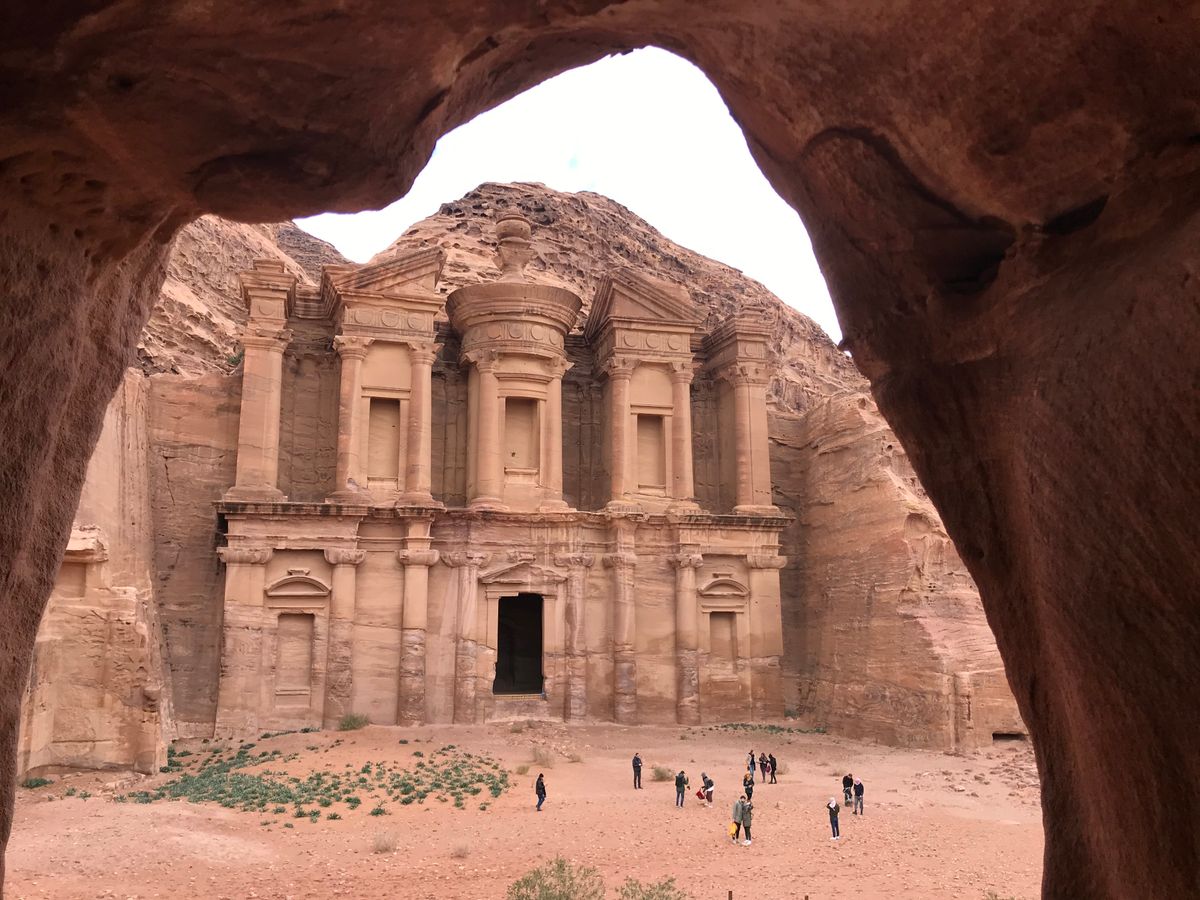
Ad Deir, known as the Monastery, rivals the Treasury as Petra’s most impressive monument, though it sits much farther from the entrance. The facade measures about 50 metres wide and 45 metres high, making it even larger than Al-Khazneh. Like the Treasury, the Monastery was carved as a tomb or temple, probably in the 1st century CE, and the name comes from Christian crosses carved inside during the Byzantine period.
The architectural style is similar to the Treasury but less ornate, with bold geometric forms and a massive central doorway. The interior consists of a single large chamber with carved benches and a niche that may have held a statue or cult object.
Reaching the Monastery requires climbing about 850 rock-cut steps from the main Petra complex, a trek of roughly 4 kilometres round trip. The trail gains significant elevation and takes 45 minutes to an hour going up, depending on fitness and pace. The steps are unevenly spaced and the climb is strenuous, especially in heat, but the path is well-defined and not technically difficult. Several viewpoints along the way offer places to rest and photograph the surrounding landscape.
At the top, a cafe sells drinks and snacks, and you can climb the rocks opposite the facade for the classic elevated view. The Monastery is much less crowded than the Treasury, and the late afternoon light is particularly beautiful on the sandstone. Budget at least two hours for the round trip, more if you want to explore the surrounding area or continue to other viewpoints beyond the Monastery.
High Place of Sacrifice and Viewpoints
The High Place of Sacrifice sits on a mountain plateau above the main Petra complex, reached by a steep trail of carved steps that begins near the theatre. The climb takes 30 to 45 minutes and gains about 250 metres of elevation. At the top, you find a large flat platform cut into the bedrock, with channels and basins carved for ritual purposes. This was one of Petra’s main religious sites, where Nabataeans performed sacrifices and ceremonies. The views from the High Place span the entire archaeological zone, from the Royal Tombs to the mountains beyond, making it one of the best vantage points in Petra.
You can descend via a different route that passes more monuments and tombs, eventually looping back to the main trail near the Royal Tombs. This descent takes about an hour and includes the Garden Tomb and the Roman Soldier Tomb, both worth a quick look. Several other viewpoints around Petra offer excellent photography opportunities, including the trail above the Treasury and the ridge behind the Monastery.
If you have limited time, prioritise the Monastery over the High Place, but if you have two full days, the High Place loop is a rewarding hike that shows a different side of the site. Wear proper hiking shoes with good grip, as the steps can be slippery and the terrain is uneven throughout.
Petra Entrance Fees and Tickets
Petra entrance fees vary based on how many nights you stay in Jordan and how many days you visit the site. For accommodated visitors who stay at least one night in Jordan, a one-day ticket costs 50 JOD, a two-day ticket costs 55 JOD, and a three-day ticket costs 60 JOD. If you visit Petra on a day trip without staying overnight in Jordan, the fee jumps to 90 JOD for a single day. Jordanian citizens and residents pay just 1 JOD, and children under 12 enter free during daytime hours. These prices have been in effect since 2024 and remain current for 2026.
| Ticket Type | Price (JOD) | Notes |
|---|---|---|
| 1-day (accommodated) | 50 | Must stay at least one night in Jordan |
| 2-day (accommodated) | 55 | Consecutive days |
| 3-day (accommodated) | 60 | Consecutive days |
| 1-day (non-accommodated) | 90 | Day visitors only |
| Jordan Pass (Jordan Expert) | 80 | Includes 3-day Petra entry + visa waiver |
The Jordan Pass can offer better value if you plan to stay at least three nights in Jordan. The Jordan Expert tier costs 80 JOD and includes three consecutive days at Petra plus entry to over 40 other sites across Jordan, and it waives the 40 JOD visa fee if you stay three or more nights.
For a single long visit to Petra, the pass pays for itself compared to buying a three-day ticket and visa separately. You must purchase the Jordan Pass online before you arrive in Jordan. Present the pass on your phone or as a printout at the Petra ticket office. The pass does not cover Petra by Night, which requires a separate ticket.
Petra Opening Hours
Petra opens daily from 6:00am to 6:00pm during the summer season, which runs from March 2 to October 1. In the winter season, from October 2 to March 1, the site opens at 6:30am and closes at 5:00pm. The ticket office opens at the same time as the site, so you can enter as soon as the gates open. Arriving at opening time gives you the best light on the Treasury and a head start before tour groups arrive mid-morning. The site does not close for any religious or national holidays, so you can visit any day of the year.
Plan to spend at least four to five hours in Petra if you want to see the main highlights from the Treasury to the Royal Tombs. A full day from opening to closing allows time to climb to the Monastery and explore more thoroughly. If you have a multi-day ticket, you can pace yourself more comfortably, covering the main trail on the first day and tackling the Monastery or High Place of Sacrifice on the second.
The last visitors must exit by closing time, so if you hike to the Monastery in the afternoon, allow at least two hours before closing to get back to the entrance. Staff begin encouraging visitors to leave about 30 minutes before the official closing time.
How to Get to Petra
Most international visitors fly into Amman’s Queen Alia International Airport, then travel overland to Petra. The distance from Amman to Wadi Musa is about 240 kilometres, taking three to four hours by road. The main routes are the Desert Highway, which is faster but less scenic, and the King’s Highway, which winds through mountains and historic towns and adds about an hour to the journey. Public transport, private transfers and rental cars are all viable options depending on your budget and comfort level.
From Amman by Bus
JETT operates a daily direct bus from Amman Abdali Station to Wadi Musa, departing at 6:30am and arriving around 10:00am. The return bus leaves Wadi Musa at 5:00pm. The fare is approximately 11 JOD each way, making it the most affordable option for independent travellers. The bus is air-conditioned and comfortable, and the journey takes about three and a half hours.
You can book tickets online through the JETT website or buy them at the Abdali station on the day, though booking ahead is safer during busy periods. The bus drops you at the JETT office in Wadi Musa, a short walk or taxi ride from most hotels and the Petra visitor centre.
Minibuses also run between Amman and Wadi Musa, usually leaving from the South Bus Station in Amman when full. These are cheaper than JETT but less predictable in schedule and comfort. Shared taxis are another option, faster than buses but more expensive. If you are coming from Aqaba on the Red Sea coast, JETT runs a bus service on that route as well, and the journey takes about two hours. From Wadi Rum, most visitors arrange transport through their desert camp or hire a private taxi, as there is no regular public bus service between Wadi Rum and Wadi Musa.
By Rental Car or Private Transfer
Renting a car in Amman gives you flexibility to stop along the King’s Highway and explore towns like Madaba, Kerak and Dana on the way to Petra. Jordanian roads are generally well-maintained, and driving is straightforward. Parking is available near the Petra visitor centre, and the site is well signposted from Wadi Musa. A private transfer costs more than the bus but saves time and allows door-to-door service from your Amman hotel to your Wadi Musa accommodation. Many hotels and tour operators can arrange transfers, and the price for a private car typically ranges from 70 to 100 JOD depending on the vehicle and route.
If you are crossing from Israel via the Wadi Araba border near Eilat and Aqaba, Petra is about a 90-minute drive north from the crossing. Some travellers combine Petra with Wadi Rum and Aqaba in a southern Jordan loop, which works well if you have three or four days. Check Visit Jordan's official Petra guide for the latest transport schedules and route options, as services can change seasonally.
Best Time to Visit Petra
Spring and autumn are the best seasons to visit Petra Jordan, with March to May and September to November offering the most comfortable weather for walking and climbing. Daytime temperatures during these months typically range from 15°C to 28°C, warm enough to be pleasant but not so hot that the climbs become exhausting. Spring brings wildflowers to the surrounding hills and green vegetation after winter rains, while autumn offers clear skies and excellent light for photography. April, May, October and November are particularly strong months for Petra, balancing good weather with manageable crowd levels.
Summer, from June to August, sees temperatures climb to 35°C to 45°C at many Jordan sites, making the Monastery climb and other exposed trails much harder. If you visit in summer, start as early as possible, carry plenty of water, and take frequent breaks in the shade. Winter, from December to February, brings cooler temperatures and occasional rain, with some snow possible in the surrounding mountains.
Wadi Musa sits at about 1,000 metres elevation, so winter nights can be cold, dropping near freezing. Rain can make the Siq slippery and flash floods are a risk, though the site has drainage systems and staff monitor conditions. Winter sees fewer tourists, so if you can handle the cold and potential rain, you will have the site more to yourself.
Petra by Night
Petra by Night is a separate evening experience that runs on set evenings each week, starting at 8:30pm and ending around 10:30pm. The event begins at the visitor centre, where you walk through the Siq lit by over 1,500 candles to reach the Treasury. At the Treasury, you sit on mats while musicians play traditional Bedouin instruments and a narrator tells stories about Petra’s history. Since May 2025, the experience has included projection mapping on the Treasury facade, adding a modern visual element to the candlelit atmosphere. The event lasts about two hours in total, including the walk in and out.
Tickets for Petra by Night cost 30 JOD per person and must be purchased separately from your daytime entry ticket. You cannot buy Petra by Night tickets online, only at a kiosk at the visitor centre on the day of the event. You must also hold a valid daytime ticket to Petra for the same day or the day before.
Children under 12 enter free for Petra by Night as well. The experience is popular and can sell out, especially during peak season, so arrive at the visitor centre by 8:00pm to secure tickets and check in. The nights it runs can change, and it occasionally pauses for official events or weather, so check the schedule at the official Petra fees and schedules page before you plan around it.
Petra Day Trip Versus Multi-Day Itineraries
A single day at Petra covers the essential highlights if you start early and walk at a steady pace. Enter at 6:00am, reach the Treasury by 7:00am, continue through the Royal Tombs and Colonnaded Street, and climb to the Monastery by mid-morning before the heat builds.
You can be back at the entrance by 3:00pm or 4:00pm, having seen the main seven sites. This pace works if Petra is one stop on a longer Jordan itinerary and you cannot spare more time. However, a one-day visit means rushing past smaller tombs, skipping the High Place of Sacrifice, and missing the chance to photograph the Treasury in different light.
Two days allow a more comfortable rhythm and deeper exploration. On the first day, walk the main trail from the Treasury to the Royal Tombs and explore the city centre, then return by mid-afternoon. On the second day, tackle the Monastery climb in the morning when you are fresh, then either hike the High Place loop or revisit the Treasury for better photographs.
With three days, you can add the back trails to Little Petra, hike to Jabal Haroun (the highest peak in the area), or simply spend more time at each monument without feeling rushed. Multi-day tickets are only slightly more expensive than single-day tickets, so the value is excellent if your schedule allows.
Sample One-Day Itinerary
Start at the visitor centre by 6:00am and walk through the Siq to reach the Treasury around 6:45am. Spend 30 minutes photographing the Treasury in the soft early light, then continue past the Street of Facades and the theatre to the Royal Tombs. Climb up to the Urn Tomb and explore the interiors, which takes about 45 minutes. Walk through the Colonnaded Street and the Great Temple area, then start the Monastery climb around 9:00am or 9:30am. Reach the Monastery by 10:30am, rest and photograph for 30 minutes, then descend. You will be back at the main complex by noon or 12:30pm.
Have lunch at one of the restaurants near the museum or bring food from Wadi Musa. In the afternoon, either revisit the Treasury when the light is different, explore smaller tombs and trails, or exit early if you are tired. This itinerary covers about 12 to 15 kilometres of walking, much of it on uneven ground and steps, so it is physically demanding. Wear comfortable shoes, carry at least two litres of water per person, and start as early as possible to avoid the worst of the heat and crowds.
Sample Two-Day Itinerary
On day one, enter at opening time and walk to the Treasury, then continue through the main trail to the Royal Tombs and the city centre. Spend the morning exploring at a relaxed pace, photographing the tombs and reading the information signs. Have lunch inside the site, then either hike the High Place of Sacrifice or exit by mid-afternoon to rest.
On day two, enter early again and head straight for the Monastery, reaching the top by 9:00am or 10:00am. Spend time at the Monastery and explore the surrounding area, then descend and revisit the Treasury or any sections you want to see again. This spread gives you time to appreciate the scale and detail of Petra without exhausting yourself on the first day.
Practical Tips and Rules
Petra’s scale and desert environment require preparation and awareness. The site covers a large area with significant elevation changes, and the climate can be harsh, especially in summer. Understanding the rules, safety guidelines and practical considerations before you go makes the visit smoother and more enjoyable. The Petra Development and Tourism Region Authority enforces regulations to protect the monuments and ensure visitor safety, and staff and Tourist Police are present throughout the site.
Licensed Guides and Tours
Hiring a licensed guide is optional but adds context and history that you would otherwise miss. Guides can be arranged through your hotel, through the visitor centre, or by booking online before you arrive. A half-day guide for the main highlights costs around 50 to 70 JOD, while a full-day guide covering the Monastery and other trails costs more. Guides are especially useful on a first visit, as they explain the Nabataean history, point out details in the carvings, and help you navigate the site efficiently. If you prefer to explore independently, the site is well-marked and you can download maps or buy a guidebook at the visitor centre.
Dress Code and Sun Protection
Jordan is a conservative Muslim country, and while Petra is a tourist site, modest dress is respectful and practical. Lightweight long trousers or long skirts and shirts that cover your shoulders protect you from the sun and help you blend in. Avoid shorts and sleeveless tops, especially if you plan to visit mosques or interact with local communities. A wide-brimmed hat, sunglasses and high-SPF sunscreen are essential, as shade is limited along most trails. Bring a light scarf or shawl that can double as sun protection or a cover-up if needed.
Footwear and Gear
Wear sturdy closed-toe shoes with good grip and ankle support, as the terrain is rocky and uneven throughout Petra. Hiking boots or trail runners are ideal; avoid sandals, flip-flops or smooth-soled shoes. Bring a small backpack with at least two litres of water per person, snacks, a basic first aid kit, and any personal medication. A refillable water bottle is better than single-use plastic, and you can refill at the museum and a few other points inside the site. A power bank for your phone, a camera with extra batteries, and a lightweight rain jacket if you visit in winter round out the recommended gear.
Animal Welfare and Ethical Transport
Horses, donkeys and camels are available for hire inside Petra to carry visitors along the Siq and up to the Monastery. While these animals provide income for local Bedouin families, welfare standards vary and some animals are overworked or poorly treated. If you choose to ride, inspect the animal’s condition before you agree, and refuse if the animal appears injured, underweight or distressed.
Agree on the price clearly before you start, as disputes over payment are common. Walking is always an option and gives you more control over your pace and stops. The short horse ride from the visitor centre to the start of the Siq is included in your ticket price, but a tip is expected and the ride is optional.
Safety and Emergency Contacts
Petra is generally safe, with low crime rates and a visible Tourist Police presence. The main risks are dehydration, heat exhaustion and falls on uneven ground. Drink water regularly, rest in the shade, and turn back if you feel dizzy or unwell. Flash floods are a risk in the Siq during heavy rain, and staff will close the site if conditions are dangerous.
In an emergency, call 911, Jordan’s national emergency number, and look for the first aid points at the visitor centre and the museum. Mobile phone coverage is good throughout most of the site, so you can call for help if needed. Do not climb on the monuments or enter closed areas, as the rock is fragile and collapses have occurred.
Nearby Places to Visit
Petra sits within reach of several other major Jordan attractions, and many visitors combine it with Wadi Rum, Aqaba, the Dead Sea or Jerash in a week-long itinerary. Little Petra, a smaller Nabataean site, is just 10 kilometres north of Wadi Musa and makes an easy half-day trip. The site features rock-cut facades, a painted dining hall, and fewer crowds than the main Petra complex. You can visit Little Petra on your own by taxi or rental car, and entry is free. The site is smaller and can be explored in an hour or two, making it a good addition if you have extra time in Wadi Musa.
Wadi Rum, about 90 minutes south of Petra, is a vast desert landscape of sandstone mountains and red sand dunes. Most visitors spend one or two nights in a Bedouin camp, taking jeep tours to rock bridges, ancient inscriptions and dramatic viewpoints. Aqaba, on the Red Sea coast, offers beaches, snorkelling and diving, and is another hour south from Wadi Rum.
The Dead Sea is about three hours northwest of Petra, and many Jordan itineraries include a stop to float in the salt water and visit the baptism site at Bethany Beyond the Jordan. Jerash, one of the best-preserved Roman cities in the Middle East, is near Amman and works well as a day trip on your way to or from Petra. Check UNESCO's World Heritage listing for Petra for background on Petra’s UNESCO World Heritage status and the broader historical context of Nabataean civilisation.
Frequently Asked Questions
Is one day enough for Petra Jordan?
One day covers the main highlights if you start at opening time and maintain a steady pace, but you will miss smaller trails and the chance to explore at a relaxed rhythm. A single day is enough to see the Treasury, Royal Tombs and the Monastery, which are the most iconic monuments. However, two days allow you to hike the High Place of Sacrifice, revisit the Treasury in different light, and absorb the scale of the site without rushing. If you can only spare one day, enter as early as possible and prioritise the Siq, Treasury, Royal Tombs and Monastery over less important areas.
How much does it cost to visit Petra Jordan?
A one-day ticket for accommodated visitors costs 50 JOD, while non-accommodated day visitors pay 90 JOD. Multi-day tickets are 55 JOD for two days and 60 JOD for three consecutive days. The Jordan Pass, which includes Petra entry and waives the visa fee, starts at 70 JOD with one day at Petra, and the Jordan Expert tier with three days costs 80 JOD. Children under 12 enter free during the day, but Petra by Night costs an additional 30 JOD per person. Budget extra for transport, food, accommodation in Wadi Musa, and optional guide fees.
What should I wear to Petra Jordan?
Wear lightweight long trousers or a long skirt, a shirt that covers your shoulders, and sturdy closed-toe shoes with good grip. A wide-brimmed hat, sunglasses and sunscreen are essential for sun protection, as shade is limited on most trails. Bring a light scarf or shawl for extra coverage if needed. Avoid shorts, sleeveless tops and sandals, both for modesty and for practical protection from the sun and rough terrain. Layer if you visit in winter, as mornings and evenings can be cold even if midday is warm.
Is Petra Jordan safe to visit?
Petra is safe for tourists, with low crime rates and a strong Tourist Police presence throughout the site. The main risks are environmental, such as dehydration, heat exhaustion and flash floods in the Siq during heavy rain. Drink plenty of water, rest regularly, and follow staff instructions if weather conditions change. Political stability in Jordan is generally good, and the tourism industry is well-established and professional. Check your government’s travel advice before you go, but most visitors experience no safety issues at Petra or elsewhere in Jordan.
Can I visit Petra Jordan from Israel?
Yes, you can cross from Israel into Jordan via the Wadi Araba border crossing near Eilat and Aqaba, then drive north to Petra in about 90 minutes. You can also cross at the Allenby Bridge near Jerusalem or the Jordan River Crossing in the north.
Most nationalities can obtain a Jordan visa on arrival at land borders, though the visa fee is waived if you hold a Jordan Pass and stay at least three nights. Some travellers do Petra as a long day trip from Eilat, though this is rushed and you pay the higher 90 JOD non-accommodated entry fee. Staying at least one night in Wadi Musa gives you more time and qualifies you for the lower ticket price.
How long does it take to climb to the Monastery in Petra Jordan?
The climb to the Monastery takes 45 minutes to an hour going up, covering about 850 rock-cut steps over 2 kilometres. The steps are unevenly spaced and the trail gains significant elevation, so it is strenuous, especially in heat. The descent takes 30 to 40 minutes. Budget at least two hours round trip, more if you want to explore the area around the Monastery or continue to other viewpoints. Start the climb early in the morning or later in the afternoon to avoid the midday heat, and bring water and snacks.
More from this site: When to Go, Start Here, Destinations.
Conclusion
Petra Jordan rewards the effort it demands, combining dramatic natural landscapes with some of the ancient world’s most ambitious architecture. The Nabataean builders carved a city into living rock, and two thousand years later their work still astonishes. Start early, walk at your own pace, and give yourself at least a full day to experience the Siq, the Treasury, the Royal Tombs and the Monastery.
If you can stay longer, two or three days reveal the site’s depth and allow time for the High Place of Sacrifice and quieter trails. Spring and autumn offer the best weather, the Jordan Pass simplifies ticketing and saves money, and the JETT bus from Amman provides reliable transport. Petra sits at the centre of a Jordan itinerary that can include Wadi Rum, the Dead Sea and Jerash, but even on its own, the ancient city justifies the journey.