

In this guide 23
- How to Get from Kyoto to Nara: Kintetsu vs JR
- The Perfect 1-Day Nara Itinerary
- Feeding the Nara Deer: Rules, Costs and Safety Tips
- What to Eat in Nara
- Nara Day Trip Budget and Admission Fees
- Best Time to Visit and How to Avoid Crowds
- Rainy-Day Options, Accessibility and Bike Rental
- Extending Your Trip: Uji, Horyuji, Mt. Yoshino and Osaka
- Frequently Asked Questions
- Conclusion
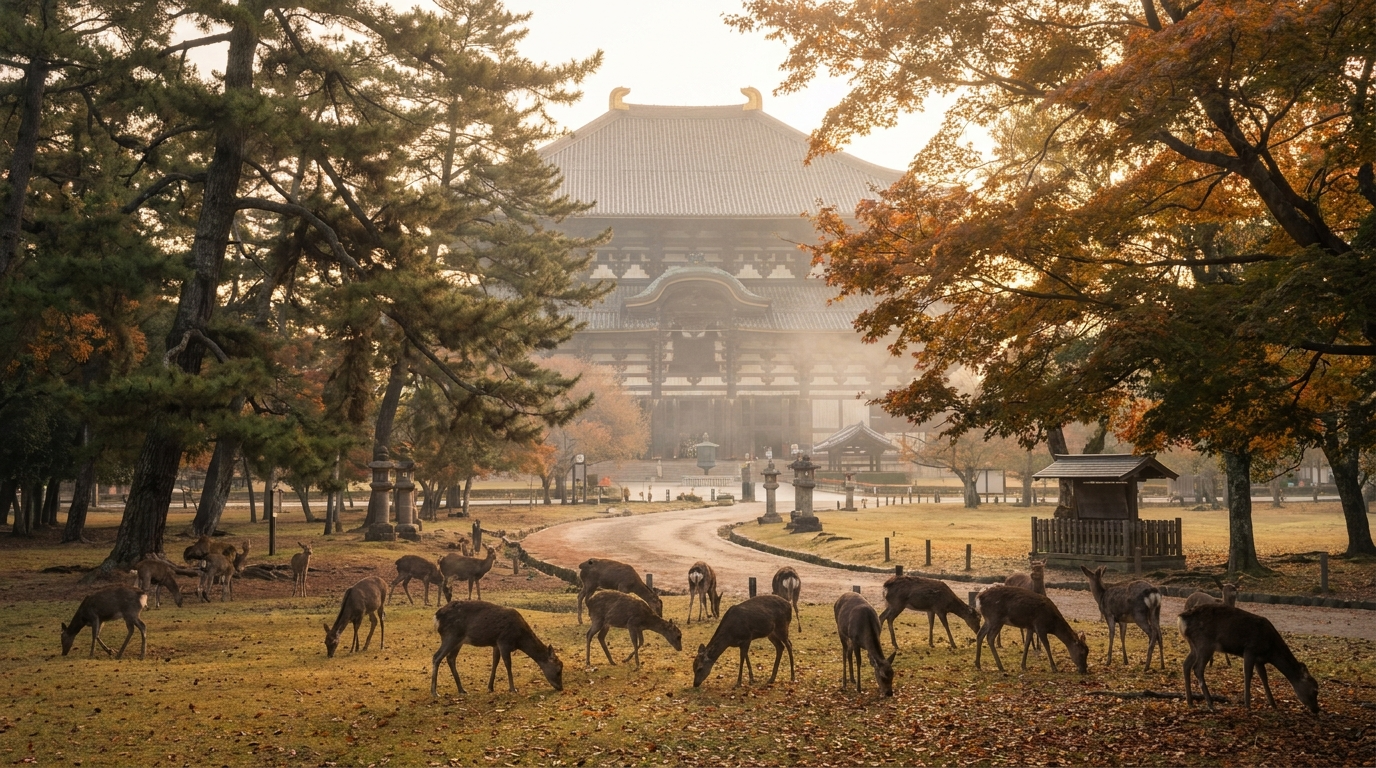
A Nara day trip delivers one of Japan’s most rewarding excursions from Kyoto, with ancient temples, free-roaming deer and a walkable historic core all within 35 to 45 minutes by train. The city served as Japan’s capital from 710 to 784, and today its UNESCO-listed monuments sit in and around Nara Park, where more than 1,400 sika deer wander freely among visitors. You can cover Todaiji Temple, Kasugataisha Shrine, Kofukuji and the Naramachi merchant quarter in six to seven hours, leaving time to feed the deer, try freshly pounded mochi and still return to Kyoto before dinner.
Some links in this guide are affiliate links. If you book through one, Roamdusk may earn a commission at no extra cost to you. It never decides what we recommend.
How to Get from Kyoto to Nara: Kintetsu vs JR
Two rail operators connect Kyoto and Nara, and your choice depends on whether you hold a Japan Rail Pass and which station you prefer. Kintetsu Railway runs the faster and more convenient service for most visitors, while JR West offers a slightly slower route that is free for pass holders. Both stations are walkable to Nara Park, but Kintetsu-Nara drops you closer to Kofukuji and the central deer areas.
Travel Times, Costs and JR Pass Validity
Kintetsu Limited Express trains from Kyoto Station reach Kintetsu-Nara Station in about 35 minutes, with a total fare of around ¥1,280 one way. That fare includes a ¥760 base ticket and a ¥520 Limited Express surcharge, because every Limited Express seat is reserved. Ordinary Kintetsu Express services take roughly 45 to 60 minutes and cost ¥760, with no surcharge and no reserved seating, though some require a change at Yamato-Saidaiji.
JR Miyakoji Rapid trains on the Nara Line from Kyoto Station to JR Nara Station take about 45 minutes and cost ¥720, while local JR trains take longer. The JR route is covered by a Japan Rail Pass or a valid regional JR pass, making it the better choice for pass holders.
An IC card such as ICOCA, Suica or PASMO covers the base fare on both operators. On Kintetsu, buy the Limited Express ticket separately at a ticket machine, counter or online before boarding, because tapping through the gate with your IC card alone does not cover the Limited Express. On JR, an IC card tap is all you need for rapid and local services. The Japan Rail Pass does not cover Kintetsu, so check which operator your pass covers before you travel.
Kintetsu-Nara vs JR Nara Station: Which to Choose, Luggage Lockers and IC Cards
Kintetsu-Nara Station sits about five minutes on foot from Kofukuji and Nara Park, making it the most practical arrival point for a day trip focused on the temples and deer. JR Nara Station lies roughly 15 to 20 minutes west along Sanjo-dori, a pleasant walk but longer when you are carrying bags or short on time.
Both stations offer coin lockers, with small lockers from around ¥300 to ¥400 and large ones from around ¥600 to ¥800, depending on the locker bank. Kintetsu-Nara generally has more lockers near the ticket gates, while JR Nara serves as a useful backup when Kintetsu lockers fill during cherry-blossom weekends, autumn foliage season and public holidays.
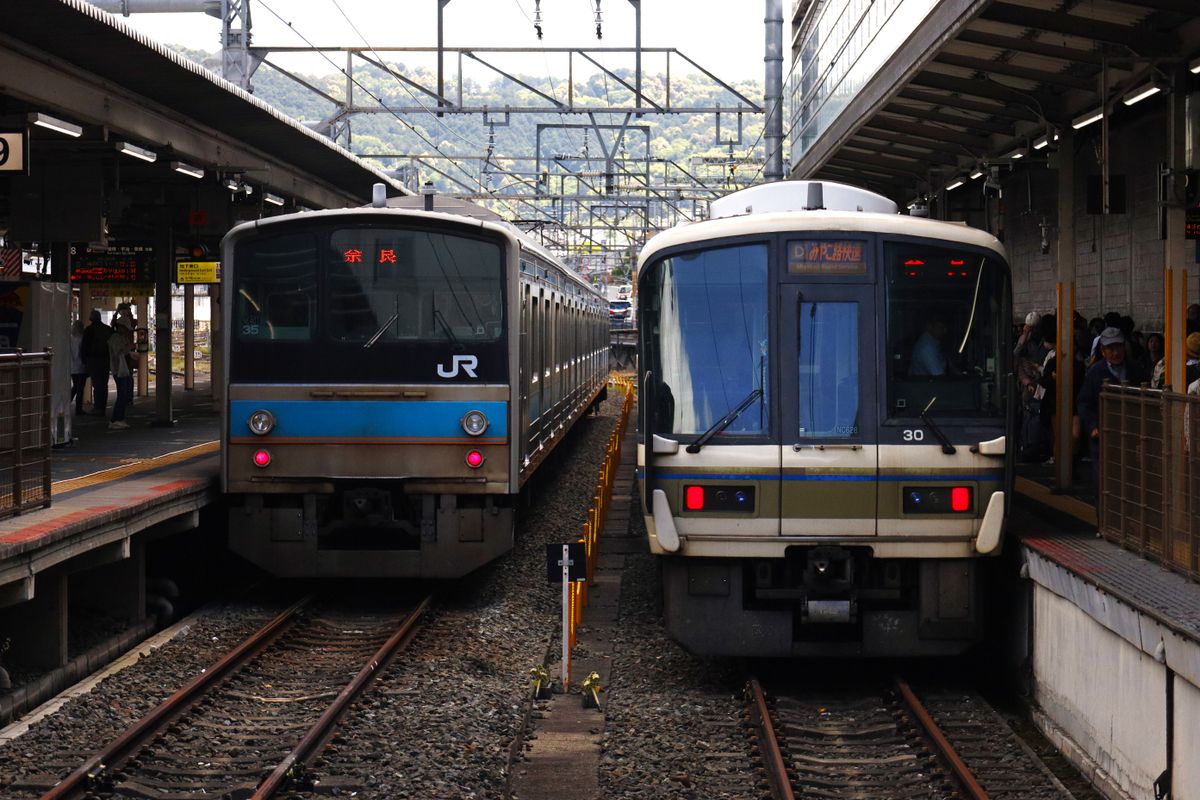
Arrive early to secure a large locker if you are carrying a suitcase, because the biggest units fill first. Many newer lockers accept IC cards, but carry ¥100 coins as a fallback. Local buses connect both stations with Kasugataisha, Todaiji and other park entrances, but walking is often faster within the central park area.
Driving and Nearest Airports
Driving from central Kyoto to Nara takes roughly 45 to 75 minutes in light traffic, but parking near Nara Park becomes scarce and expensive during peak seasons. Congestion can extend the journey substantially on weekends and public holidays, and the train is almost always faster and less stressful. The nearest airports are Osaka International Airport at Itami and Kansai International Airport, each about one to one and a half hours away by airport limousine bus. There is no commercial airport in Nara itself.
The Perfect 1-Day Nara Itinerary
A well-paced Nara day trip follows a loop from Kintetsu-Nara Station through Kofukuji, Nara Park, Todaiji, Kasugataisha and Naramachi, returning to the station by late afternoon. This route keeps the walking logical and spreads the highlights across the day, so you are not rushing the Great Buddha or skipping the forest paths around the shrine. Allow at least six hours from arrival to departure, and add an hour if you want to linger in Naramachi or visit the Nara National Museum.
Morning: Kofukuji and Nara Park
Leave Kintetsu-Nara Station and walk east toward Kofukuji Temple at the western edge of Nara Park. Its five-story pagoda, normally one of Nara’s best-known landmarks, is wrapped in scaffolding for a major restoration that began in 2023 and is expected to run into the early 2030s, but the temple grounds remain free to wander and the Central Golden Hall and National Treasure Hall stay open. From Kofukuji, follow the paths into Nara Park and watch for the first groups of deer, which gather near the cracker vendors and the open lawns. The deer are protected as a natural monument and traditionally regarded as messengers of the gods, but they are wild animals and can be persistent when they smell food.
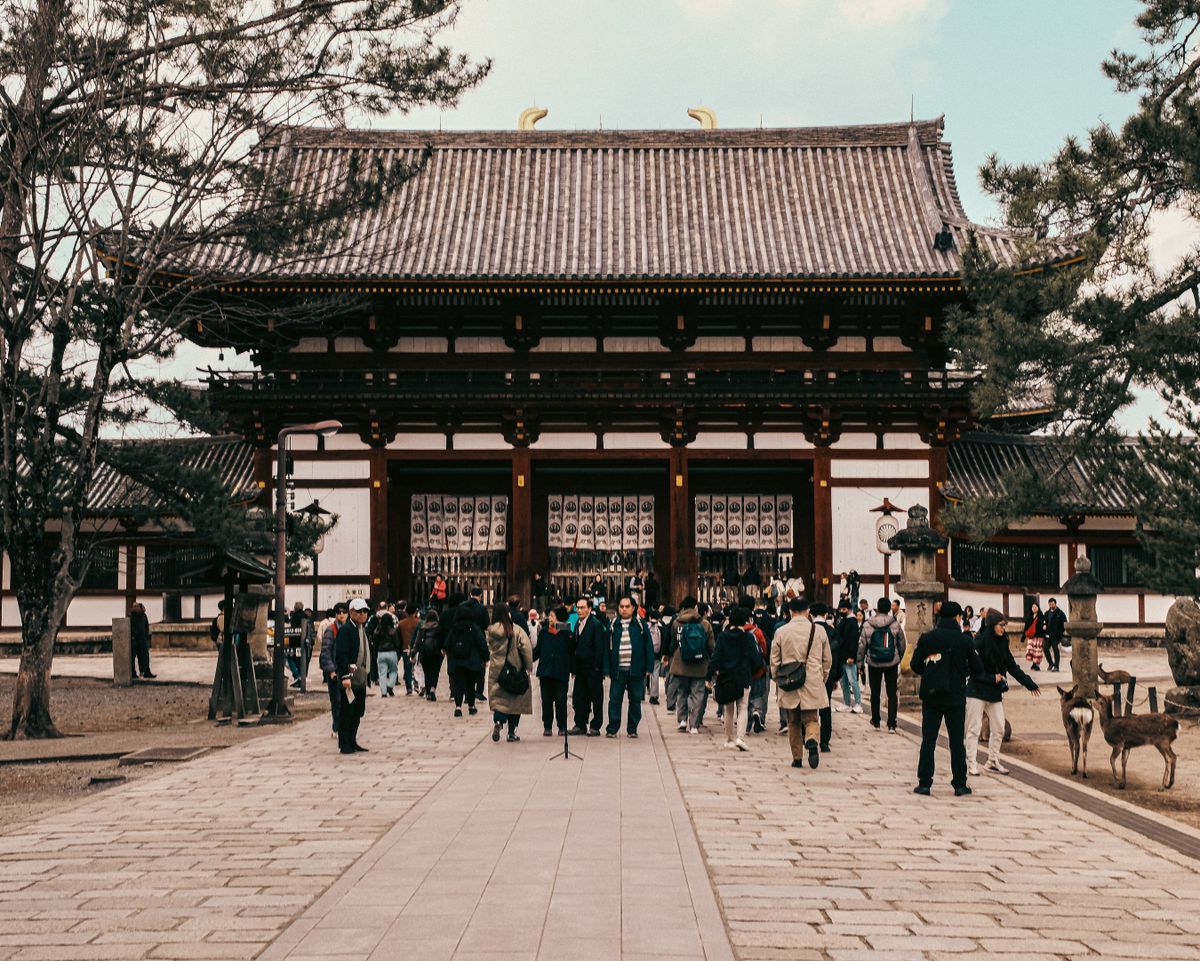
Buy a bundle of shika senbei deer crackers from one of the stalls for about ¥200, and feed them with your hand flat to avoid nipped fingers. Bow slightly before offering a cracker, and some deer will bow back. Keep maps, paper leaflets and any other food concealed in your bag, because the deer may mistake them for edible items and become pushy. Once you finish the crackers, show the deer your empty hands and walk away calmly.
Midday: Todaiji and the Great Buddha
Continue east through the park toward Todaiji Temple, passing the Nandaimon Great South Gate with its towering guardian statues. The approach is wide and often crowded, but the scale of the Daibutsuden Great Buddha Hall becomes clear only when you step inside. The hall houses a monumental bronze Vairocana Buddha, one of Japan’s most iconic religious sculptures, and the building itself is one of the world’s largest wooden structures. Admission is ¥800 for adults and ¥400 for elementary-school children, and a combined ticket with the Todaiji Museum costs ¥1,200 for adults.
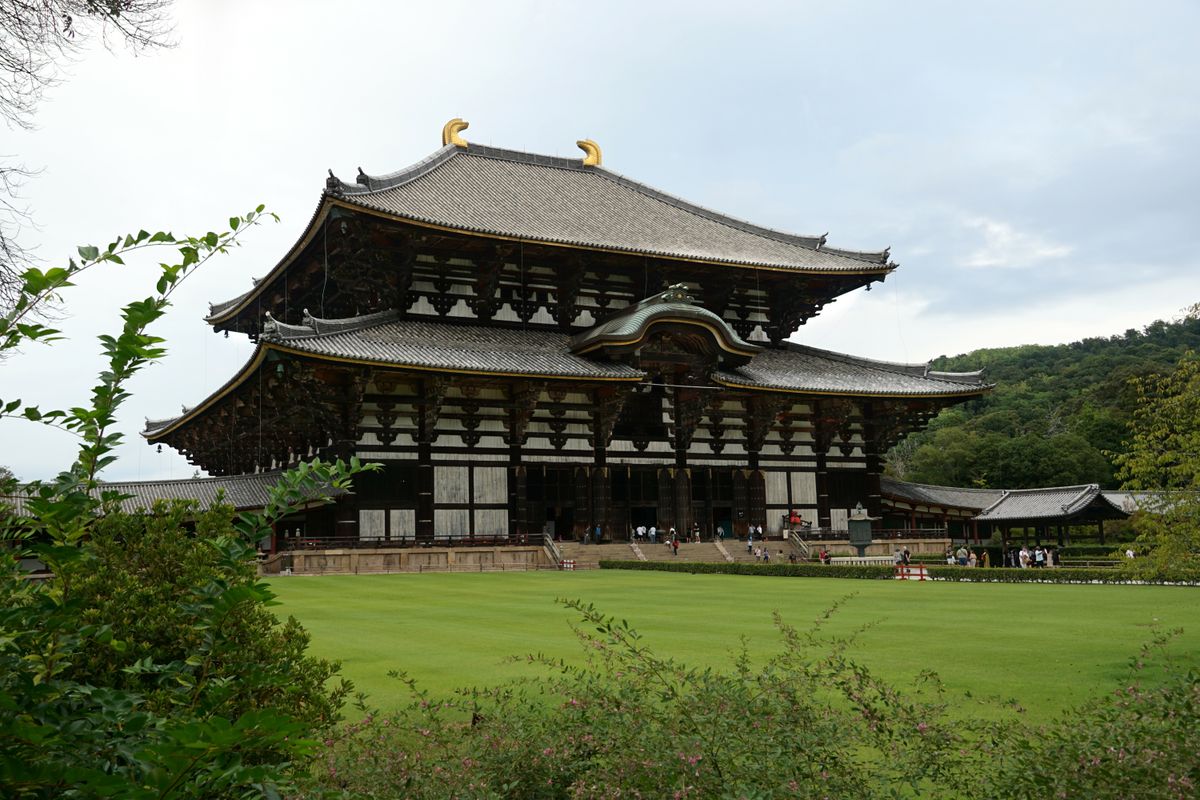
The Great Buddha Hall opens from 7:30 to 17:30 between April and October, and from 8:00 to 17:00 from November to March. The present hall was rebuilt in 1709 and is about 30 percent smaller than the original, yet the interior is genuinely overwhelming. Look for the pillar with a hole cut through its base, which is said to bring enlightenment to anyone who can squeeze through. After visiting the hall, walk the wider temple grounds, which are free and less crowded, and consider a stop at the Todaiji Museum if you have time and an interest in Buddhist art.
Afternoon: Kasugataisha Shrine and the Lantern-Lined Forest Paths
From Todaiji, follow the lantern-lined paths east into the forested slopes toward Kasugataisha Shrine, Nara’s major Shinto site. The walk takes about 15 to 20 minutes from the Great Buddha Hall, and the path is shaded and peaceful, with hundreds of moss-covered stone lanterns lining the route. The outer shrine grounds are free to enter, while the inner area charges an admission fee. Kasugataisha is known for its bronze and stone lanterns, which are all lit twice a year during the Mantoro Lantern Festivals in February and August, and the vermilion shrine buildings contrast beautifully with the surrounding forest.
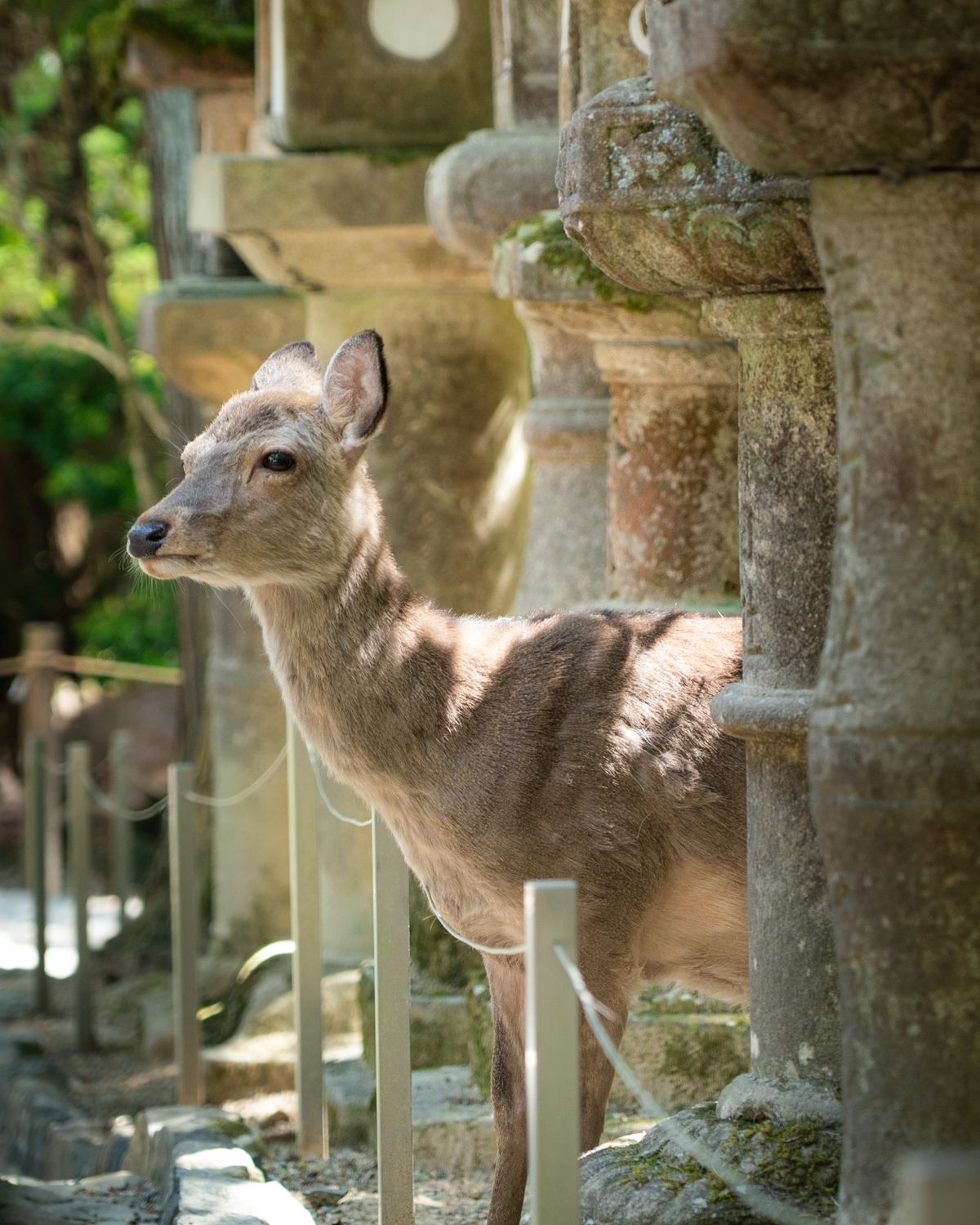
If you have energy and good shoes, continue along the trails beyond the main shrine into the Kasugayama Primeval Forest, a protected area with quieter paths and fewer visitors. The forest is part of the UNESCO World Heritage site and offers a genuine escape from the crowds near Todaiji. Return the same way or loop back through the park, watching for deer along the route.
Late Afternoon: Naramachi Old Merchant District
Walk south from Nara Park into Naramachi, the former merchant quarter where traditional wooden townhouses line narrow streets. The district has been preserved and restored, and today it holds small museums, craft shops, cafés and restaurants. The pace is slower here than in the park, and the atmosphere is residential rather than touristic. Stop at one of the machiya townhouse museums to see how Nara’s merchants lived, or browse the craft shops for locally made textiles, ceramics and paper goods.
Naramachi is also the best area for a late lunch or an early dinner before you return to Kyoto. Look for restaurants serving kakinoha-zushi, the local pressed sushi wrapped in persimmon leaves, or try a bowl of chilled Miwa somen noodles if the weather is warm. The district is compact and easy to explore on foot, and it sits about 10 to 15 minutes south of Kintetsu-Nara Station, making it a logical final stop before you collect your bags and catch the train back.
Feeding the Nara Deer: Rules, Costs and Safety Tips
Nara Park’s deer are wild animals, not pets, and they deserve respect despite their familiarity with visitors. Feed them only with official shika senbei crackers, which are sold by vendors throughout the park for about ¥200 per bundle. The crackers are made from rice bran and wheat flour and are safe for the deer, while human snacks, bread and other foods can make them sick. Keep all food, maps and paper items concealed in your bag, because the deer will approach and may become persistent if they think you are holding something edible.
Approach the deer calmly and offer crackers with your hand flat, not pinched between your fingers, to avoid accidental nips. Some deer will bow before taking a cracker, and you can encourage this by bowing slightly yourself. Once you run out of crackers, show the deer your empty hands and walk away without running or turning your back abruptly. Do not tease, chase, hug or attempt to ride the deer, and keep a respectful distance from mothers with fawns, which can be protective. The deer are generally gentle, but they are large animals and can push, headbutt or bite if they feel threatened or frustrated.
What to Eat in Nara
Nara’s food specialties reflect its history as an inland capital, with preserved ingredients, mountain vegetables and Buddhist vegetarian traditions shaping the local cuisine. The most famous dish is kakinoha-zushi, pressed mackerel or salmon sushi wrapped in persimmon leaves, which were historically used to preserve the fish during transport from the coast. The leaf is packaging, not garnish, and should be peeled away before eating. Hiraso and Izasa are two well-regarded makers in central Nara, with Hiraso offering sit-down meals and Izasa convenient for takeaway boxes to eat in the park.
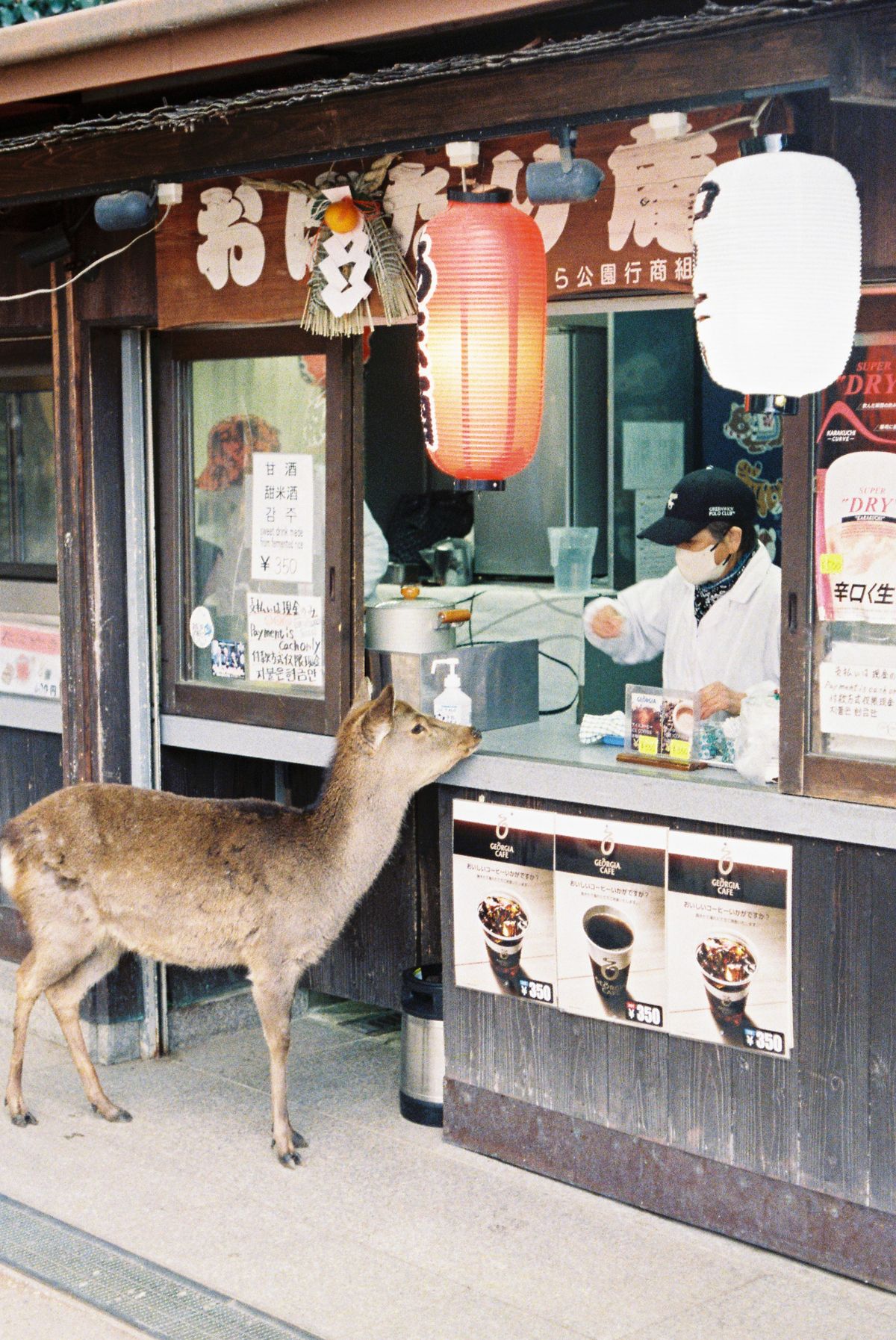
Miwa somen, ultra-thin wheat noodles from the Miwa area near Nara, are another regional specialty and are best eaten chilled with a light dipping broth in warm weather. Several restaurants around Kintetsu-Nara Station and in Naramachi serve somen, and the texture is finer and smoother than ordinary somen. For the most authentic experience, take the train to Miwa or Sakurai, near Omiwa Shrine, where restaurants serve the noodles close to their traditional production area.
Nakatanidou, a small shop near the Higashimuki shopping street close to the station, is famous for its high-speed mochi pounding demonstrations, which draw crowds several times a day. The shop makes yomogi mochi, mugwort-flavored rice cakes filled with sweet red bean paste, and you can watch the rhythmic pounding before buying the mochi warm. Arrive before late afternoon, because the shop can sell out. Other Nara specialties include nara-zuke pickles and chagayu tea-flavored rice porridge.
Nara Day Trip Budget and Admission Fees
A typical Nara day trip from Kyoto costs approximately ¥4,000 to ¥7,000 per person, depending on your train choice, meal preferences and how many paid attractions you visit. A return trip on the Kintetsu Limited Express costs about ¥2,560, or ¥1,520 if you take the slower Kintetsu Express, while JR is free for Japan Rail Pass holders and costs ¥1,440 return otherwise. Todaiji Great Buddha Hall admission is ¥800 for adults, and Kasugataisha’s outer grounds are free, though the inner area charges a fee.
A bundle of deer crackers costs about ¥200, and a casual lunch in Naramachi or near the station runs ¥1,000 to ¥2,000, while a sit-down restaurant meal may cost ¥2,000 to ¥4,000 or more. Coin locker fees range from about ¥300 to ¥800 depending on size, and local buses charge a few hundred yen per ride, with day passes available, though most visitors walk. If you add the Todaiji Museum or the Nara National Museum, budget roughly ¥700 to ¥1,000 per museum. Guided group tours from Kyoto often cost ¥8,000 to ¥20,000 per person, while private guides can cost considerably more.
Best Time to Visit and How to Avoid Crowds
April, May, October and November offer the best balance of weather and sightseeing in Nara, with comfortable walking temperatures and colorful seasonal scenery. Late March to early April is the classic cherry-blossom period, particularly attractive around Nara Park and Kasugataisha, but it is also the busiest and most expensive time to visit. Late November brings excellent autumn foliage, with maple trees turning red and gold across the temple gardens and forest paths, and this period is nearly as crowded as cherry-blossom season.
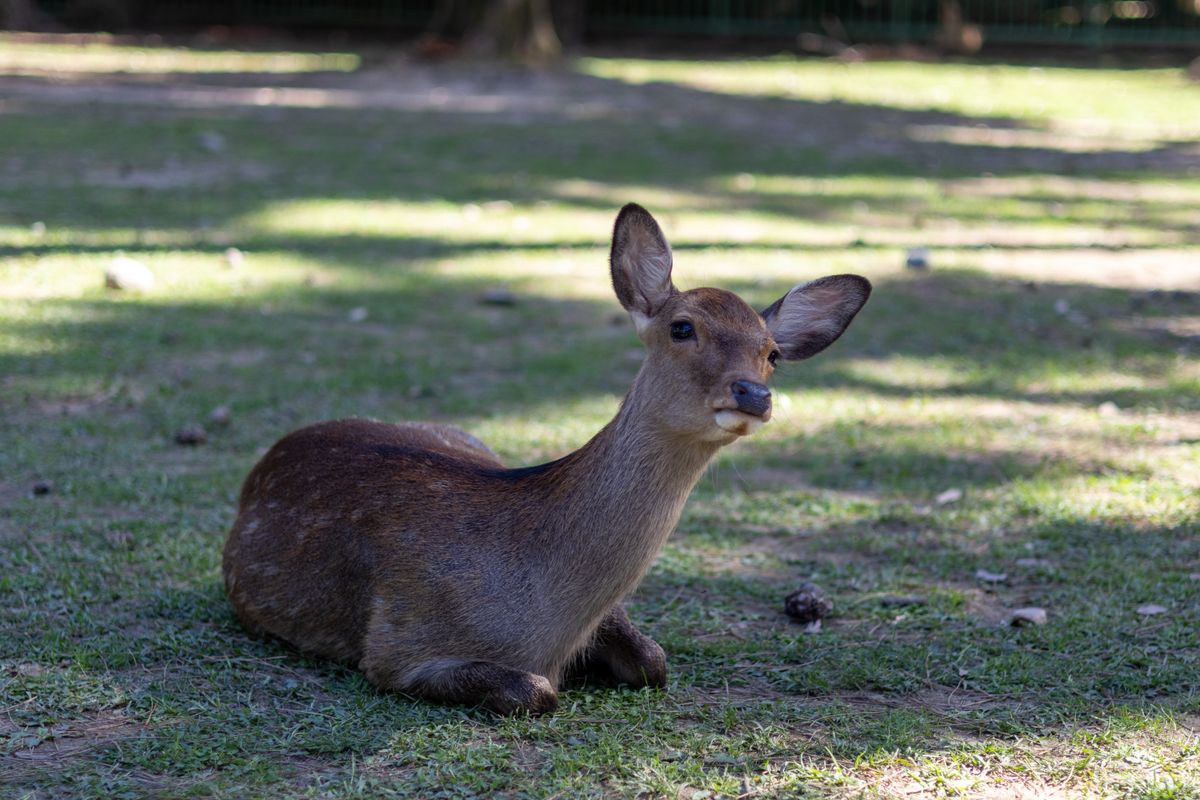
June brings rainy-season showers but also young fawns, which are especially appealing to visitors. July and August are hot and humid, with strong midday sun and temperatures often exceeding 30 degrees Celsius, so bring water and sun protection if you visit in summer. September can remain hot and may be affected by typhoons. January and February are quiet and sometimes atmospheric, with fewer visitors and occasional light snow, but days are short and colder, and you will need warm layers.
Golden Week in late April to early May, Obon in mid-August and the New Year holidays are the worst times for crowds, with tour groups, school trips and domestic tourists filling the park and the trains. Weekends are busier than weekdays year-round, and arriving before 9:00 or after 15:00 helps you avoid the peak midday crush. Early morning light is also better for photographs, and the deer are calmer before the crowds arrive.
Rainy-Day Options, Accessibility and Bike Rental
Nara Park is largely outdoors, but several indoor attractions offer shelter when the weather turns. The Nara National Museum, near Kofukuji, houses one of Japan’s finest collections of Buddhist art and sculpture, and it is open from 9:30 to 17:00 most days, with last admission 30 minutes before closing. The museum is normally closed on Mondays, or the following day when a Monday falls on a public holiday, so check the exhibition calendar before you visit. The Todaiji Museum and Kofukuji’s National Treasure Hall are smaller but equally worthwhile, and both are covered and climate-controlled.
Naramachi’s machiya townhouse museums and craft shops are also good rainy-day stops. If rain is forecast, pack a compact umbrella and wear shoes with good grip, because the stone paths around Kasugataisha and Todaiji become slippery when wet. The deer are less active in heavy rain, and fewer vendors set up stalls, so feeding opportunities may be limited.
Nara Park’s main sights are spread out, and the terrain includes gentle slopes, uneven stone paths and forested trails. Visitors with limited mobility can reach Todaiji and Kofukuji without great difficulty, but Kasugataisha and the forest paths beyond it involve more walking and climbing.
Local buses connect the major sites, though not every bus stop has level boarding. Bike rental is available near Kintetsu-Nara Station, including electric-assist bicycles that make Nara Park’s slopes easier. Use the designated bicycle parking areas, and do not ride into temple grounds or along crowded paths.
Extending Your Trip: Uji, Horyuji, Mt. Yoshino and Osaka
Nara pairs well with several nearby destinations, though most require a separate half-day or full-day excursion rather than a quick add-on. Uji, about 20 to 30 minutes from Kyoto by JR, is famous for Byodoin Temple, the Uji River and traditional tea shops, and it can be combined with Nara only if you start very early and accept a long day. Horyuji Temple, one of Japan’s most important Buddhist complexes and a UNESCO World Heritage site, lies outside central Nara and requires additional bus or train time, so it is better treated as a separate trip.
Mt. Yoshino, famous for spectacular cherry blossoms in spring and mountain temples year-round, is much farther from Nara than Nara Park and is best visited as a seasonal excursion on its own. Osaka connects easily with Nara by Kintetsu and JR, and Dotonbori, Osaka Castle and Umeda can be added after Nara only if your itinerary begins early and finishes late. For most visitors, the strongest plan is to focus on Nara alone and save these other destinations for another day, or to choose one and combine it with a lighter Nara itinerary that skips Kasugataisha or Naramachi.
Frequently Asked Questions
Is one day enough for Nara?
One day is enough to visit Kofukuji, Nara Park, Todaiji, Kasugataisha and Naramachi, which covers the essential sights and gives you time to feed the deer and try local food. If you want to add Horyuji Temple, the Nara National Museum or a trip to Mt. Yoshino, you will need a second day or a more selective itinerary. Most visitors find that six to seven hours in Nara is satisfying without feeling rushed, especially if you arrive early and follow a logical walking route.
How long is the train from Kyoto to Nara?
The Kintetsu Limited Express from Kyoto Station to Kintetsu-Nara Station takes about 35 minutes, while the slower Kintetsu Express services take roughly 45 to 60 minutes. JR Miyakoji Rapid trains from Kyoto Station to JR Nara Station take about 45 minutes, and JR local trains take longer. Kintetsu is faster and more convenient for most visitors, while JR is the better choice if you hold a Japan Rail Pass.
Can I use my JR Pass from Kyoto to Nara?
Yes, the Japan Rail Pass covers JR trains from Kyoto Station to JR Nara Station, including the Miyakoji Rapid and local services on the JR Nara Line. The pass does not cover Kintetsu Railway, so if you want to take the faster Kintetsu Limited Express, you will need to buy a separate ticket. JR Nara Station is about 15 to 20 minutes farther from Nara Park than Kintetsu-Nara Station, but the walk is pleasant and the station has coin lockers and bus connections.
Are the Nara deer dangerous?
Nara’s deer are generally gentle and accustomed to visitors, but they are wild animals and can push, headbutt or bite if they feel threatened, frustrated or teased. Feed them only with official shika senbei crackers, approach calmly, and keep all other food and paper items concealed. Do not chase, hug or attempt to ride the deer, and give mothers with fawns extra space. Most injuries are minor and result from visitors teasing the deer or holding crackers out of reach, so treat them with respect and you will have no problems.
What is the best route for a Nara day trip itinerary?
The best route starts at Kintetsu-Nara Station, walks east through Kofukuji and Nara Park, continues to Todaiji and Kasugataisha, then loops back through Naramachi before returning to the station. This route keeps the walking logical, spreads the highlights across the day, and puts you in Naramachi for a late lunch or early dinner before you catch the train back to Kyoto. Allow at least six hours from arrival to departure, and start as early as you can to avoid the midday crowds.
Where should I eat in Nara?
Naramachi is the best area for a sit-down meal, with traditional restaurants serving kakinoha-zushi, Miwa somen and other local specialties. Hiraso is well-regarded for kakinoha-zushi and offers a comfortable dining room. Nakatanidou near the Higashimuki shopping street is famous for its freshly pounded yomogi mochi, and the high-speed pounding demonstration is worth the short detour. For a quick lunch, look for casual restaurants around Kintetsu-Nara Station or along Sanjo-dori, where you can find udon, soba and rice bowls at reasonable prices.
Planning more of Asia? See our Ha Long Bay cruise guide, or browse all our Asia guides.
Before you go, check these official pages for the latest details: Nara Park’s official visitor guide and Japan National Tourism Organization’s Nara page.
Conclusion
A Nara day trip from Kyoto is one of Japan’s most accessible and rewarding excursions, with ancient temples, free-roaming deer and a walkable historic core all within an hour by train. Follow the loop from Kofukuji through Todaiji, Kasugataisha and Naramachi, start early to avoid the crowds, and leave time to feed the deer and try freshly pounded mochi before you return.
The city is compact enough to cover in six hours but rich enough to justify a slower pace, and the combination of natural beauty, cultural depth and practical convenience makes it an essential stop on any Kansai itinerary. Check the train times before you go, and use our three-day Kyoto itinerary to plan the rest of your days in the region.