

In this guide 30
- Essential Things to Do in Fes Medina: Top 7 Sights
- 1. Bab Bou Jeloud (The Blue Gate)
- 2. Al Quaraouiyine Mosque and University
- 3. Bou Inania Madrasa and Al-Attarine Madrasa
- 4. Chouara Tannery (Terrace Views and Leather Crafts)
- 5. Nejjarine Museum of Wooden Arts and Crafts
- 6. Mellah and Royal Palace Gates (Fes el-Jdid)
- 7. Merenid Tombs and Borj Nord Panoramic Overlook
- How to Navigate Fes Medina Without Getting Lost
- Practical Travel Logistics: Getting to Fes Medina
- Best Time to Visit and Typical Travel Costs
- Cultural Etiquette, Safety and Scam Prevention
- Top Day Trips from Fes
- Frequently Asked Questions About Fes Medina
- Conclusion
The Fes medina is one of the largest car-free urban areas in the world, a medieval city where goods still move by donkey, mule and handcart. UNESCO inscribed the Medina of Fez as a World Heritage Site in 1981, recognizing its exceptional urban fabric, religious architecture and craft traditions that continue today. The medina divides into Fes el-Bali, the older eighth-century core, and Fes el-Jdid, the thirteenth-century Marinid extension. Most visitors enter through Bab Bou Jeloud and walk downhill into a maze of thousands of narrow lanes, where finding your way is part of the experience. One full day covers the main sights; two days allows time for museums, food and the Mellah quarter at a comfortable pace.
Some links in this guide are affiliate links. If you book through one, Roamdusk may earn a commission at no extra cost to you. It never decides what we recommend.
Essential Things to Do in Fes Medina: Top 7 Sights
The medina is free to enter, and walking its lanes is the central experience. The seven sights below form a practical route from Bab Bou Jeloud downhill through the heart of Fes el-Bali, then out to Fes el-Jdid and the overlook points. Each one is a landmark you can navigate toward, and together they cover the architecture, craft traditions and views that define Fes medina.
1. Bab Bou Jeloud (The Blue Gate)
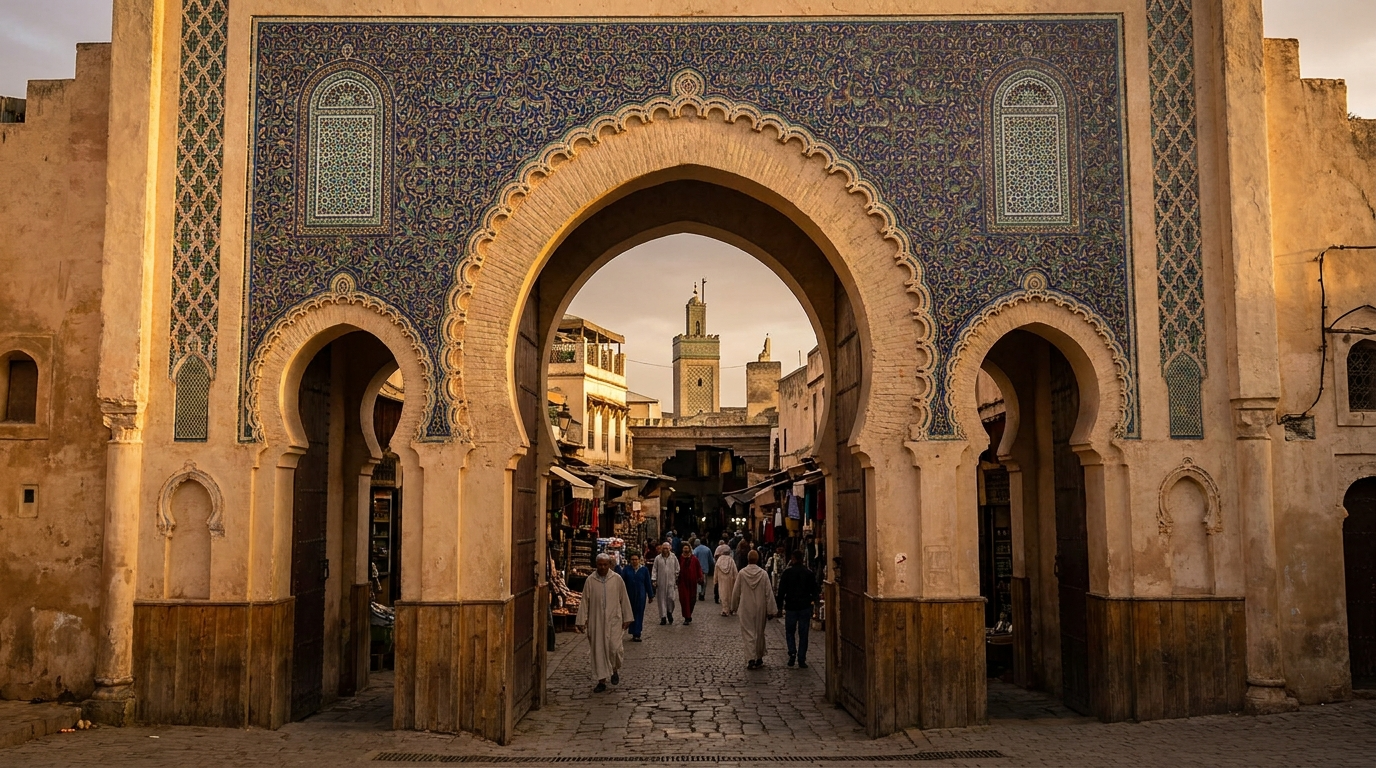
Bab Bou Jeloud is the best-known western entrance to Fes el-Bali and the starting point for most walks. The gate is tiled blue on the outside and green on the inside, and it opens onto a small square where Tala’a Kebira and Tala’a Seghira, the two main descending streets, begin. Food stalls, cafés and a few small hotels cluster around the square. The gate itself dates from 1913, so it is not medieval, but it marks the threshold between the Ville Nouvelle and the historic core.
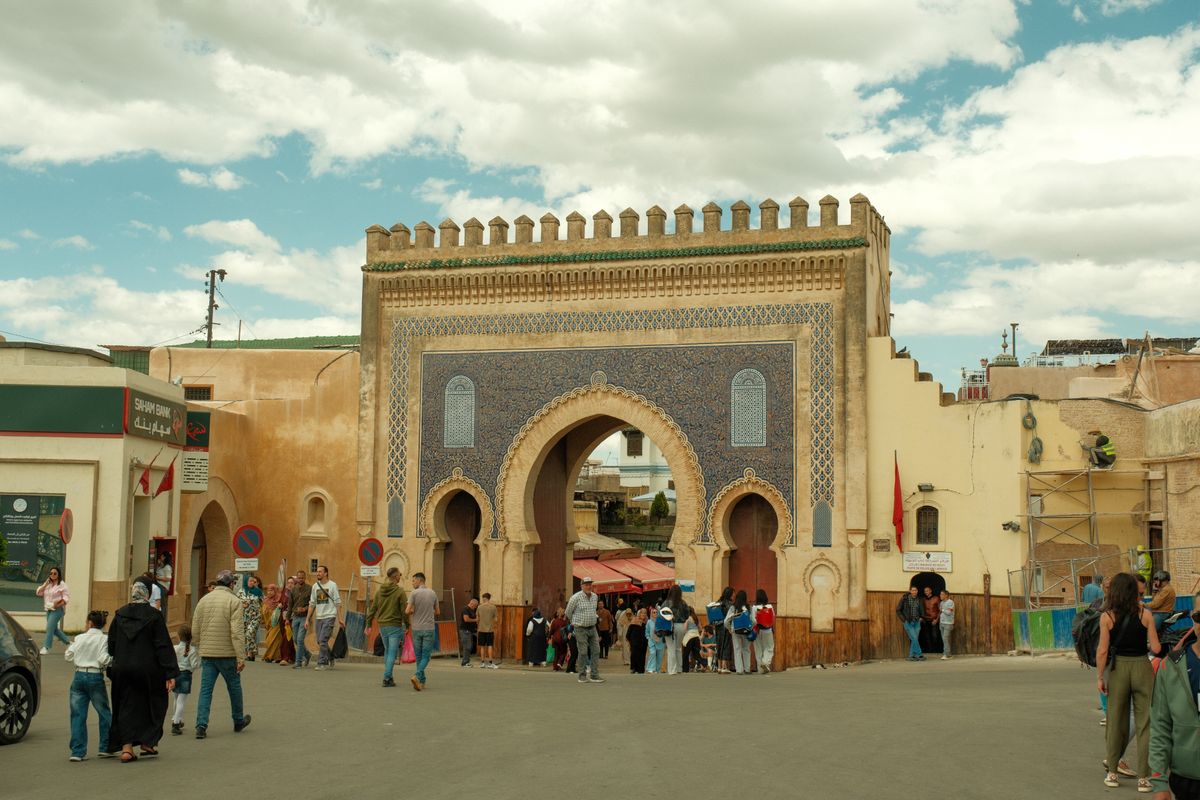
Use Bab Bou Jeloud as your reset point. If you are lost deeper in the medina, ask a shopkeeper for directions to Bab Bou Jeloud or walk uphill until you reach it. The gate is also the most reliable place to find a red petit taxi back to the train station or your accommodation outside the walls.
2. Al Quaraouiyine Mosque and University
Al Quaraouiyine was founded in 859 by Fatima al-Fihri, a Tunisian-born benefactor, and it remains an active mosque and functioning university. Non-Muslim visitors cannot enter the prayer hall, but the exterior and limited courtyard views are free. The building is one of the oldest continuously operating educational institutions in the world, and it sits at the geographic and spiritual center of Fes el-Bali.
You reach Al Quaraouiyine by continuing downhill from Bab Bou Jeloud along Tala’a Kebira for about 15 to 20 minutes, passing through the spice and perfume souks. The mosque has no regular tourist hours, and access is restricted around the five daily prayer times and on Fridays. Exterior views are possible throughout the day, and the surrounding lanes offer glimpses of the courtyard and tilework from doorways and adjacent buildings.
3. Bou Inania Madrasa and Al-Attarine Madrasa
Bou Inania Madrasa is a fourteenth-century Marinid religious school near Bab Bou Jeloud, and it is one of the medina’s major architectural visits. Sultan Abu Inan Faris built it between 1350 and 1355. Visitors of all faiths can enter the courtyard, although the prayer hall is for Muslims only. Inside are carved cedarwood, zellige tilework and a small canal, drawn from a branch of the Oued Fes, that runs along the edge of the courtyard. Entry is 20 MAD. It opens roughly 09:00 to 18:00 but closes at prayer times, for longer on Fridays around the midday prayer.
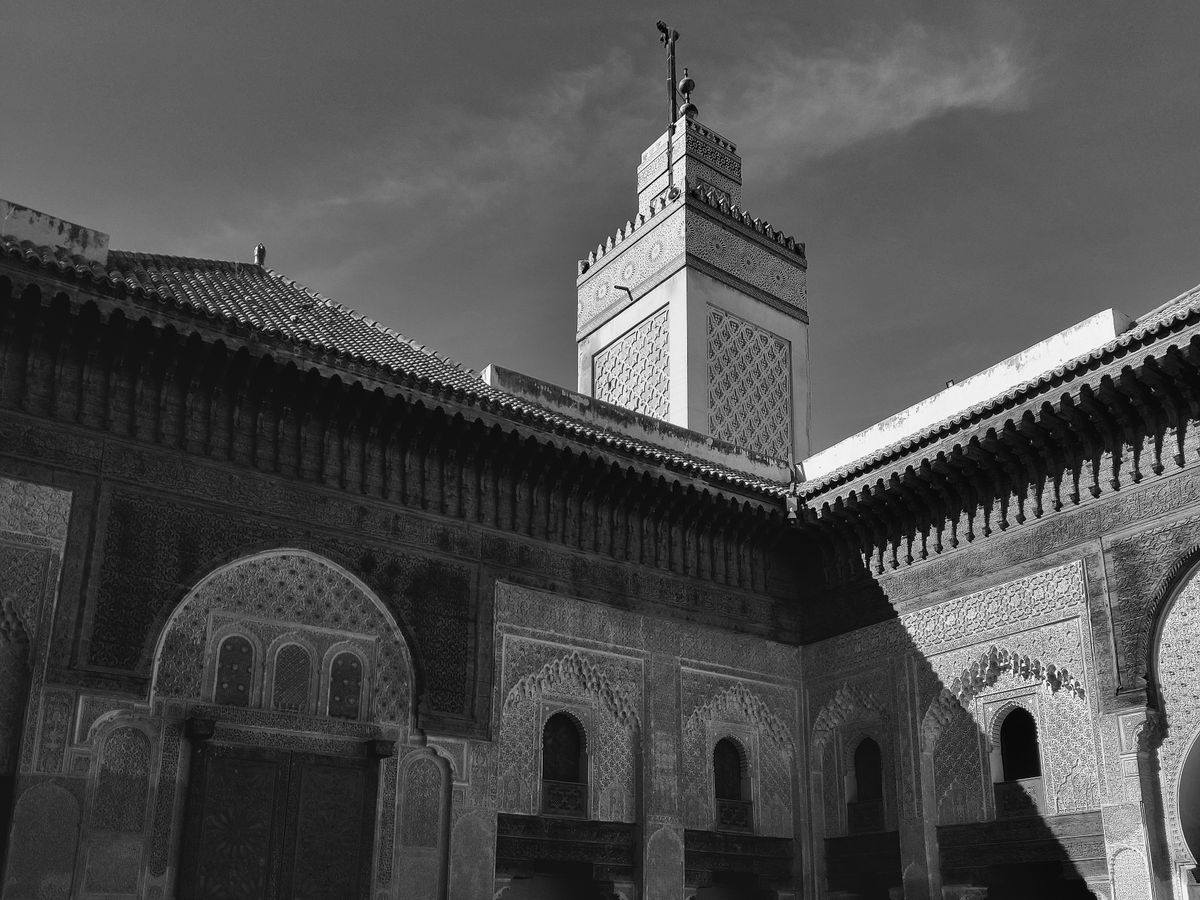
Al-Attarine Madrasa is another Marinid-era school, built between 1323 and 1325, close to the spice and perfume markets. It is smaller than Bou Inania but equally detailed in its decoration. Entry is also about 20 MAD. Both madrasas are best visited in the morning when light fills the courtyards and before midday crowds arrive.
4. Chouara Tannery (Terrace Views and Leather Crafts)
Chouara Tannery is where hides are washed and dyed in stone vats, using methods that have changed little in centuries. Viewing happens from the rooftop terraces of surrounding leather shops, not from inside the tannery itself. There is no official ticket or entrance gate. Shops commonly offer terrace access in the hope you will browse their goods, but purchasing is not required. A tip of about 10 to 20 MAD per person to the shop whose terrace you use is normal, and you should not pay more than 50 MAD whatever you are asked for. Vendors may hand you fresh mint to hold near your nose because the smell from the dye pits is strong.
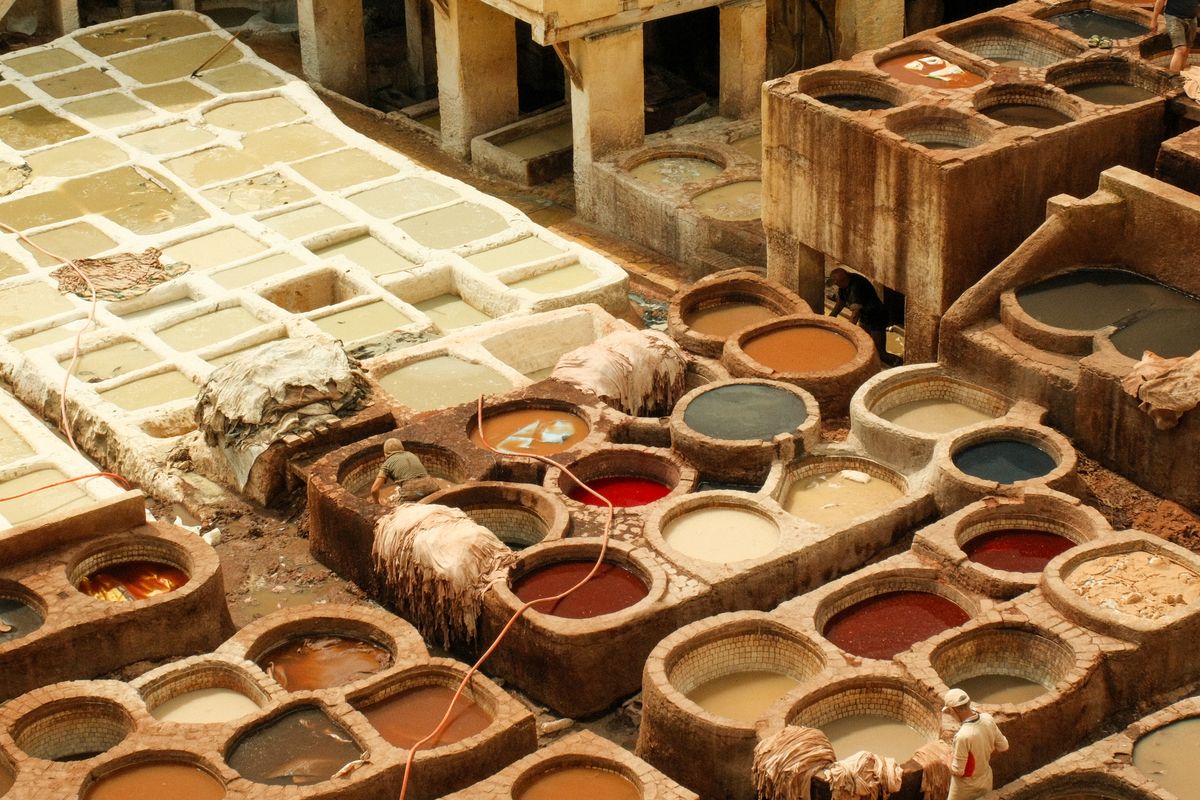
The tannery is deep inside Fes el-Bali, near Place Seffarine. From Bab Bou Jeloud, allow roughly 20 to 25 minutes on foot through the medina. For active workers and stronger colors, aim for approximately 09:30 to 14:00; late afternoon is quieter because many workers have left the pits. Friday afternoons may have more restricted or reduced activity. Allow around 30 to 45 minutes for the visit, and be cautious of unsolicited guides who lead you somewhere and demand payment afterward.
5. Nejjarine Museum of Wooden Arts and Crafts
The Nejjarine Museum is housed in a restored eighteenth-century funduq, a traditional inn where merchants once stored goods and rested. The building now displays carved woodwork, musical instruments and examples of Moroccan joinery. The rooftop offers views over the medina’s roofscape and the surrounding souks. Admission is about 30 MAD, it opens roughly 10:00 to 17:00, and the museum is a quieter alternative to the busier lanes outside.
Nejjarine Square sits on the route between Bab Bou Jeloud and the Chouara Tannery, so it combines naturally with a morning walk. The square itself is small and surrounded by woodworkers’ shops, and it is one of the few open spaces inside the dense medina where you can pause and orient yourself before continuing.
6. Mellah and Royal Palace Gates (Fes el-Jdid)
The Mellah is the historic Jewish quarter, established in Fes el-Jdid during the fifteenth century. The Ibn Danan Synagogue and the Jewish cemetery are the main sites, and the quarter’s architecture differs from Fes el-Bali, with taller buildings, balconies and wider streets. The synagogue is open to visitors, though hours and access can vary, so confirm locally before making the trip.
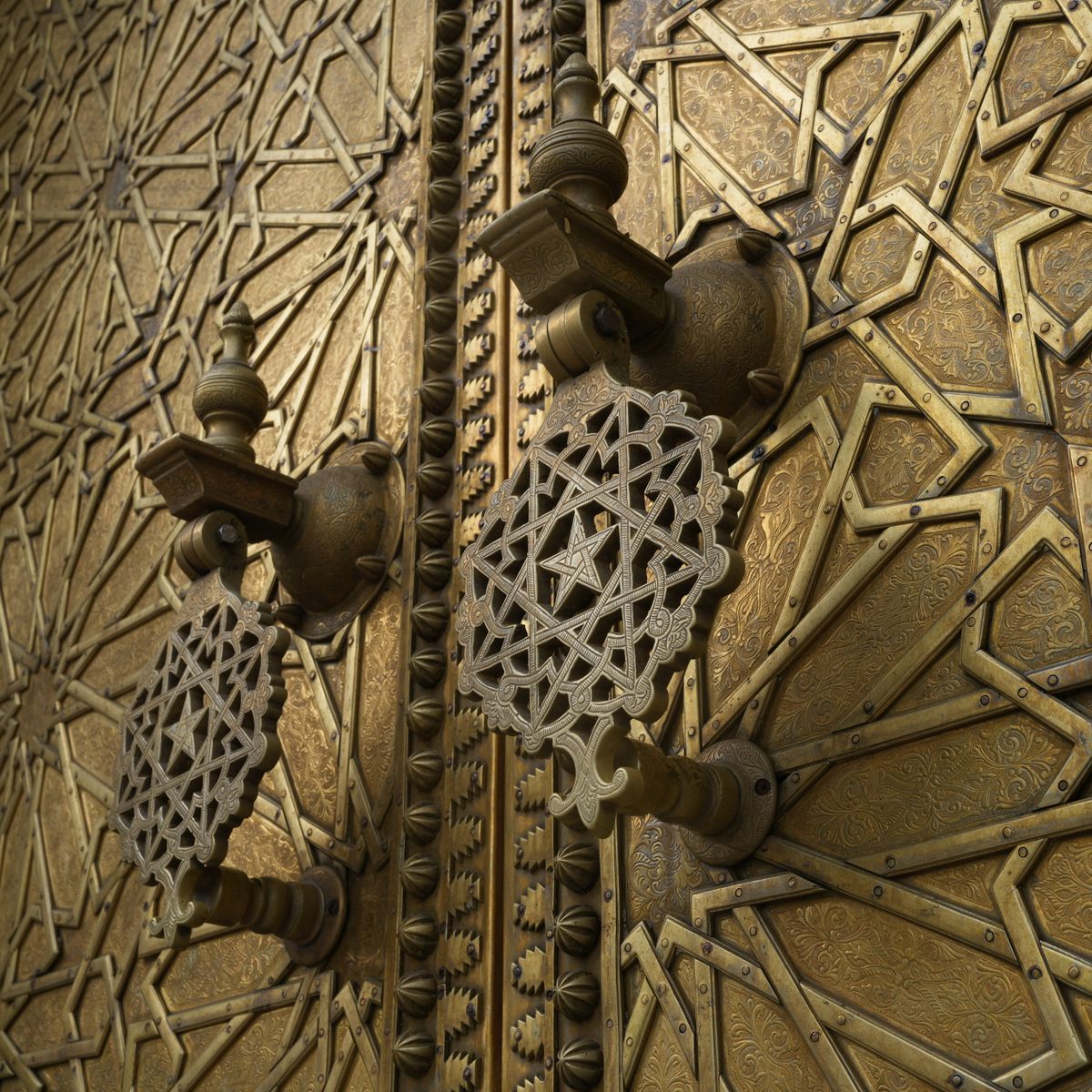
The Royal Palace gates, Dar al-Makhzen, sit nearby in Fes el-Jdid. The palace is not generally open as a regular interior sightseeing attraction, but the brass gates and the square in front are worth the walk. The gates are large, ornate and heavily decorated, and they mark the edge of the royal precinct. The edge of Fes el-Jdid is about 10 minutes on foot from Bab Bou Jeloud, but allow 20 to 30 minutes (about 1.5 to 2 km) to reach the Mellah and the palace gates on Place des Alaouites, or take a short petit taxi ride.
7. Merenid Tombs and Borj Nord Panoramic Overlook
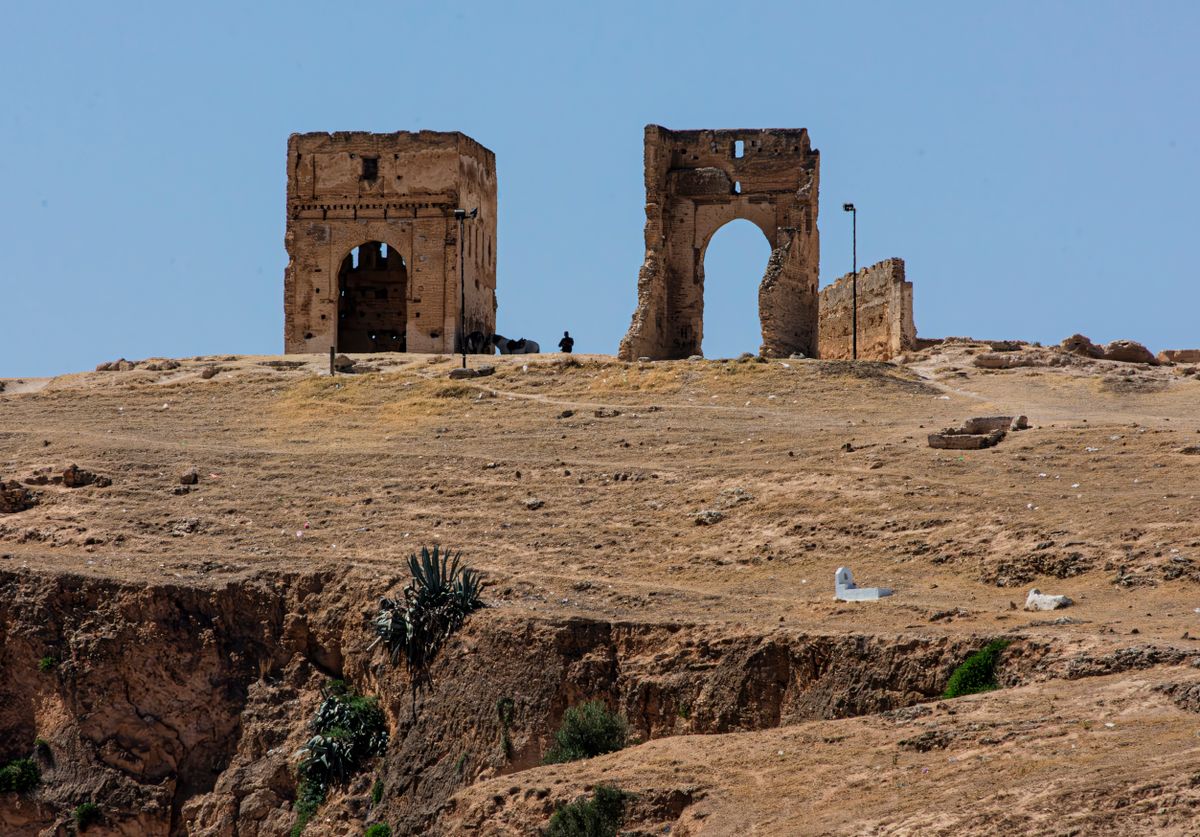
The Merenid Tombs sit on a hill north of the medina, outside the dense lanes, and offer broad views over Fes el-Bali. The tombs themselves are ruins, but the overlook is the reason to go. The walk up takes about 20 to 30 minutes from Bab Guissa, and the route is steep in places, so wear shoes with grip. The site is free to visit, and it is best at sunrise or late afternoon when the light is softer. Sunset is the most popular time, but the hillside is isolated after dark, so go with company, keep valuables out of sight and head down before nightfall or take a petit taxi.
Borj Nord is a fortress built in 1582 by the Saadian sultan Ahmad al-Mansur, and it now houses the Museum of Arms. It stands about 500 metres west of the tombs, a walk of roughly ten minutes, and offers similar panoramic views. The museum displays weapons and armor; admission is about 20 MAD and it opens roughly 09:00 to 18:00. Both sites are outside the medina’s pedestrian core, so they work well as a break from the narrow lanes and as a way to see the scale of Fes el-Bali from above.
How to Navigate Fes Medina Without Getting Lost
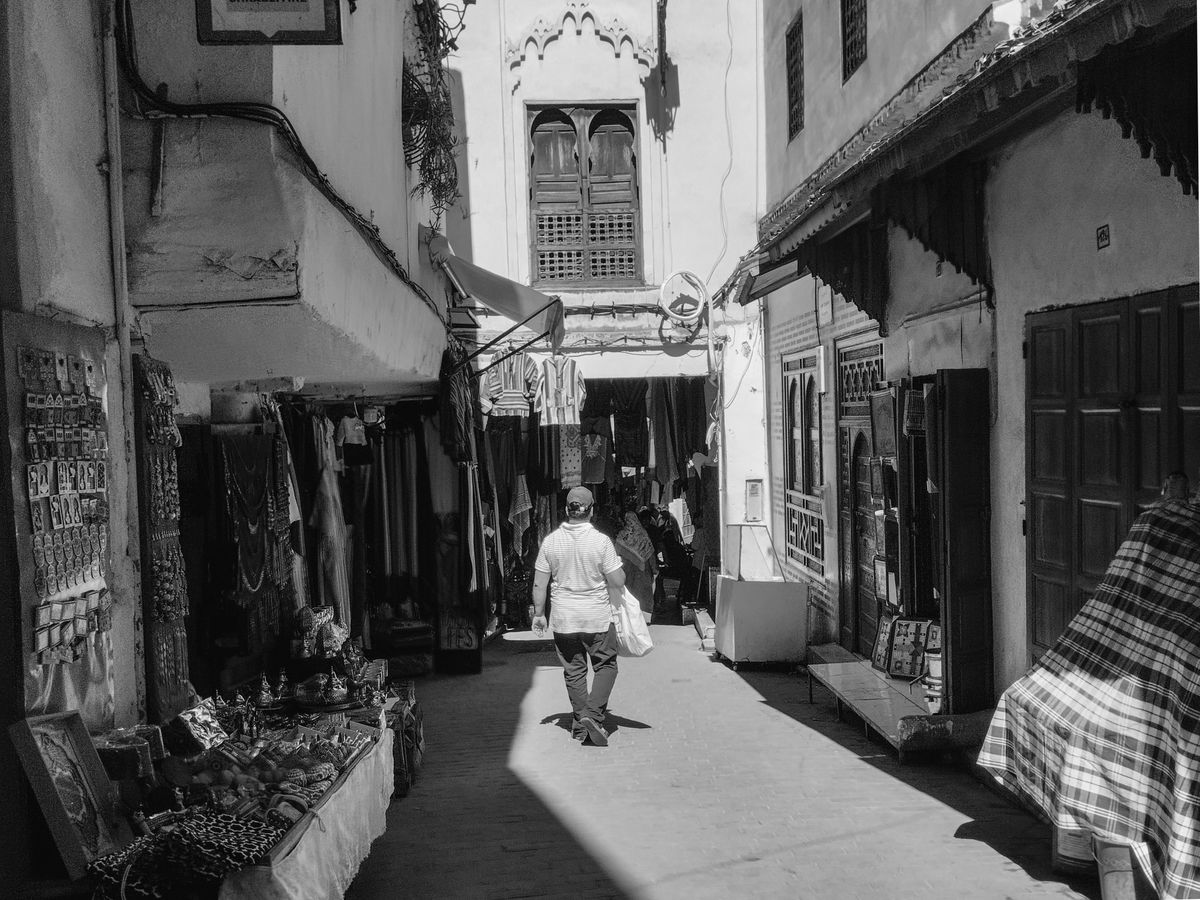
Fes el-Bali is a maze of thousands of narrow lanes and dead ends, and getting lost is part of the experience. The medina slopes generally downhill from Bab Bou Jeloud toward the Qarawiyyin area and Place R’cif, so walking uphill will eventually bring you back toward the Blue Gate. The two main streets, Tala’a Kebira and Tala’a Seghira, are your orientation spines. Downhill leads deeper into the medina; uphill leads back to Bab Bou Jeloud.
Self-Guided Walking Route: Tala’a Kebira to Tala’a Seghira
A practical self-guided loop is Bab Bou Jeloud down Tala’a Kebira, through the central souks and landmarks, then back up Tala’a Seghira to Bab Bou Jeloud. Start outside the gate facing into the medina. Take Tala’a Kebira, generally the wider, busier street on the left. Visit Bou Inania Madrasa shortly after entering, then continue downhill using Tala’a Kebira as your main road. Explore side souks briefly, but return to Tala’a Kebira whenever orientation becomes difficult.
Continue toward Al-Attarine Madrasa and the Qarawiyyin district. The exact alley route may vary because many passages are narrow or poorly signed, but the general direction is downhill and southeast. Place Seffarine and Nejjarine are reached by continuing through the brassworkers’ area. Detour to the Chouara Tanneries only if desired, because the route is more confusing and signs from shops may lead to viewing terraces. Return via Tala’a Seghira, the quieter parallel route, walking uphill until you reach Bab Bou Jeloud or the surrounding square. Allow roughly three to five hours for the loop with sightseeing and occasional wrong turns.
Hiring an Official Licensed Guide vs. Exploring Solo
A licensed local guide is useful for the first half-day, especially for identifying historic buildings, understanding the craft traditions and avoiding misleading offers of help. An official guide typically charges about 250 to 400 MAD for a half day (three to four hours) and 400 to 600 MAD for a full day, per group rather than per person. Agree the duration, language, any shop stops and the total price before starting, and pay at the end. Use a guide arranged through licensed accommodation or the official tourist office, and ignore unsolicited guides and anyone claiming that a street is closed unless there is a clear official barrier.
Exploring solo is perfectly possible with offline maps and patience. Download the entire Fes area in Google Maps or Maps.me before entering the medina, because reception and GPS accuracy can suffer among high walls. Save pins for Bab Bou Jeloud, your riad, Bou Inania Madrasa, Al-Attarine Madrasa, Place Seffarine, Nejjarine Museum, Chouara Tanneries and Bab Rcif. Screenshot your riad’s location and its nearest recognizable gate. Do not rely on a continuously calculated walking route, because GPS can jump between parallel alleys. Navigate by landmark, slope and main street instead. If lost, walk uphill toward Bab Bou Jeloud, or ask a shopkeeper for directions to the Blue Gate.
Practical Travel Logistics: Getting to Fes Medina
Fes is well connected by air, rail and road. The main railway station, Gare de Fès or Fès-Ville, is in the Ville Nouvelle, roughly 10 to 15 minutes by petit taxi from Bab Bou Jeloud in light traffic. Cars cannot enter most of the medina, so use a guarded car park near an access gate and walk or take a short taxi ride.
Arriving at Fès–Saïs Airport (FEZ)
Fès–Saïs Airport is about 15 to 20 km south of the medina. Grand taxis wait outside arrivals and take about 25 to 40 minutes to the medina, depending on traffic. Expect to pay about 150 MAD per vehicle by day and about 200 MAD after 20:00, and agree the fare before you get in. A pre-booked private transfer costs more, typically 400 to 500 MAD, but the driver meets you at arrivals and knows which gate is closest to your riad.
City bus 16 runs between the airport and Fès-Ville railway station about every 30 to 60 minutes. The fare is about 4 to 5 MAD, paid on board, so carry small change, and the ride takes 30 to 45 minutes. From the station, a red petit taxi to the medina usually costs under 25 MAD on the meter by day, with a 50 percent surcharge at night; insist that the driver uses the meter.
Reaching Fes by Train (ONCF) or Bus (CTM)
ONCF runs trains to Fes from Rabat, Casablanca, Tangier and Marrakech. Journey times are about three hours from Rabat, about four hours from Casablanca and about seven hours from Marrakech, where some services need a change at Casablanca or Rabat. From Tangier, the fastest option is the Al Boraq high-speed train to Kenitra with a connection to Fes, about three and a half hours in total; direct classic trains take a little over four hours. Fares depend on train, class and booking date, so check the ONCF official timetable shortly before departure.
CTM and other intercity bus operators serve Fes. Buses are useful for destinations not directly convenient by rail, although journeys from Marrakech commonly take about eight to nine hours. Driving from Casablanca generally takes around three to four hours, while Marrakech, about 530 km away, takes around six hours on the toll motorway via Casablanca and Rabat. Use a guarded car park near Bab Bou Jeloud or another access gate if driving, because vehicles cannot enter the pedestrian lanes.
Parking and Getting Around the Car-Free Medina
The medina is car-free: goods move by donkey, mule and handcart, so step aside when you hear “Balak!” (watch out). Only a few service roads at the edges take small vehicles. If you drive to Fes, park outside the walls at a guarded lot and walk in. Several car parks sit near Bab Bou Jeloud, Bab Rcif and other major gates. Daily parking charges vary, but expect to pay roughly 20 to 50 MAD for the day. Take a ticket, lock the car and keep valuables out of sight.
Inside the medina, everything is on foot. Distances are short, but the lanes are narrow, uneven and sometimes steep. Comfortable closed shoes with grip are essential. Carry small denominations of dirhams, water and offline maps. Mobile signals can be inconsistent in deep lanes, so do not rely on a live connection for navigation.
Best Time to Visit and Typical Travel Costs
March to May and October to November are the most comfortable months for walking, with average daytime highs of about 20 to 27°C. September is still hot, with highs around 30°C. April, May, October and early November offer the best balance of comfortable temperatures and manageable crowds.
Weather Windows: Spring vs. Autumn
July and August are the months most worth avoiding for long daytime walks. Average highs are about 35°C, heatwaves regularly push past 40°C, and the stone lanes retain heat. Sightseeing is easier early in the morning and after late afternoon if you visit in summer. December to February is quieter and sometimes cheaper, but nights can be cold and rainfall is more likely. Spring offers green hillsides and longer days, while autumn brings clearer skies and the end of the summer heat.
In 2027, Ramadan is expected to run from about 8 February to about 9 March, with the exact dates set by the moon sighting. Many cafés and restaurants close or shorten their hours during the fasting day, and the medina comes alive after sunset. The lanes are most crowded around midday and during religious festivals, so plan your walks for early morning or late afternoon if you prefer fewer people.
Daily Budget Breakdown (Accommodation, Food, Admission, Guides)
Treat these as planning ranges, because prices move with the season and with negotiation. Medina entry is free. Museums and historic monuments charge about 10 to 30 MAD. A licensed half-day guide costs about 250 to 400 MAD per group. An inexpensive local meal costs about 30 to 80 MAD, while a sit-down tourist-oriented meal may cost 100 to 250 MAD per person. Street snacks commonly cost about 10 to 30 MAD.
A petit taxi within the city usually costs about 15 to 30 MAD on the meter for a short ride. Budget guesthouses and simple riads start at about 200 to 500 MAD for a double room. A mid-range riad commonly costs 700 to 1,500 MAD per room, and attractive historic riads and luxury properties can exceed 2,000 MAD. Compare several riads, check whether breakfast and taxes are included, and reserve ahead during spring, autumn and major festivals.
Cultural Etiquette, Safety and Scam Prevention
Wear modest clothing, particularly near mosques and religious schools. Long trousers or skirts that cover the knees and tops that cover the shoulders are appropriate. Comfortable closed shoes are essential, because paving can be uneven, slippery and steep. Carry small denominations of dirhams, water and offline maps. Alcohol is not appropriate in public spaces and may be unavailable in traditional establishments.
Photography Etiquette and Tannery Tips
Do not photograph people, workshops or religious interiors without permission. Many craftspeople and shopkeepers are happy to be photographed if you ask politely, but some may expect a small tip or a purchase in return. At tanneries, rooftop viewpoints are associated with shops, so politely decline purchases if unwanted. Give the terrace tip only after viewing, particularly if someone provided a useful explanation or genuinely assisted you. You are not required to buy leather goods, so browse politely, say no thank you and leave if uninterested.
Prices for leather and ceramics are negotiable. If shopping, compare several stores, open at a third to a half of the first asking price and expect to settle at around half to two-thirds of it. Meals, transport and monument tickets have fixed prices and are not bargained.
Handling Faux Guides and Ramadan Timetables
Unsolicited offers of help are common near Bab Bou Jeloud and other entry points. Most are from unofficial guides hoping for payment. If you do not want a guide, say no thank you firmly and keep walking. Do not follow someone who insists a street is closed or that your riad is difficult to find. If hiring a guide, use one arranged through licensed accommodation or the official tourist office, check for the official badge, and agree the duration, language, inclusions and total price before starting.
During Ramadan, some museums and monuments keep shorter hours, so check opening times locally, and be respectful of those fasting by not eating or drinking in public during daylight hours. Iftar, the evening meal that breaks the fast, is a lively time in the medina, and many food stalls and restaurants open after sunset.
Top Day Trips from Fes
Meknes is 35 to 45 minutes from Fes by train, with roughly hourly departures, and it is another imperial city with Bab Mansour, the old medina and the granaries of Heri es-Souani. The granaries have had long restoration closures, so check that they are open before you go. It combines easily with Fes as a day trip. Volubilis is roughly 30 km north of Meknes and about 70 km from Fes by road. This UNESCO-listed Roman archaeological site is best reached by hired car or organized excursion, and you should allow at least half a day. Entry is 70 MAD. Mosaics remain in place across its Roman houses. Rome gave the town up around 285 AD, but people kept living there for centuries: Idris I founded the Idrisid dynasty there in 788, and the town was abandoned only in the 11th century, after power moved to Fes.
Chefchaouen is approximately three and a half to four and a half hours by road or bus, depending on traffic and connections. Its blue-painted medina works better as an overnight stay than a rushed day trip, because the round trip alone takes seven to nine hours. If you have time for an overnight, Chefchaouen offers a quieter, smaller medina and mountain scenery that contrasts with the density of Fes.
Frequently Asked Questions About Fes Medina
Is one day enough for Fes medina?
One full day covers the main sights, including Bab Bou Jeloud, Bou Inania Madrasa, Al Quaraouiyine, the souks and the Chouara Tannery. Two days allows slower exploration, time for museums, food and the Mellah quarter at a comfortable pace. If you have only one day, start early, follow the Tala’a Kebira route downhill, and prioritize the landmarks that interest you most. A licensed guide for the first half-day helps you cover more ground and understand the history.
Can non-Muslims visit the mosques in Fes medina?
Al Quaraouiyine Mosque and most other mosques in Fes are active places of worship, and non-Muslim visitors generally cannot enter the prayer halls. Exterior views are free, and you can see parts of the buildings from nearby access points and doorways. The madrasas, including Bou Inania and Al-Attarine, are open to visitors of all faiths, and they offer the best opportunity to see Islamic architecture and tilework up close.
How safe is Fes medina for solo travelers?
The Fes medina is generally safe for visitors, including solo women, and violent crime against tourists is uncommon. Pickpocketing does happen in crowded lanes, so keep valuables zipped away. Expect persistent touts and unofficial guides, especially around Bab Bou Jeloud, and women traveling alone often get unwanted comments; a firm no thank you and walking on is the best response. Avoid the quieter lanes alone after dark, stick to the main streets or return to Bab Bou Jeloud if you are unsure, and hire only guides who carry an official badge. Most locals are helpful if you ask for directions politely.
What should I wear when visiting Fes medina?
Wear modest clothing, particularly near mosques and religious schools. Long trousers or skirts that cover the knees and tops that cover the shoulders are appropriate. Comfortable closed shoes with grip are essential, because paving can be uneven, slippery and steep. A hat and sunscreen are useful in summer, and a light jacket is helpful in winter evenings. Dress respectfully, and you will be welcomed more warmly by locals and shopkeepers.
How much should I tip in Fes medina?
Tipping standards vary. A terrace tip at the Chouara Tannery is about 10 to 20 MAD per person. A licensed half-day guide charges about 250 to 400 MAD per group as the agreed fee, not as a tip, though a small additional tip for exceptional service is appreciated. In restaurants, a tip of about 10 percent is customary if service is not included. For small services, such as help with directions or carrying bags, 10 to 20 MAD is reasonable. Always agree on any fee before accepting help.
Where is the best place to stay in Fes medina?
Staying inside Fes el-Bali puts you at the center of the experience, with traditional riads offering courtyards, rooftop terraces and breakfast. Choose a riad near Bab Bou Jeloud or Bab Rcif for easier access with luggage, because the lanes are narrow and vehicles cannot enter. The Ville Nouvelle offers modern hotels with parking and is about 10 to 15 minutes by taxi from the medina. Compare several riads, check whether breakfast and taxes are included, and reserve ahead during spring, autumn and major festivals.
Planning more of Africa? See Stone Town Zanzibar.
Before you go, check the Visit Morocco official tourism site for the latest details on events and travel advice.
Conclusion
The Fes medina is a working medieval city where craft traditions, religious life and daily commerce continue in the same lanes and buildings that have served them for centuries. The experience is as much about walking, watching and listening as it is about ticking off landmarks. Start at Bab Bou Jeloud, follow Tala’a Kebira downhill, and let the medina reveal itself at its own pace. Bring offline maps, comfortable shoes and patience, and you will find that getting lost is often the best part of the day.