

In this guide 42
- Getting to Bacharach Germany
- Exploring the Medieval Streets of Bacharach Germany
- Visiting Stahleck Castle and Surroundings
- Cultural Experiences and Festivals in Bacharach Germany
- Where to Stay in Bacharach Germany
- Dining and Local Cuisine
- Walking the Town Walls and Vineyards
- Bacharach Germany as a Day Trip from Frankfurt
- How Bacharach Compares to Nearby Rhine Villages
- Practical Tips for Visiting Bacharach Germany
- FAQ About Bacharach Germany
- Conclusion
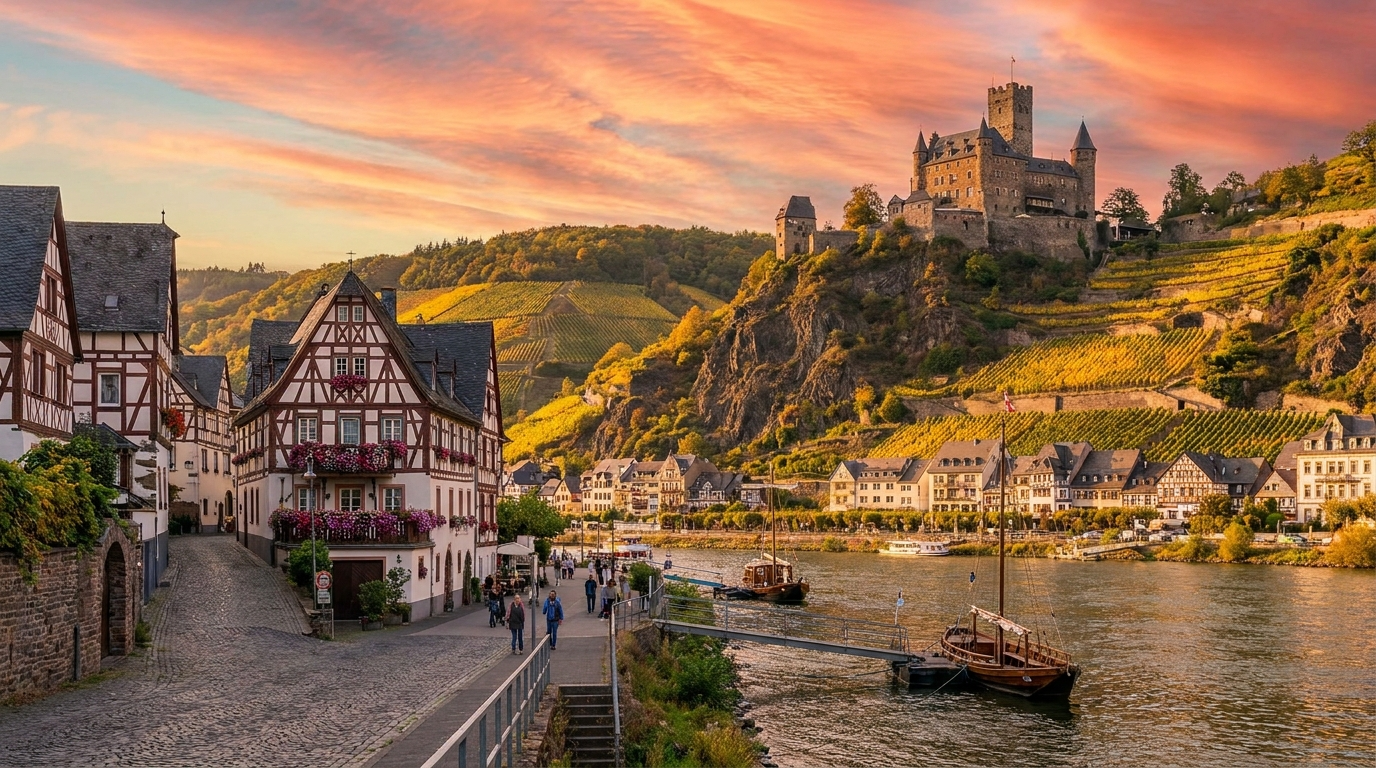
Bacharach Germany is a village of about 1,800 people on the left bank of the Rhine, roughly halfway between Mainz and Koblenz. It sits inside the Upper Middle Rhine Valley, a stretch of river that UNESCO added to its World Heritage list in 2002. The old town still holds its medieval wall, a hilltop castle, an unfinished Gothic chapel and a timber-framed house dated 1368. This guide covers how to get there, what is worth your time once you arrive, what a day costs in effort, and when to go.
Getting to Bacharach Germany
Train Connections and Stations
The easiest way to reach Bacharach Germany is by train. The village sits on the West Rhine Railway, the line that runs along the left bank between Cologne and Mainz. Regional trains stop here throughout the day, and the journey takes about 45 minutes from Koblenz and roughly the same from Mainz. From Frankfurt you usually change once in Mainz, which puts the total at somewhere between 90 minutes and two hours depending on the connection.
Bacharach station is a single platform with a ticket machine and no staffed counter. The historic center begins about three minutes on foot from the platform, through the underpass and across the main road. Check live times on the Deutsche Bahn site before you travel, because the Rhine line closes for engineering work more often than most German routes.
Best Times and Routes for Arrival
Morning trains are worth the early start. A train arriving before 10 AM gives you the old town before the river cruise passengers disembark, and leaves the whole afternoon for the castle and the wall walk. Sit on the river side of the carriage if you can, because the stretch between Bingen and Bacharach runs close enough to the water to see the castles on the opposite bank.
If you plan to see more than one village, look at a Rheinland-Pfalz-Ticket or the Deutschlandticket rather than buying single fares. Both cover regional trains across the whole valley, which changes the economics if you want to stop in Oberwesel or Sankt Goar on the same day.
Flying In and Onward Transport
Frankfurt Airport is the practical gateway, about 90 kilometers away with a direct rail link into Mainz. Frankfurt-Hahn is closer on the map but serves few routes and has no useful train connection, so most visitors end up at Frankfurt regardless. Current fares to Frankfurt look like this:
[tp_in_our_city_fly_shortcodes destination = FRA title = “” limit = 5]
If you land late, or travel with luggage that makes two train changes unappealing, a private transfer from Frankfurt Airport runs door to door in about an hour and a quarter. It costs several times the train fare, so treat it as buying convenience rather than saving money.
Exploring the Medieval Streets of Bacharach Germany
Walking Tour Highlights
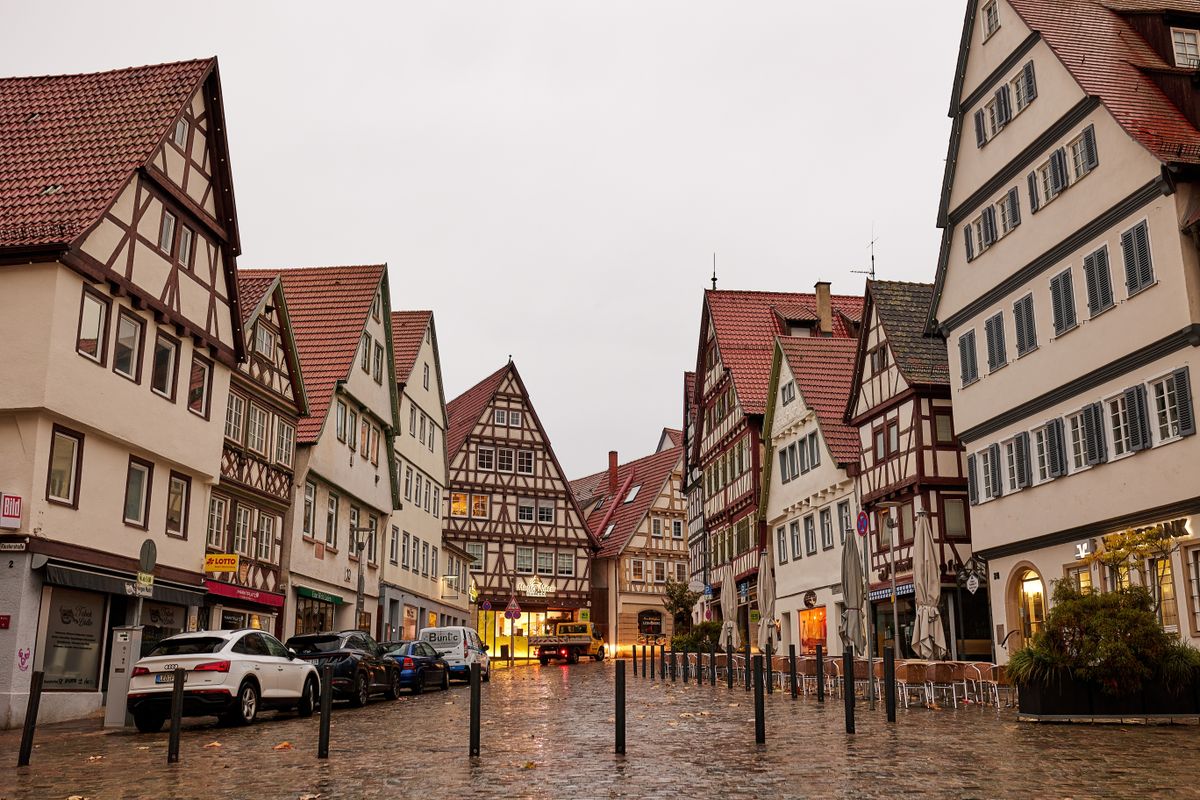
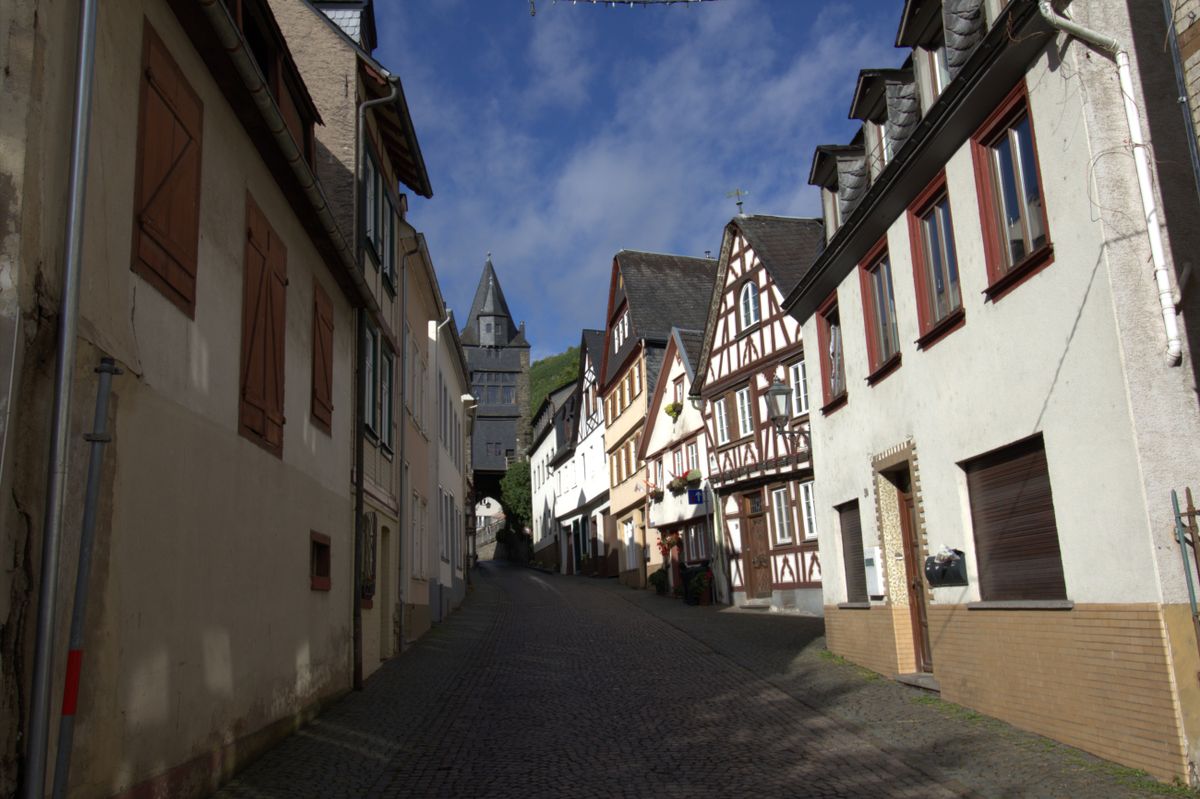
Start at the Steeger Tor, the wooden gate at the northern end of the old town, which is the best preserved of the surviving gates. From there the cobbled lanes run toward Oberstraße, the main street, where the Altes Haus stands. That building dates to 1368 and leans at an angle that photographs better than it sounds. Further along, the Postenturm and the Hutturm still stand on the wall line, and the Liebesturm marks the southern end.
Several towers are ruins rather than buildings. The Diebesturm, the Spitzenturm and the Sonnenturm survive as fragments, which is worth knowing before you go looking for them. The wall itself is continuous enough to walk, and that walk is covered further down.
The Wernerkapelle Above the Town
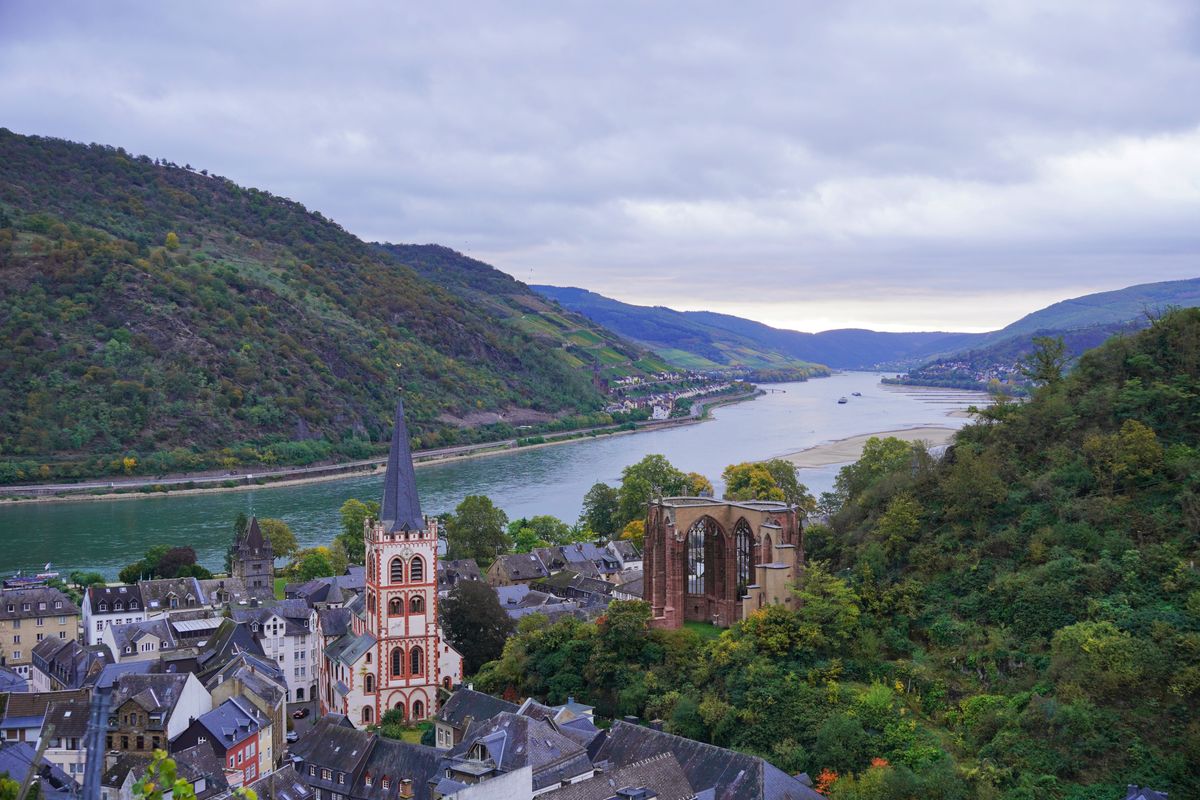
The red sandstone ruin on the slope between the village and the castle is the Wernerkapelle. Work began in the late 13th century and stopped before the chapel was finished, which is why the windows open onto sky. It is the single most photographed structure in Bacharach Germany after the castle, and the short climb to it is the best five minutes you can spend here.
The chapel is named after Werner of Oberwesel, and the cult that grew around him in the 1280s was built on a blood libel against the Jewish communities of the Rhine. The building is a ruin of that history as much as of medieval architecture, and reading the plaque at the entrance is part of visiting it honestly.
Hidden Gems and Photo Spots
The vineyard terraces just above the village stay quiet even in August. A short path leads up from behind the church and gives you the roofline, the chapel ruin and the river in a single frame. Down in the old town, the market square with its flower boxes gives the classic shot, and it is worth returning there in late afternoon when the light comes across the water rather than down onto the roofs.
Visiting Stahleck Castle and Surroundings
Castle History and Architecture
Stahleck Castle first appears in records in the 1130s. French troops destroyed it in the late 17th century during the wars that emptied most of the Rhine castles, and it sat as a ruin until reconstruction work in the 20th century rebuilt the walls and towers on the medieval footprint. The terrace is open to anyone who walks up, whether or not you are staying, and it holds the view that most people come to Bacharach Germany for.
Guided Tours and Access Tips
Guided tours run in the main season and are worth joining for the history you cannot read off the walls. Times change year to year, so confirm at the tourist office on the day. The climb takes about 20 minutes on a path that starts behind the church and gains height quickly. It is steep rather than long, and the surface is uneven in two places, so wear shoes with some grip.
Sleeping Inside the Castle
Stahleck now operates as a DJH youth hostel, which means you can sleep inside a 12th-century castle for the price of a budget hotel room. Rooms range from dormitories to private doubles, and the ones facing the river are the ones to ask for. It books out months ahead for summer weekends. If you want the full list of what the village holds beyond the castle, our guide to things to do in Bacharach goes deeper on each site.
Cultural Experiences and Festivals in Bacharach Germany
Annual Wine Festival
The wine festival runs each autumn and pulls people in from across the valley. Local growers pour their vintages in the streets and the square, traditional food stands run alongside, and there is live music into the evening. Riesling is the grape this stretch of the Rhine is known for, and the festival is the cheapest way to taste a range of it in one afternoon.
Folklore and Local Traditions
Outside the festival, the village keeps smaller traditions going through the year: seasonal markets, storytelling evenings, and church concerts in the Peterskirche. These are not staged for visitors, which is what makes them worth catching. If your dates line up with one, it will tell you more about the place than any guided tour.
Where to Stay in Bacharach Germany
Options Inside the Old Town
Staying inside the walls is the version of this village most people are picturing. Small guesthouses and family-run inns occupy historic buildings, several with rooms looking onto the river or up at the vineyards. There are not many of them. Rooms inside the old town sell out fast in summer, so book a room in Bacharach well before your dates are fixed.
Nearby Hotels and Guesthouses
Just outside the village you will find larger hotels with parking and more space, which suits anyone arriving by car or on a late train. Breakfast included is worth paying for here, because the bakeries do not open early enough for a first train out.
Dining and Local Cuisine
Traditional Dishes to Try
Kitchens here lean on the river and the season. Smoked trout appears on most menus, as do sausages with sauerkraut, and autumn brings game dishes that are worth ordering when you see them. The wine list is the real draw: Rieslings from the terraces you can see from the table.
Recommended Eateries and Cafes
Cafes around the market square handle light meals and coffee through the day, and one of the bakeries on Oberstraße is known well beyond the village for its pretzels. For dinner, book a table at a riverside restaurant, because the terraces fill early in summer and the view is the reason to eat there.
Walking the Town Walls and Vineyards
Route and Difficulty
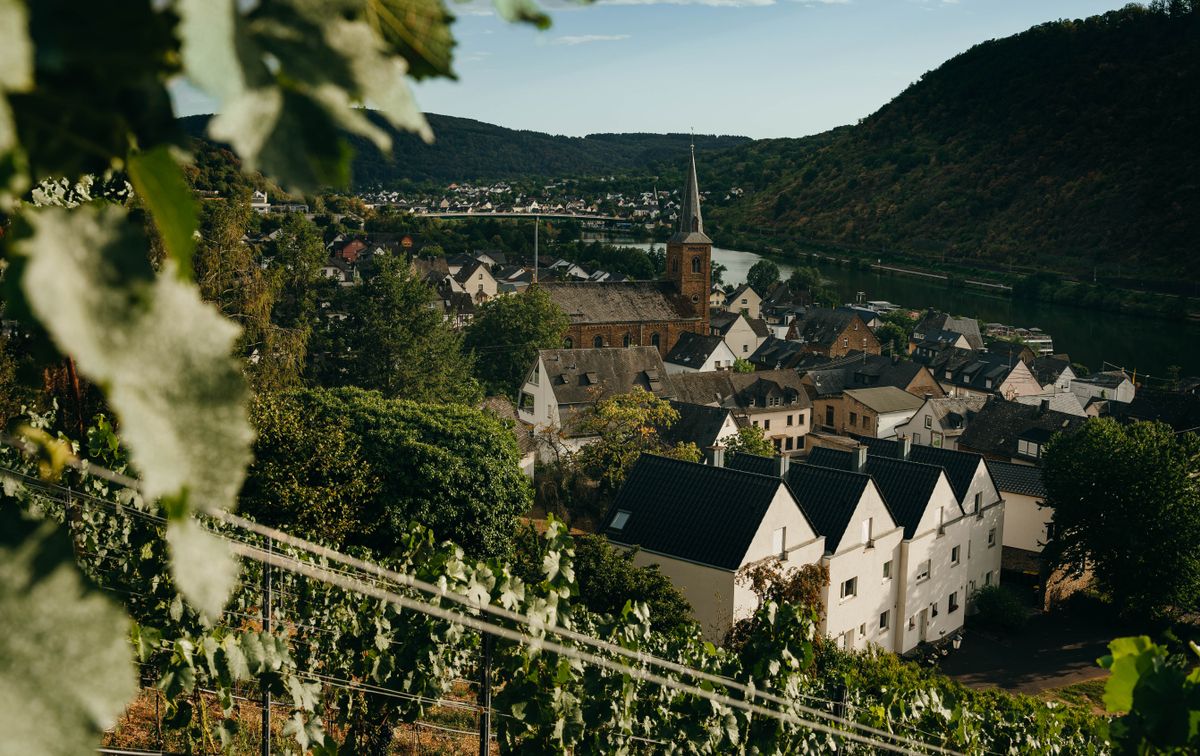
The wall circuit takes about an hour at a normal pace. It includes stairs and several uneven stretches, and one section narrows enough that passing another walker takes coordination. Sturdy shoes matter more than fitness. The reward is the valley from above, with the terraced vineyards climbing the slope behind you.
Best Views and Photo Opportunities
Lookout points along the wall open onto the river and the hills opposite. The one near the Postenturm draws the most people, for good reason. Early morning and the last hour before sunset give the light that makes these photographs work, and both times are quiet. If this kind of walk is what you travel for, the Caminito del Rey in Spain works on the same principle at a much larger scale.
Bacharach Germany as a Day Trip from Frankfurt
Timing the Day
This works as a day trip, and plenty of people do it that way. Leave Frankfurt around 8 AM, change at Mainz, and you are walking through the Steeger Tor before 10. The last useful train back leaves in the early evening, which gives you roughly eight hours on the ground. Buy the return leg when you buy the outbound, because the machine at Bacharach station has been known to be out of service.
What You Can Realistically Fit In
Eight hours covers the old town, the climb to the Wernerkapelle and the castle, the wall circuit, and a long lunch. It does not cover a second village, a vineyard tasting and the castle in the same day. If you want the wine side of the valley as well, stay the night. Solo travelers in particular get more out of an overnight here, and our guide to the best places for solo travel in Europe explains why small towns often beat big cities for a first trip alone.
How Bacharach Compares to Nearby Rhine Villages
Bacharach or Sankt Goar
Sankt Goar has Rheinfels, a far bigger castle ruin, and it sits opposite the Loreley rock. It also has more coach traffic and a main street built around that traffic. Bacharach is smaller, quieter, and better preserved as a village rather than a viewpoint. If castles are the point of your trip, go to Sankt Goar. If the village itself is the point, stay here.
Bacharach or Rüdesheim
Rüdesheim is the busiest town on this stretch of river, with a cable car, a monument on the hill and the Drosselgasse full of music bars. It is a good time and it is nobody’s idea of quiet. The cable car sells out on summer weekends, so it is worth looking at Rhine Valley attraction tickets before you go rather than queueing on the day. Bacharach offers the opposite trade: fewer things to do, and space to do them in. Many people take the train to one and the boat to the other.
Seeing three or four villages in one day is the single case where driving beats the train here, because the regional service is frequent but slow between stops. If that is the plan, renting a car for the valley pays for itself by the second village. For a single base like Bacharach, the train wins on both cost and parking.
Practical Tips for Visiting Bacharach Germany
Visitor Information Centers
The tourist office in the village center carries maps, current event schedules and castle tour times, and the staff speak English. Rhein-Nahe Touristik runs it and publishes opening hours online, which is worth checking in winter when the hours shorten. Pick up the valley-wide brochure if you plan to continue north or south.
Best Season to Visit
Spring and early autumn give the best combination of weather and space. May and September are the sweet spot. The wine festival in autumn is the single best event in the calendar and also the busiest weekend of the year, so decide which of those two things you want. Winter is very quiet, several guesthouses close, and the castle hostel runs a reduced season.
Packing and Preparation Advice
Weather along the Rhine shifts quickly, so bring a layer you can take off. Walking shoes are essential for the cobbles and the vineyard paths. In peak season, book accommodation and any guided tour before you arrive. Cash is still useful in the smaller cafes and at festival stands. Mobile coverage in the gorge drops out in places, and if your plan does not cover Germany, a data eSIM costs less than roaming and works the moment you land.
FAQ About Bacharach Germany
Is one day enough to see Bacharach Germany?
One day covers the old town, the castle and the wall circuit at a decent pace. Two days let you add a vineyard tasting, a second village along the river, or simply slow down. Most visitors who stay overnight say they were right to.
What makes Bacharach Germany a fairytale village?
The combination is specific: half-timbered houses from the 14th century, a wall you can still walk, a castle above the roofs and an unfinished Gothic chapel between the two, with vineyards on the slope behind. Few places on the Rhine have all of it in one frame.
How do you get around Bacharach Germany?
On foot. The village is small enough that walking covers everything, and the climbs to the chapel and the castle have no vehicle alternative. Regional trains connect you to the neighbouring towns in 10 to 20 minutes.
Are there family-friendly things to do in Bacharach Germany?
Yes. The castle grounds suit children, the wall walk is manageable for anyone steady on stairs, and the seasonal markets usually run activities for families. The steep sections of the chapel path are the one thing to watch with small children.
When is the best time to visit Bacharach Germany?
May and September give mild weather and thinner crowds. The autumn wine festival is the highlight of the year and brings the largest crowds of the year with it. Winter is quiet to the point where some places close.
Can you book guided tours in Bacharach Germany?
Guided tours run seasonally, mostly around the castle and the vineyards. Times are set locally and change year to year, so the tourist office is the reliable source rather than any listing site.
Conclusion
Bacharach Germany rewards a visitor who slows down. The wall, the chapel ruin and the castle can all be seen in a day, but the village reads differently once the day-trippers have gone and the light drops behind the vineyards. Plan the trains, book a room early if you are coming in summer, and give yourself the evening. It is a short stop on the map and a long one in memory.