

In this guide 29
- What Is the Caminito del Rey?
- Caminito del Rey Tickets and Prices
- Best Time to Visit the Caminito del Rey
- How to Get to the Caminito del Rey
- Rules and What to Bring
- What the Walk Is Really Like
- Things to Do Near the Caminito del Rey
- Where to Stay Near the Caminito del Rey
- Caminito del Rey FAQ
- Final Thoughts on the Caminito del Rey
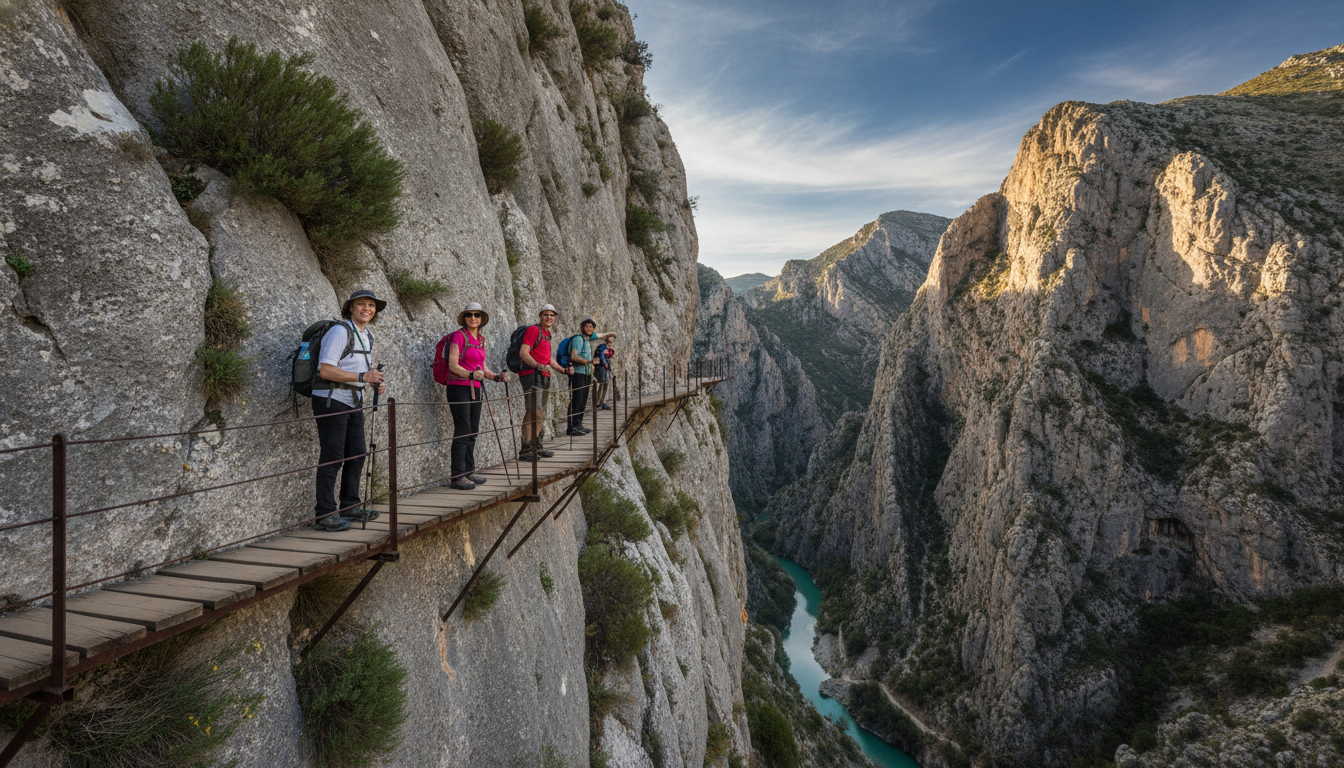
For fifteen years the Caminito del Rey was closed because people kept dying on it. The concrete had crumbled off the walkway, leaving bare steel rods a hundred metres above the river, and the people who came anyway climbed around the barriers to get on it.
The Caminito del Rey reopened in 2015 with a new walkway bolted above the old one. You can still see the original underneath you as you walk, which is the whole reason the place is worth the trip.
Here is what it costs, when to go, how to get there, and what the walk is actually like.
What Is the Caminito del Rey?
Where it is
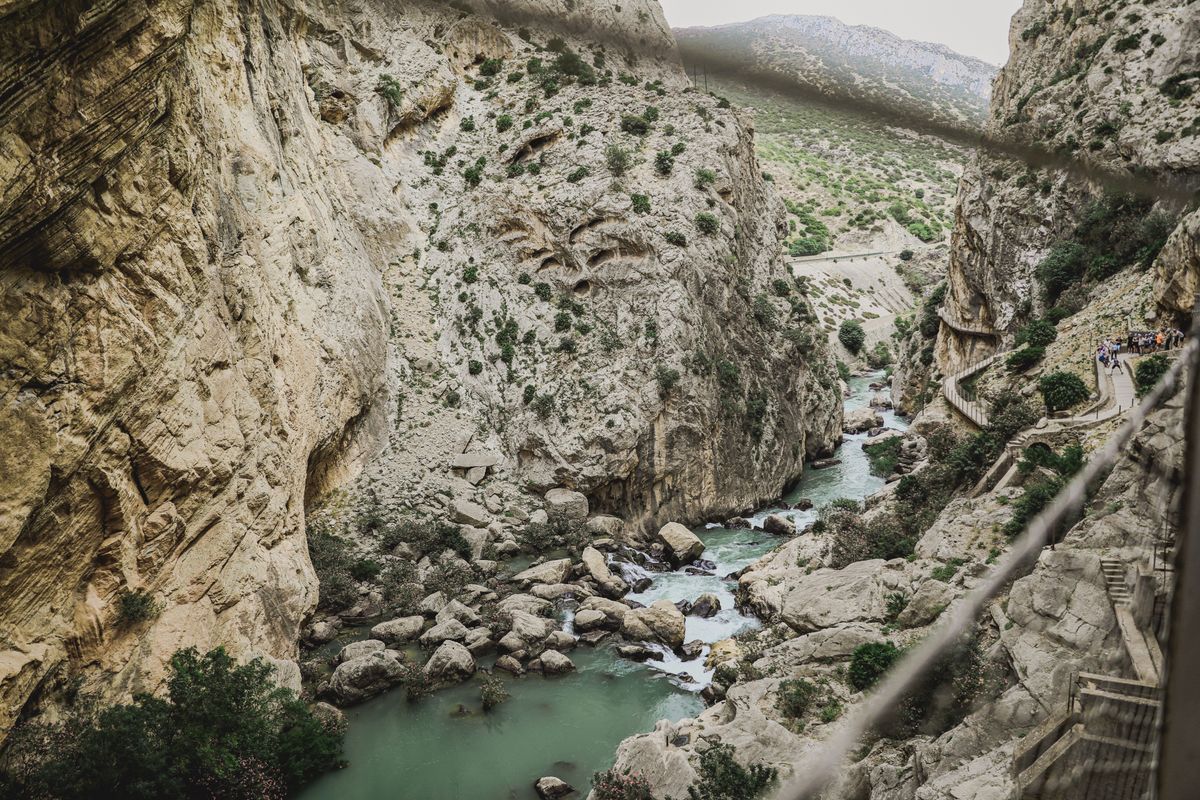
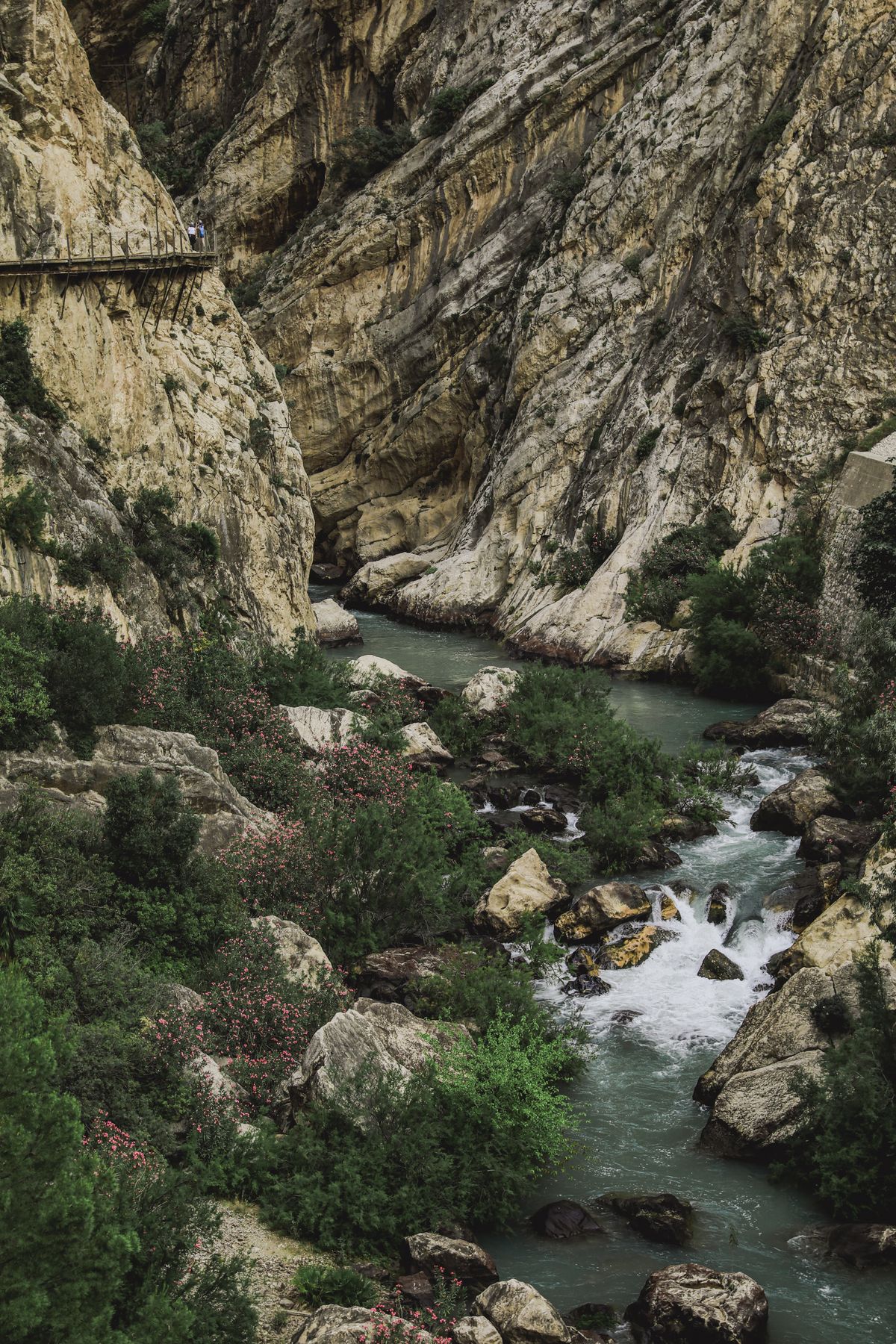
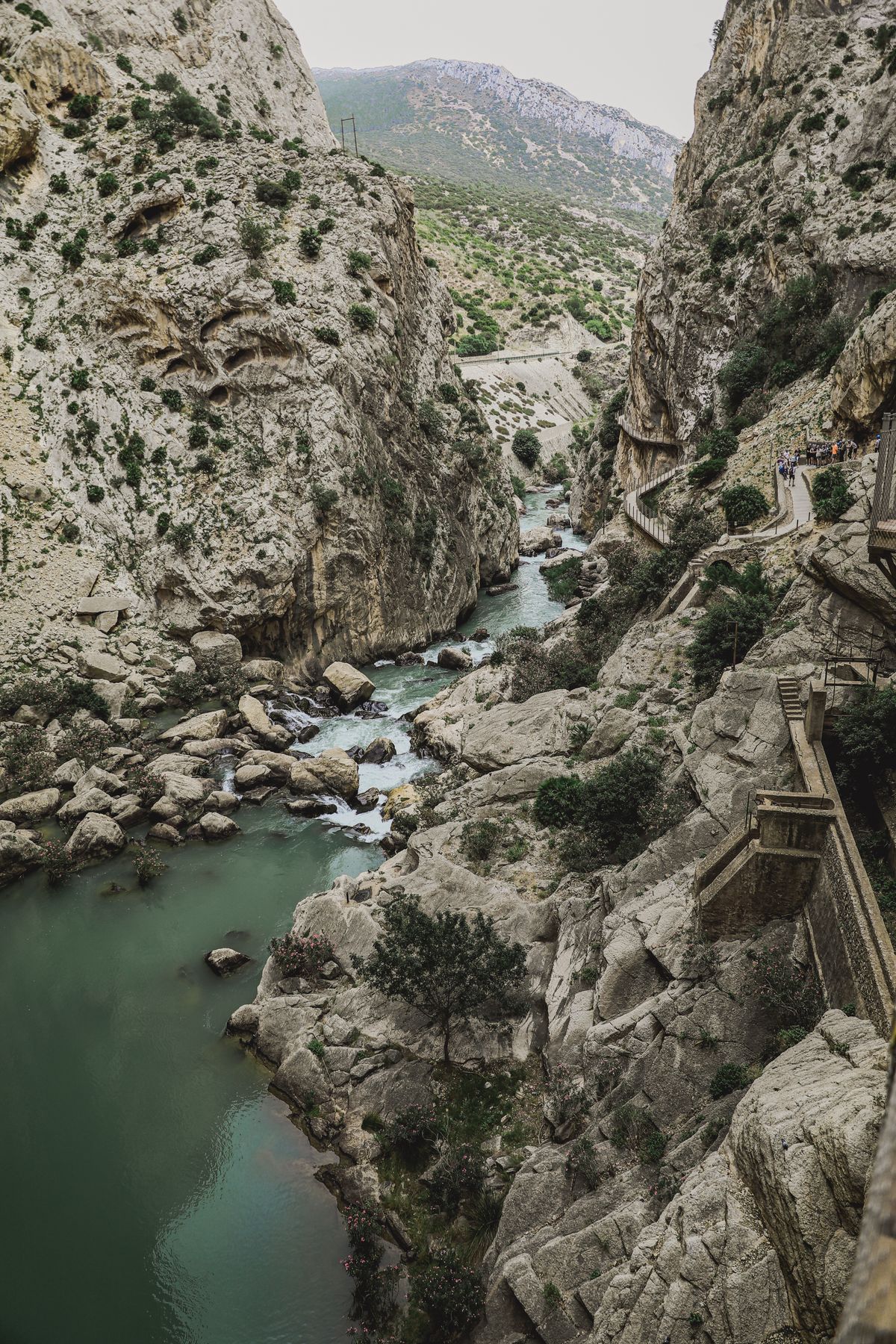
The Caminito del Rey runs through the Desfiladero de los Gaitanes, a limestone gorge in the middle of Malaga province. The Visitors’ Reception Centre sits at Puerto de las Atalayas, 57.7 km from Malaga city and 6 km from the Ardales crossing.
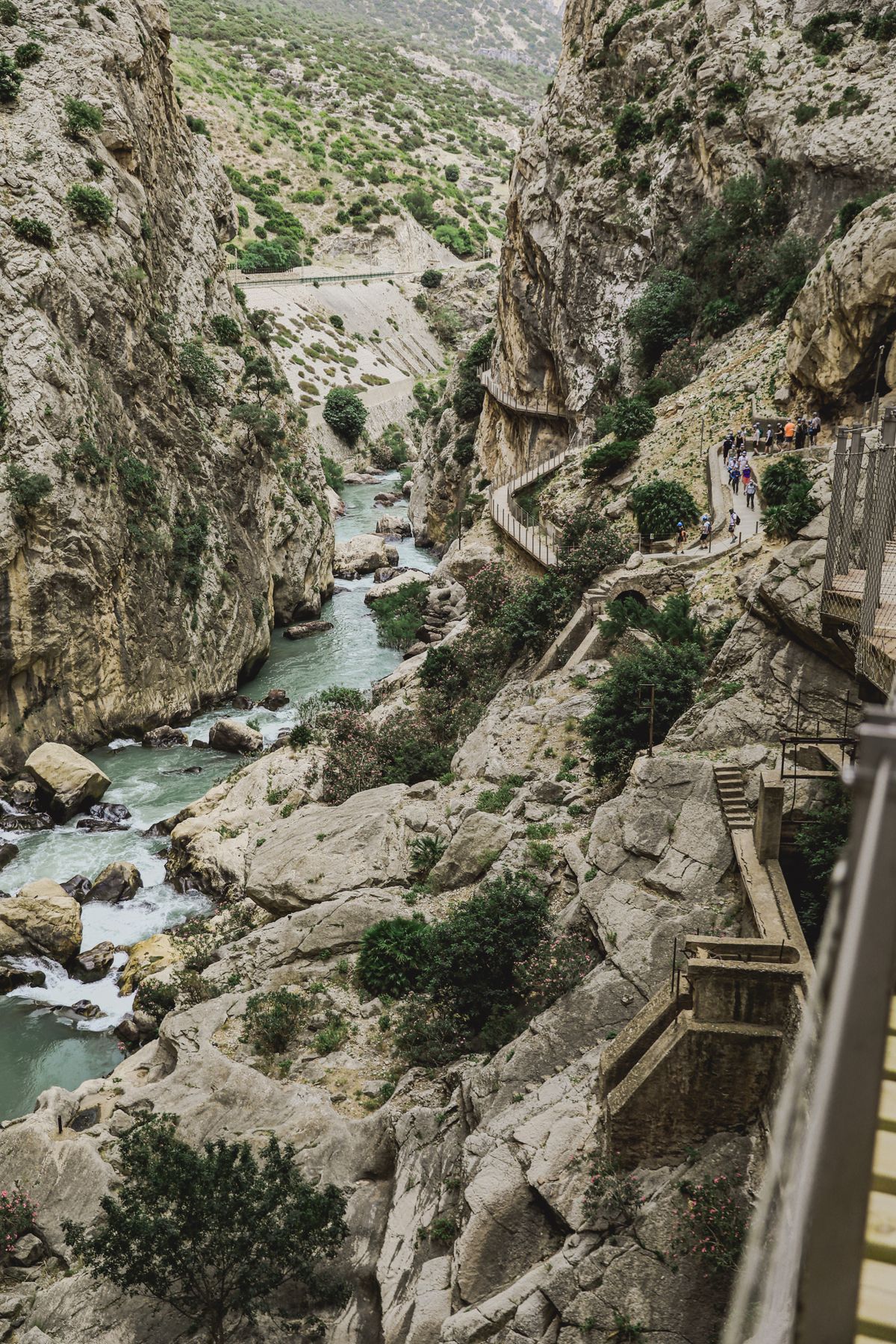
The full route is 7.7 km, of which 2.9 km is boardwalk pinned to the gorge wall. The rest is forest track at either end. Most people take three to four hours door to door.
Why it was built, and why it is called the King’s path
It was built between 1901 and 1905, and not for tourists. Workers at the Chorro Falls and Gaitanejo Falls hydroelectric plants needed a way to cross between the two, move materials, and inspect the water channel. The walkway was infrastructure.
In 1921 King Alfonso XIII walked it to open the Conde del Guadalhorce dam, and the name stuck.
The reputation
Two fatal accidents in 1999 and 2000 closed both entrances. By then the walkway had been decaying for decades and the nickname “the most dangerous path in the world” had attached itself to the place, helped along by videos of people edging across the gaps.
Andalusia’s regional and local governments split a 9 million euro restoration, took about three years over it, and reopened the Caminito del Rey on 29 March 2015. The path you walk now is a new structure. The old one is still bolted to the rock a metre below, and looking down at it is the closest the walk comes to frightening.
Caminito del Rey Tickets and Prices
What it costs
- General admission: 10 euros
- Official guided visit: 18 euros, in Spanish or English, groups capped at 30
- Shuttle bus between the two entrances: 2.50 euros
- Parking at the Reception Centre: 2 euros a day
So a couple driving themselves, walking unguided and using the shuttle back pays about 27 euros for the day. It is one of the cheaper headline attractions in Andalusia.
Where to book, and where you cannot
Book through the official Caminito del Rey booking platform. There is a limit of ten tickets per purchase.
One thing catches people out: you cannot buy tickets at the Visitors’ Reception Centre. Tickets are sold online, or at the ticket office at the northern access. Turning up at the Reception Centre expecting to pay at the door is a wasted drive.
Caminito del Rey slots sell out, especially at weekends and through spring and autumn. Book ahead rather than hoping.
The age rule nobody expects
Children under 8 cannot go on the Caminito del Rey at all. There is no exception for being carried.
Anyone over 8 has to bring original ID or a Family Book so staff can check their age at the entrance. A photo on your phone will not do.
Best Time to Visit the Caminito del Rey
Opening hours
Summer, roughly April to October: 9:00 to 17:00, with last entry in the early afternoon.
Winter, November to March: 9:30 to 15:00, with last entry around midday.
The exact last-entry time shifts through the year, so check it against the day you are booking rather than assuming.
When it is shut
The Caminito del Rey is closed on 24 and 25 December and on 31 December and 1 January. Some Mondays are closed depending on the season. High wind or heavy rain shuts it at short notice, which is worth knowing if you have driven from the coast.
Which months to aim for
Spring and autumn. April, May, September and October give you a comfortable walking temperature and a gorge that still has water moving through it.
July and August are hot and there is almost no shade on the boardwalk. If summer is your only option, take the first slot of the day.
Winter is quieter and perfectly walkable, but the shorter hours mean a tighter schedule, and closures for weather are more likely.
How to Get to the Caminito del Rey
By car
The Caminito del Rey is an hour or so from Malaga city by road. Park at the Visitors’ Reception Centre for 2 euros a day and book the parking with your ticket.
The catch is that the walk is one way. You start at the northern entrance and finish at the southern one, so your car ends up an hour’s walk behind you. That is what the shuttle is for.
By train
El Chorro station sits at the southern end of the route, which makes the train genuinely practical here in a way it is not for most Spanish day trips. Trains run from Malaga.
Arriving by train you take the shuttle bus north to the start, walk south, and finish at the station.
The shuttle bus
2.50 euros, connecting the two entrances. Reserve it when you buy your ticket. Plan which direction you need it in before you arrive, because getting this backwards is the most common way people lose an hour.
If you are working out the wider trip, our guide to the best places for solo travel in Europe covers Seville, which is an easy add-on from here.
Rules and What to Bring
Closed shoes with grip. The boardwalk is fine but the forest track at either end is loose stone, and people do turn ankles in sandals.
Original ID for everyone in your group, including children over 8.
Water. There is nowhere to buy any once you are on the path, and the gorge holds heat.
A hat and sunscreen from May onwards. Shade on the boardwalk is close to nonexistent.
A helmet is issued at the entrance and you wear it for the whole walk. Rockfall is the reason.
Leave the drone and the tripod. Neither is permitted. Large or bulky bags are not allowed either, so bring a small daypack rather than a hiking rucksack.
Two rules people find out too late: anyone under 18 has to be accompanied by an adult, and pets are not allowed at all except assistance dogs.
What the Walk Is Really Like
Easier than the photographs suggest, and that surprises most people.
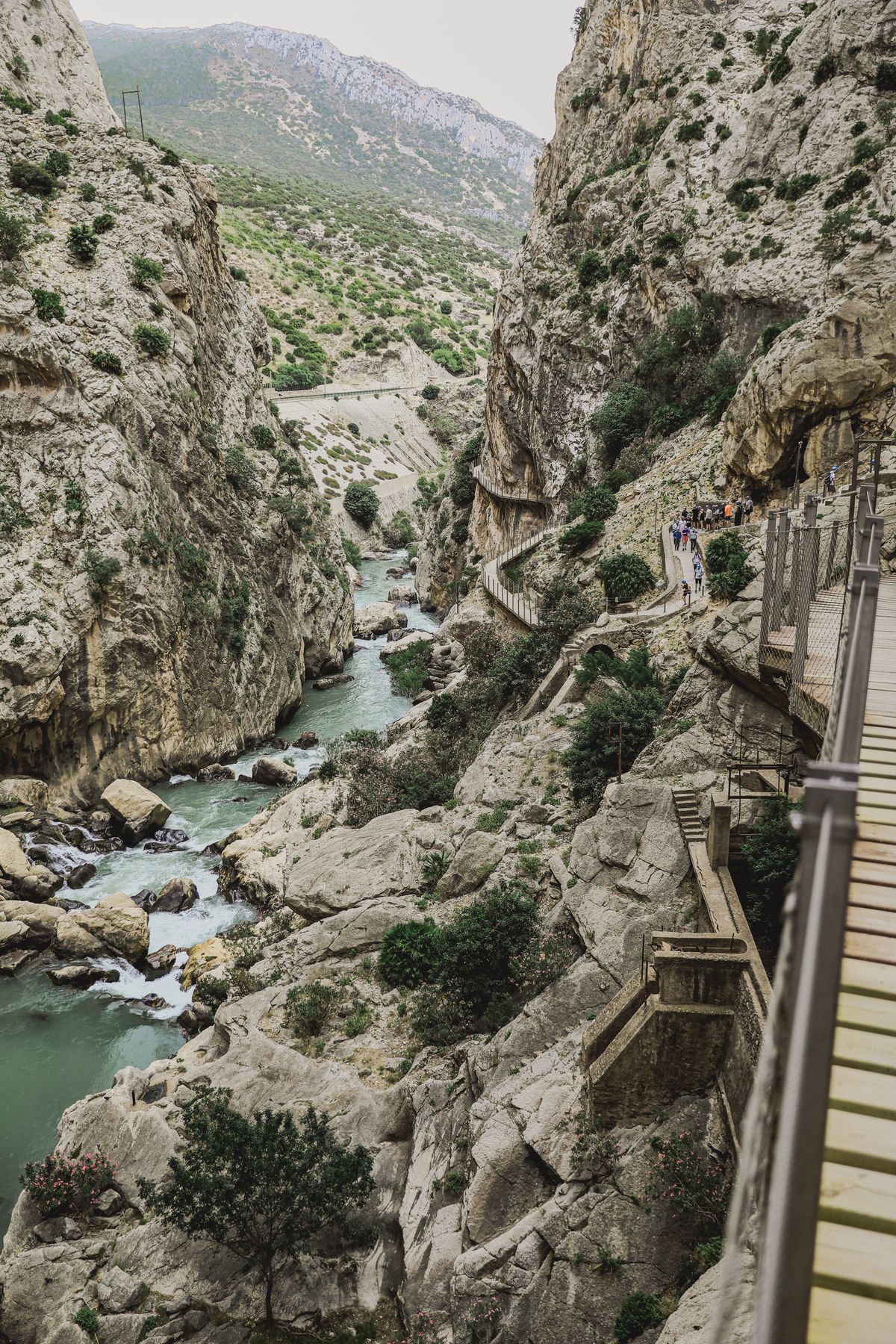
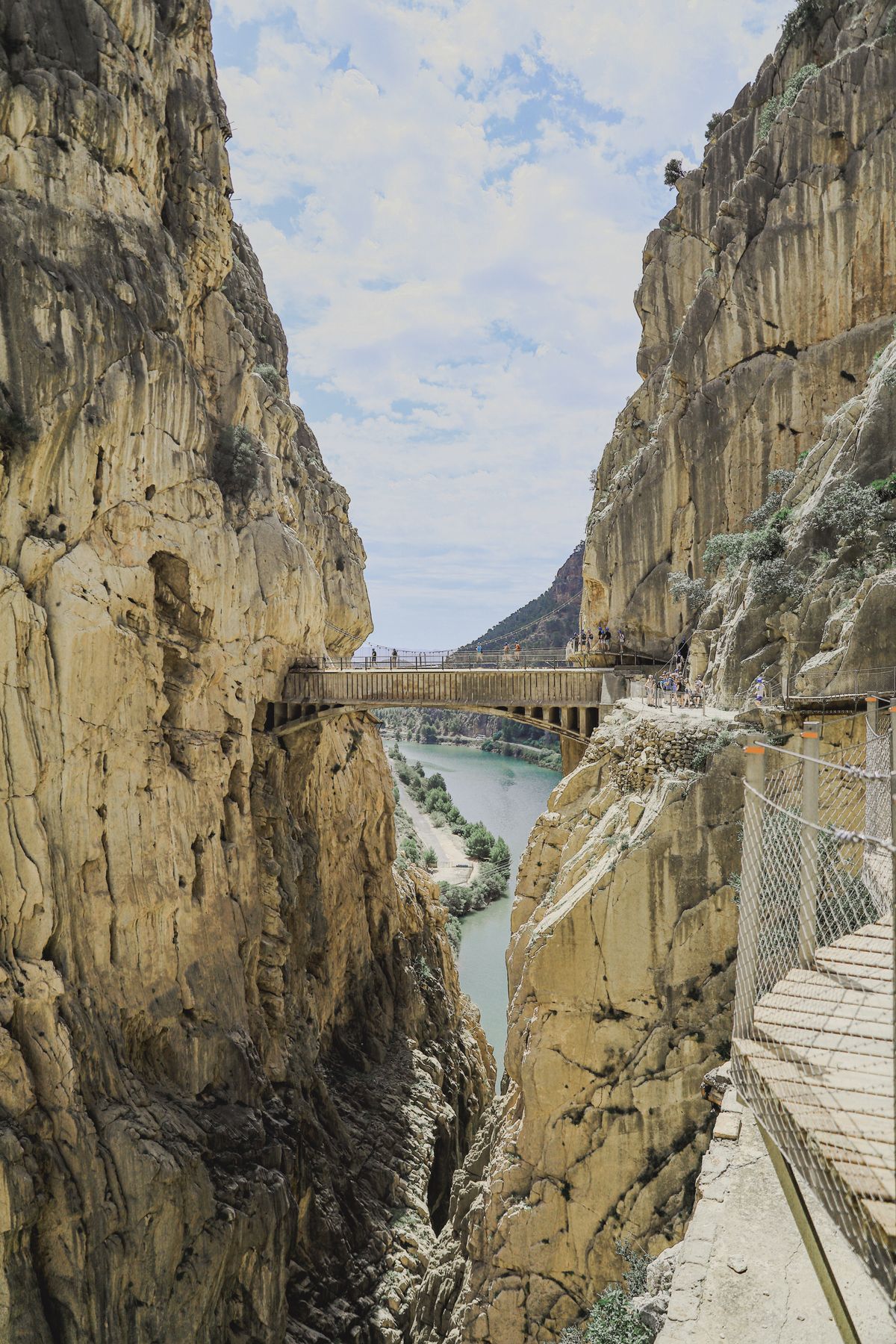
The boardwalk is about a metre wide with a handrail and a wire barrier the whole way. There is no scrambling, no exposure you have to negotiate, and no section where you need your hands. If you can walk 8 km on the flat you can do this.
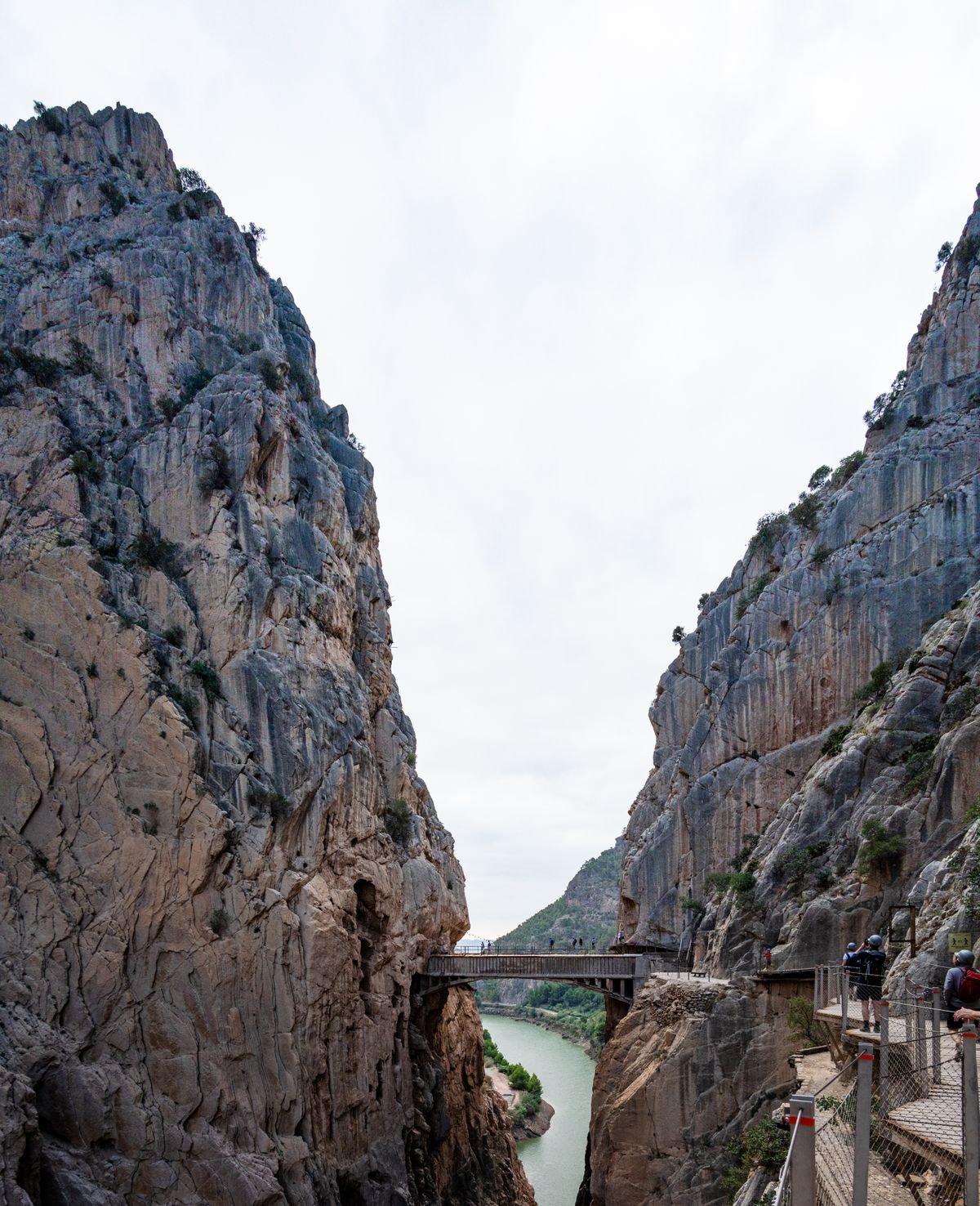
What it is not is a walk for anyone who dislikes heights. The gorge drops around 100 metres below the boards, and sections of the floor are open grating you can see straight through. The hanging bridge across the gorge moves a little as people cross it.
The three to four hours is mostly access track. The spectacular part, the 2.9 km of boardwalk, goes by faster than you expect. Groups enter in timed slots so it rarely feels crowded, though the bridge and the glass platform create a bottleneck.
The best thing about it is not the drop. It is looking down and seeing the 1905 path directly beneath your feet: a strip of broken concrete and rusted rail, no wider than a plank, with nothing beside it. Workers walked that to get to a shift.
Things to Do Near the Caminito del Rey
The Caminito del Rey takes half a day, so most people pair it with something else nearby.
The Ardales Cave holds Palaeolithic art and sits a short drive from the gorge. Visits are limited and booked separately.
Bobastro is a Mozarabic church carved directly into the rock, the remains of a ninth century rebel stronghold. It is quiet, strange, and almost empty compared with the path.
The Necropolis of Las Aguilillas is a prehistoric burial site in the same small area.
The three reservoirs around El Chorro, including the Conde del Guadalhorce that Alfonso XIII came to open, are the turquoise water in most photographs of the region. There are places to swim in summer.
All of the above sit inside a 20 km radius, and together they form the basis of the area’s UNESCO World Heritage candidacy.
Where to Stay Near the Caminito del Rey
El Chorro puts you at the southern entrance and next to the station. It is small, geared to climbers, and books out early.
Ardales is a white village near the northern entrance, with more places to eat and a normal town to walk around in the evening.
Malaga works as a base if you have a car and want a city at the end of the day. An hour each way is a reasonable trade.
Antequera, 51 km from the Reception Centre, is the option people miss. It is a proper Andalusian town with its own reasons to visit.
Caminito del Rey FAQ
How much does the Caminito del Rey cost?
10 euros for general admission and 18 euros for the official guided visit. The shuttle bus is 2.50 euros and parking is 2 euros a day.
Is the Caminito del Rey dangerous?
Not now. The walkway that earned the reputation was closed in 2000 after two fatal accidents and replaced in 2015. The current path has handrails and barriers the whole way. It is exposed, not dangerous.
Can children do the Caminito del Rey?
Only from age 8. Under 8 is not allowed, and everyone over 8 must show original ID or a Family Book at the entrance.
How long does it take?
Three to four hours for the full 7.7 km, including the access tracks at both ends. The boardwalk section itself is 2.9 km.
Do I need to book in advance?
Yes. Slots sell out at weekends and through spring and autumn, and you cannot buy tickets at the Visitors’ Reception Centre. Book online or at the northern access ticket office.
Is it one way?
Yes, north to south. The 2.50 euro shuttle bus connects the two entrances so you can get back to your car or the station.
What if the weather is bad?
The path closes at short notice in high wind or heavy rain. Check before you set off, particularly in winter.
Final Thoughts on the Caminito del Rey
The Caminito del Rey is a three to four hour walk that costs ten euros, and it is one of the few famous attractions in Spain that is not overpriced for what it is.
Go in spring or autumn, book weeks ahead, bring ID for everyone, and work out your shuttle direction before you arrive. Those four things cover almost everything that goes wrong for people.
And when you are on the boardwalk, look down. The old path is right there, and it explains the entire reputation in about two seconds.