

In this guide 33
- Why Bacharach Is Worth Visiting
- How to Get to Bacharach Without a Car
- Best Things to Do in Bacharach on Foot
- Burg Stahleck: The Castle Above Bacharach
- Hiking Around Bacharach
- Riesling and Wine Tasting in Bacharach
- Where to Stay in Bacharach
- When to Visit Bacharach
- A Practical One-Day Bacharach Itinerary
- Bacharach FAQ
- Plan Your Bacharach Stay
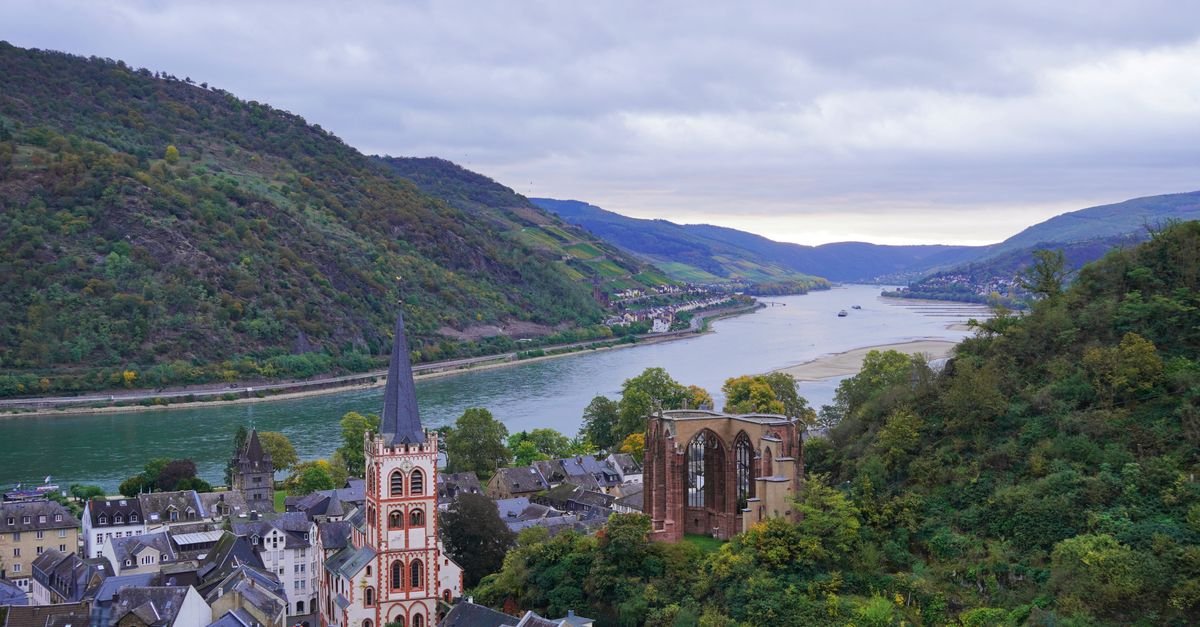
The best things to do in Bacharach are simple, walkable, and tied closely to the Rhine: climb to a castle, follow medieval walls, hike through steep vineyards, and taste the Riesling grown on the hills above town. This small village in Germany’s Upper Middle Rhine Valley is easy to visit independently, especially if you arrive by train and spend at least one night.
Bacharach can look like a quick photo stop from a river cruise, but I think that misses the point. The village becomes much more enjoyable when you have time to wander without a schedule, pause for a glass of wine, and see the old streets after the daytime crowds have moved on. Here’s how I’d plan a visit, including where to hike, where to stay, and what deserves your time.
Why Bacharach Is Worth Visiting
The things to do in Bacharach are worth a trip because the village combines a compact medieval town with castle views, vineyard trails, local wine, and straightforward public transport. You don’t need a car, a packed itinerary, or a large budget to experience the best of it.
The village sits on the west bank of the Rhine, roughly between Mainz and Koblenz, inside the UNESCO-listed Upper Middle Rhine Valley. This is the famous castle country of the Rhine, where vineyards climb the slopes and historic fortresses appear above the river. Bacharach has a particularly appealing mix of atmosphere and practicality: the old town is small enough to explore on foot, but the surrounding hills give you proper walking routes when you want more than cobbled streets.
I’d allow one full day for the main things to do in Bacharach, the central sights and the castle, then add a second day if you want to hike one of the longer Rhine trails or take a relaxed boat trip. If you’re comparing destinations for a solo trip, Bacharach has the same low-pressure appeal I look for in the best places for solo travel in Europe: it’s easy to navigate, and you can fill an evening without needing a group.
How to Get to Bacharach Without a Car
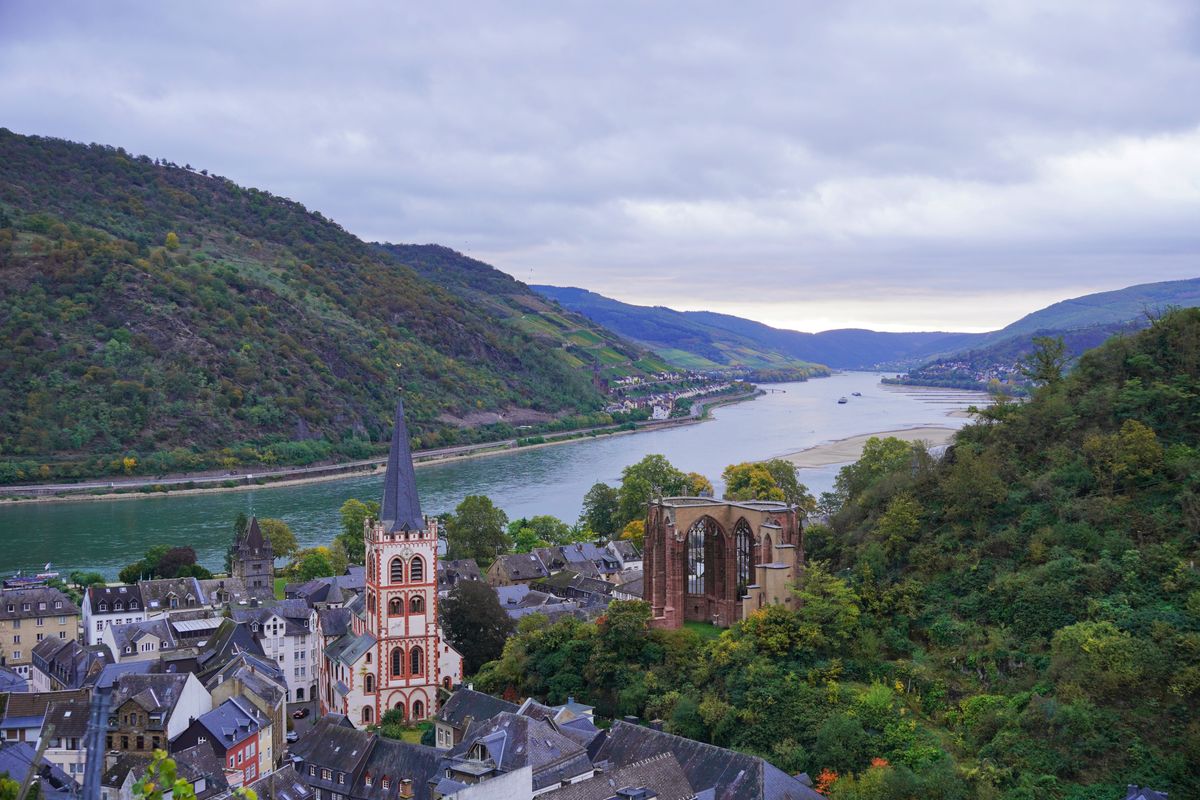
The easiest way to reach Bacharach is by train, while boats and the riverside road offer scenic alternatives.
By train
Bacharach is on the railway line running along the west bank of the Rhine between Mainz and Koblenz. The station is about a ten-minute walk from the old town, with the river beside you for part of the route. Connections from Frankfurt and Frankfurt Airport make the village surprisingly easy to add to a wider Germany itinerary.
Arriving by train also removes one of the main annoyances of driving here: parking. Once you’re in Bacharach, the old town, riverfront, wine shops, restaurants, and lower trailheads are all close enough to reach on foot.
By boat
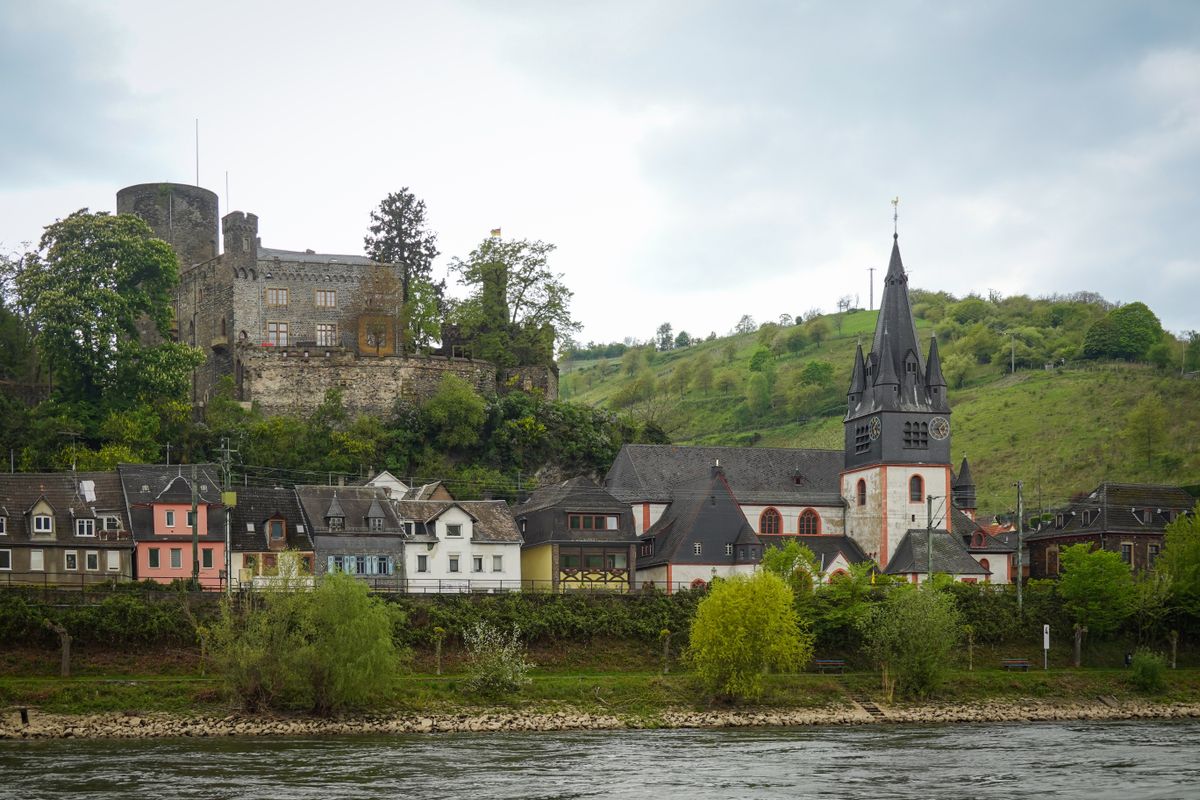
Rhine passenger boats stop at Bacharach during the cruising season. Arriving from the water gives you the classic approach, with the village, church towers, vineyards, and Burg Stahleck rising above the river. You can make the journey one way and return by train, but check the current boat timetable before building your day around it.
By car
The B9 follows the west bank of the Rhine and passes through Bacharach. A car can help if you’re exploring several villages or trailheads, but it isn’t necessary for Bacharach itself. I’d choose the train unless you’re already driving through the valley, because the village is compact and parking can be more trouble than it’s worth.
Best Things to Do in Bacharach on Foot
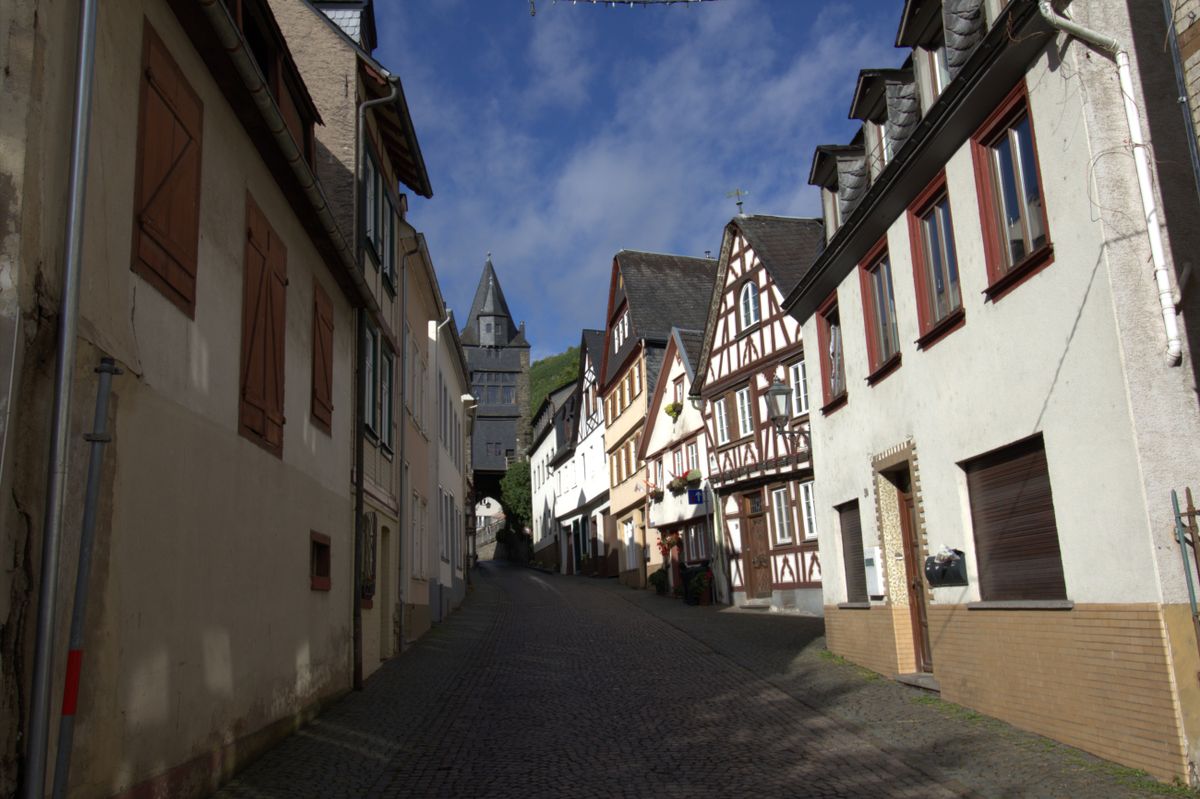
The best things to do in Bacharach on foot are the town-wall circuit, Wernerkapelle, Peterskirche, Oberstraße, the Altes Haus, and the climb toward Burg Stahleck.
Walk the medieval town walls
The Stadtmauer-Rundweg follows much of Bacharach’s medieval fortification and is the most rewarding introduction to the village. Allow around an hour at an unhurried pace, with extra time for photographs and viewpoints.
From the walls, you see Bacharach from above rather than simply moving between its streets. Look for the towers around the old town, including the Holzmarktturm near the Wood Market and the Postenturm among the vineyards. The route also makes the village’s layout easier to understand: defensive walls below, steep slopes behind, and the Rhine opening out in front.
Wear shoes with a decent sole. This isn’t a strenuous hike, but medieval paths and steps are less forgiving than the smooth promenade beside the river.
Stop at Wernerkapelle
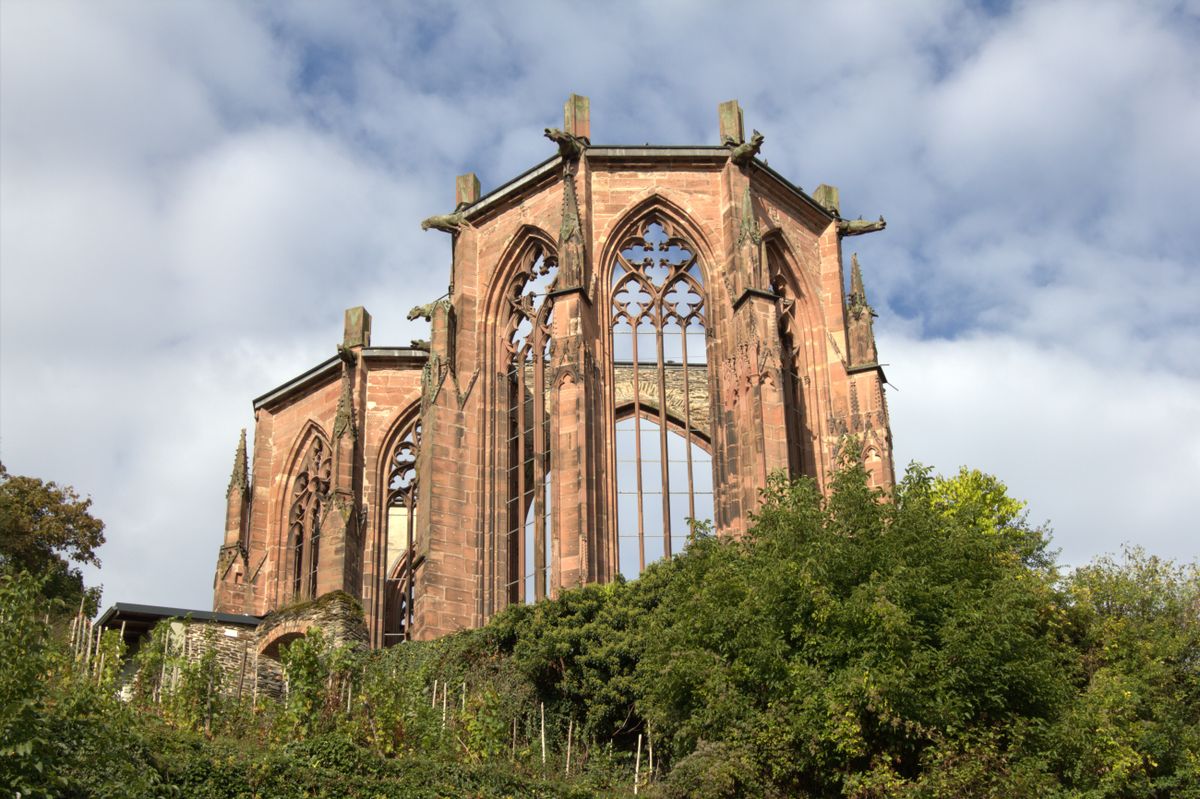
Wernerkapelle is a Gothic chapel ruin on the slope below Burg Stahleck. Its red sandstone tracery remains visible against the hillside, while much of the building behind it has disappeared. The ruin is especially atmospheric because it feels connected to the landscape rather than separated from it as a formal attraction.
You’ll pass Wernerkapelle on the route toward the castle, so it doesn’t need a separate detour. Take a few minutes here before continuing uphill.
Visit Peterskirche
Peterskirche stands in the centre of Bacharach and combines Romanesque and Gothic elements. Medieval frescoes survive inside, making this a worthwhile short stop even if churches aren’t usually the main reason you travel.
It’s the kind of place I’d visit between a morning walk and lunch rather than plan an entire outing around. Bacharach works best when you leave room for these small discoveries.
Explore Oberstraße and the Altes Haus
Oberstraße is the main street through the old town, lined with half-timbered buildings and small businesses. The Altes Haus is the standout: a historic timber-framed house that visibly leans and looks almost too precarious to be real.
Continue along the street to see the Alte Münze, the former mint, and the Posthof. You don’t need a ticket or a tour to enjoy this stretch. Just walk slowly, look up at the upper floors, and notice how many buildings reveal their age through uneven walls and timber details.
Find the Malerwinkel
Malerwinkel means “Painters’ Corner,” a viewpoint associated with the Romantic artists who came to the Rhine in the nineteenth century. It sits where the built-up village gives way to streams, slopes, and vineyards.
The appeal isn’t a single monument. It’s the transition from town to hillside, where the Rhine landscape starts to feel much larger than Bacharach’s narrow streets.
Burg Stahleck: The Castle Above Bacharach
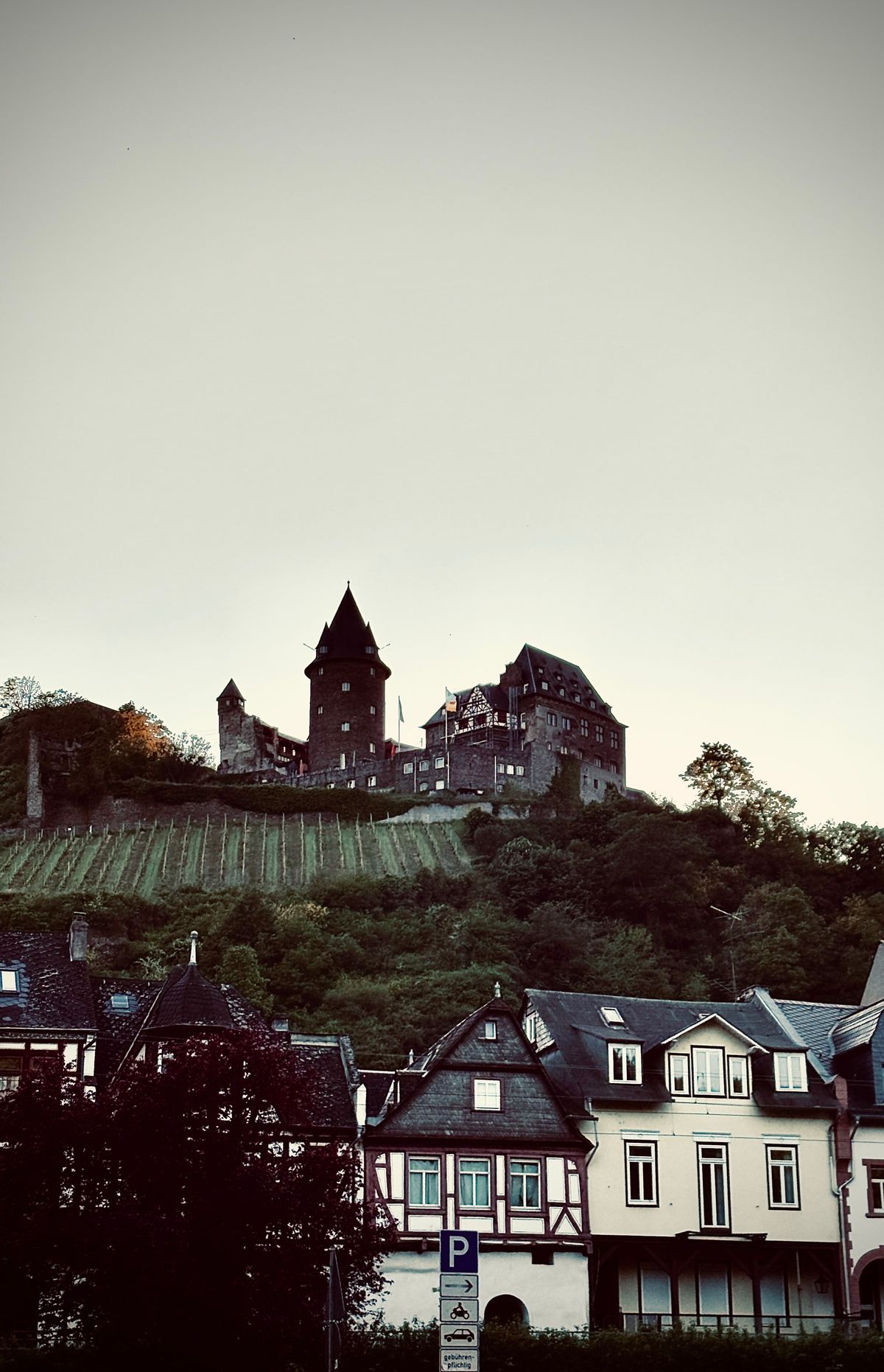
Burg Stahleck is the castle above Bacharach and one of the rare Rhine fortresses where travelers can actually spend the night.
The castle dates back to the twelfth century and now operates as a DJH youth hostel. Accommodation includes dorms as well as private rooms, making it one of the most interesting budget stays in the Rhine Valley. Availability, room types, and meal arrangements can change, so check the hostel’s current details before booking.
The climb from the village is short but steep. The path passes Wernerkapelle and continues through vineyard terraces, eventually opening onto views along the river in both directions. Even if you aren’t staying at the hostel, the climb is one of the essential things to do in Bacharach.
Staying at Burg Stahleck has one big advantage: you experience Bacharach before the day visitors arrive and after they leave. That quiet stretch is when the village feels most like a real community rather than a stop on a sightseeing route.
If the castle is full, look for a guesthouse or small hotel along Oberstraße and the surrounding lanes. Staying in the old town keeps your mornings easy and puts dinner, wine tasting, and the river within walking distance.
Hiking Around Bacharach
Hiking around Bacharach means following vineyard paths and sections of the Rheinburgenweg, a long-distance trail that links castles and viewpoints along the west bank of the Rhine.
Oberwesel to Bacharach
The route from Oberwesel to Bacharach covers about 13.2 kilometres, includes roughly 217 metres of ascent, and is generally rated moderate. Most hikers allow four to five hours. Along the way, you pass vineyard and agricultural landscapes, viewpoints toward the Rhine, and Burg Schönburg above Oberwesel.
The descent into Bacharach is the part to take seriously. The trail drops steeply beside the northern town walls and includes steps, including a section of metal staircase. Good footwear matters, particularly after rain.
This is a strong choice if you want Bacharach to be the destination at the end of a proper day hike. You can arrive by train in Oberwesel and finish near Bacharach’s station, avoiding the need to arrange a car.
Bacharach to Trechtingshausen
The next Rheinburgenweg stage heads north from Bacharach toward Trechtingshausen. It begins by climbing toward Burg Stahleck, so the castle becomes part of the route rather than a separate outing.
This is better suited to hikers who want a full trail day, not travelers looking for a gentle village stroll. Bring water, check the weather, and confirm your return transport before setting off. Trail logistics along the Rhine can be simple, but the village-to-village connections don’t always match the pace of a long hike.
Shorter walks
For a shorter itinerary, combine the two things to do in Bacharach that give the most view for the least effort: the town-wall circuit and the climb to Burg Stahleck, taking in Wernerkapelle on the way. Together, they give you the best mix of history, elevation, and Rhine views without committing to a full trail stage.
There are also cycling routes beside the river and more demanding paths in the hills beyond the town. If you want to compare this kind of dramatic, managed hiking experience with a very different one, our Caminito del Rey guide covers a cliff walk in southern Spain. The terrain and planning are different, but both reward travelers who build a day around the route instead of rushing through it.
Riesling and Wine Tasting in Bacharach
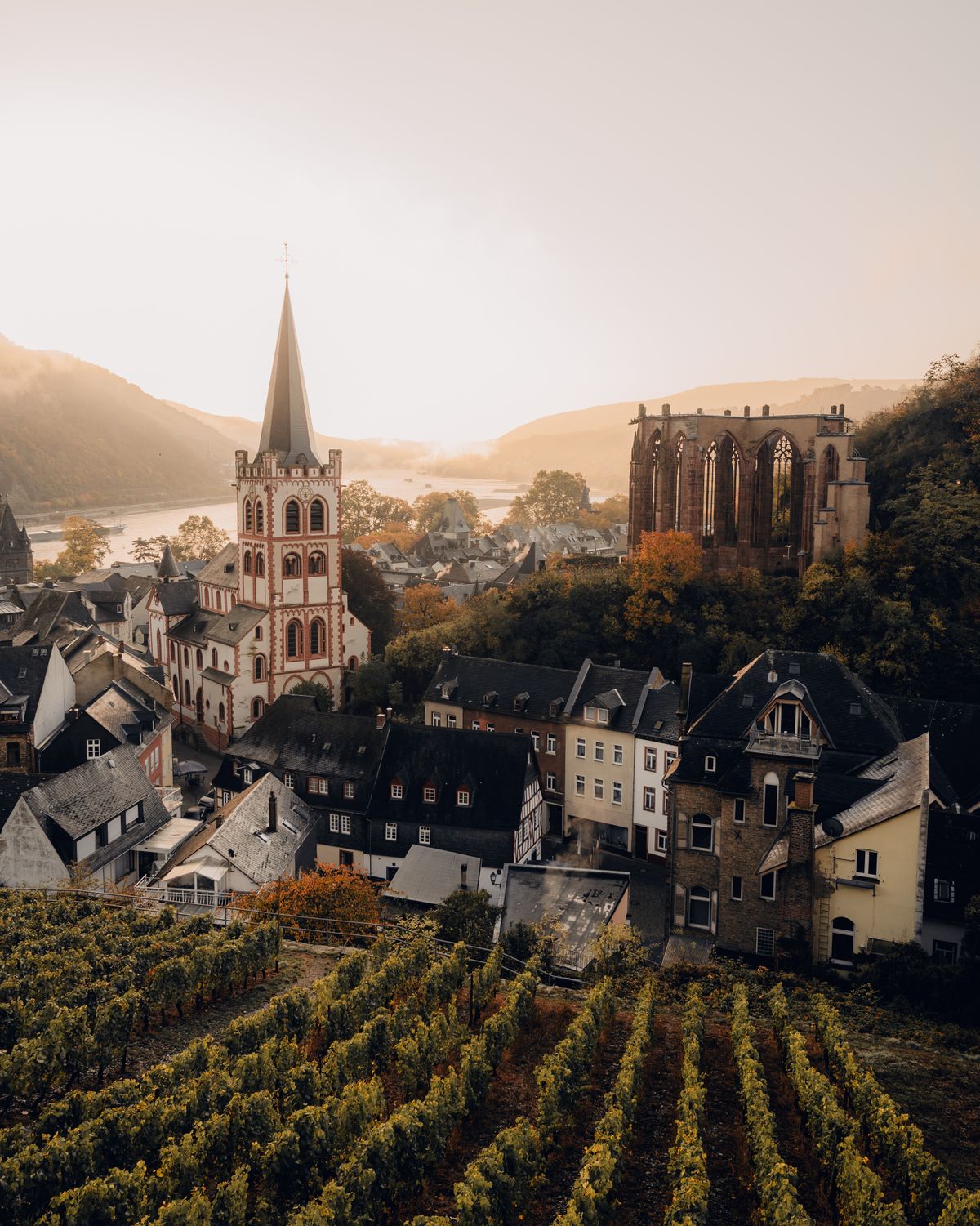
Riesling is the drink to look for in Bacharach, where steep slate vineyards climb the slopes above the Rhine.
The Mittelrhein is one of Germany’s smaller wine regions, and the vineyard landscape feels closely tied to the village. The slopes are steep enough that much of the work remains hands-on, which helps explain why local wine is best approached as a regional product rather than just another souvenir.
Where to taste local Riesling
Weingut Fritz Bastian on Oberstraße is a convenient place to try local wines in the old town. Tasting availability changes through the year, so check ahead if sampling wine is a central part of your plan. You may also find seasonal tastings at other wineries and guesthouses around the valley.
I’d pair a tasting with the town-wall walk or the castle climb rather than schedule it first thing. After walking through the vineyards, you have a better sense of where the wine comes from, and the whole experience feels less like a generic tasting room visit.
Try Riesling ice cream
For something lighter, look for Riesling gelato at Eis Café Italia. It sounds unusual, but it makes sense in a town where wine is part of everyday identity. It’s a fun afternoon stop, particularly if you’re traveling on a budget and don’t want to commit to a full tasting.
Where to Stay in Bacharach
The best place to stay depends on whether you want a memorable castle night, a convenient old-town base, or a larger nearby town with more accommodation choices.
Burg Stahleck
Choose Burg Stahleck if you want the most distinctive budget experience. The youth hostel setting suits solo travelers, backpackers, and anyone who likes accommodation with a story. You’ll have to accept the uphill walk, shared facilities in some room types, and the need to book ahead during busy periods.
The old town
Hotels, guesthouses, and small inns around Oberstraße are the easiest option for comfort and convenience. You’ll be close to the churches, town walls, restaurants, and wine businesses, and you can explore early in the morning before the village gets busy.
Oberwesel or Bingen
If Bacharach has no rooms, consider staying in Oberwesel or Bingen and visiting by train. This works particularly well if you’re moving along the Rhine rather than using Bacharach as your only base. You’ll sacrifice the quiet late-evening atmosphere in the village, but you gain more accommodation choice.
When to Visit Bacharach
Late spring and early autumn are the most appealing seasons for walking, wine tasting, and exploring the village without the extremes of summer or winter.
Spring brings fresh growth in the vineyards, while early autumn is a natural time to focus on the wine landscape. Name your exact travel season when checking accommodation and events, because festival dates and business opening patterns vary from year to year.
Summer brings more river traffic and lively event weekends, including wine-related festivals. That can be fun if you want atmosphere, but it also means higher demand for rooms. Winter is quieter, and some restaurants, tasting rooms, and attractions may operate on reduced schedules or close seasonally.
A Practical One-Day Bacharach Itinerary
A good one-day itinerary threads the main things to do in Bacharach together, starting in the old town, climbs to the castle, and ends with a relaxed meal or wine tasting.
- Morning: Arrive by train, walk from the station through the old town, and visit Peterskirche.
- Late morning: Follow the town-wall circuit and stop at the towers and viewpoints.
- Lunch: Eat in the old town rather than rushing straight to the next sight.
- Afternoon: Walk past Wernerkapelle and climb to Burg Stahleck.
- Late afternoon: Return via Oberstraße, visit the Altes Haus, and try a local Riesling tasting or gelato.
- Evening: Stay for dinner and watch the village settle down after the day visitors leave.
If you have two days, use the second for the Oberwesel-to-Bacharach or Bacharach-to-Trechtingshausen trail, depending on your fitness and transport plans. Don’t try to squeeze a full hike into the same day as every village sight; the Rhine is much more enjoyable when you leave some breathing room.
Bacharach FAQ
What are the best things to do in Bacharach?
Walk the Stadtmauer-Rundweg around the medieval walls, climb to Burg Stahleck, stop at Wernerkapelle on the way up, and taste Riesling on Oberstraße. That is a full day and it costs very little.
How long do you need in Bacharach?
One full day covers the main village sights, town walls, castle, and a wine experience. Two days are better if you want to add a longer hike or travel slowly by boat and train.
Is Bacharach walkable?
Yes. The old town is compact and most central attractions are close together. The main challenge is the steep climb toward Burg Stahleck and the uneven surfaces around the walls.
Can you stay in Burg Stahleck?
Yes. Burg Stahleck operates as a youth hostel with dormitory and private-room accommodation. Confirm current availability and conditions directly before booking.
Do you need a car in Bacharach?
No. The train station is within walking distance of the old town, and the village itself is easy to explore on foot. A car becomes more useful only if you’re combining Bacharach with rural wineries or destinations away from the Rhine rail line.
Is Bacharach good for solo travelers?
Yes, especially for travelers who enjoy walking, small-town history, and social accommodation without a nightlife focus. A hostel stay, a communal wine tasting, or a seat at a local restaurant can make it easy to meet people while still giving you plenty of time alone.
Plan Your Bacharach Stay
Start by deciding which of the things to do in Bacharach matters most to you: hiking, wine, or the castle stay. For the easiest first visit, arrive by train, spend one night in or near the old town, walk the walls, climb to Burg Stahleck, and leave enough time for Riesling on Oberstraße.
If you’re building a longer European trip, Bacharach fits naturally between Mainz, Koblenz, Bingen, and the wider Rhine Valley. And if you’re comparing it with a more ambitious itinerary, remember the same lesson that applies to planning one week in Morocco: travel days and recovery time are part of the trip, not empty space to fill.
Whatever you pick first, the things to do in Bacharach reward a slower pace than a cruise stop allows. Book the room, check the current transport schedules, and give yourself at least one evening beside the Rhine. That’s when Bacharach starts to feel less like a stop and more like somewhere you’ve arrived.