

In this guide 22
- Why Moraine Lake Is Famous
- How to Get to Moraine Lake
- Best Things to Do at Moraine Lake
- Comparing Moraine Lake vs. Lake Louise
- Best Time to Visit Moraine Lake
- Trip Planning Costs and Banff Park Pass Details
- Essential Visitor Rules and Bear Safety
- Combining Moraine Lake with Nearby Destinations
- Frequently Asked Questions
- Conclusion
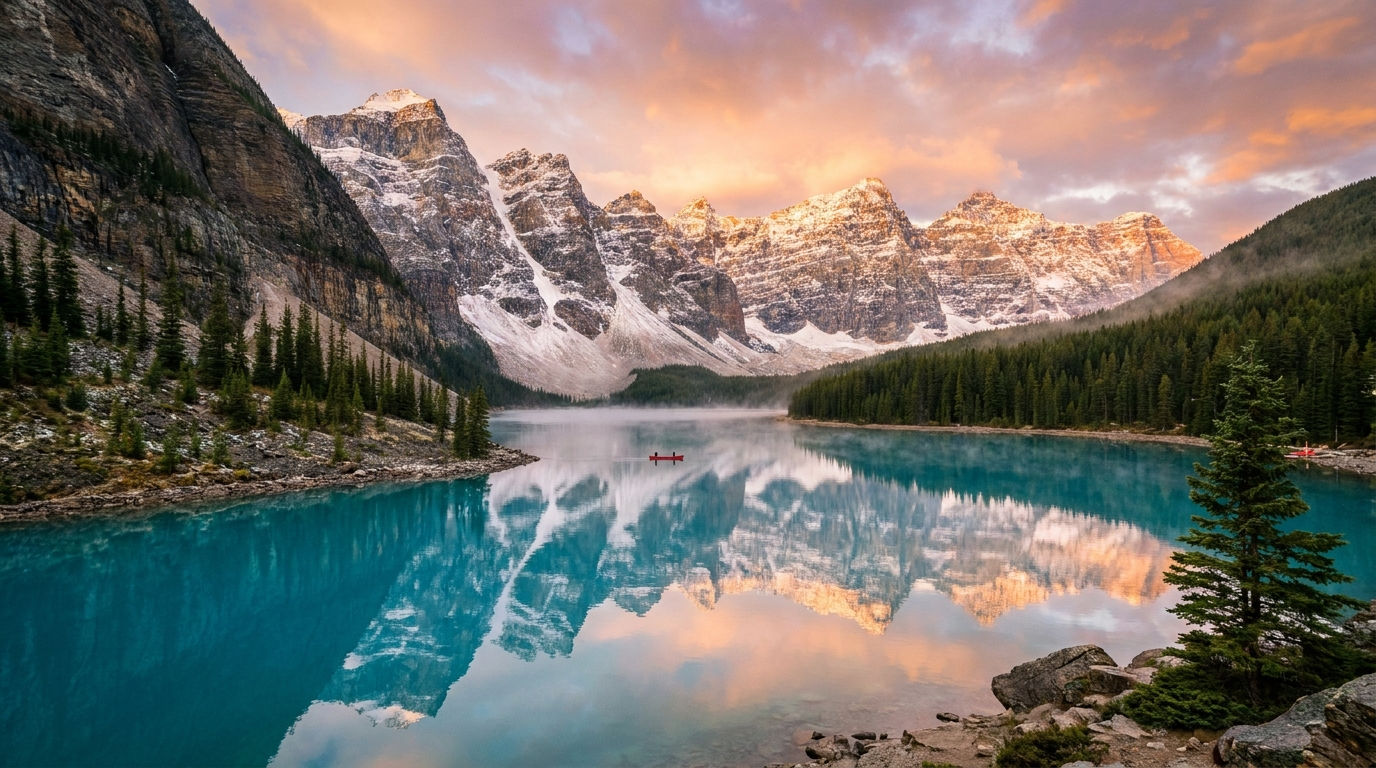
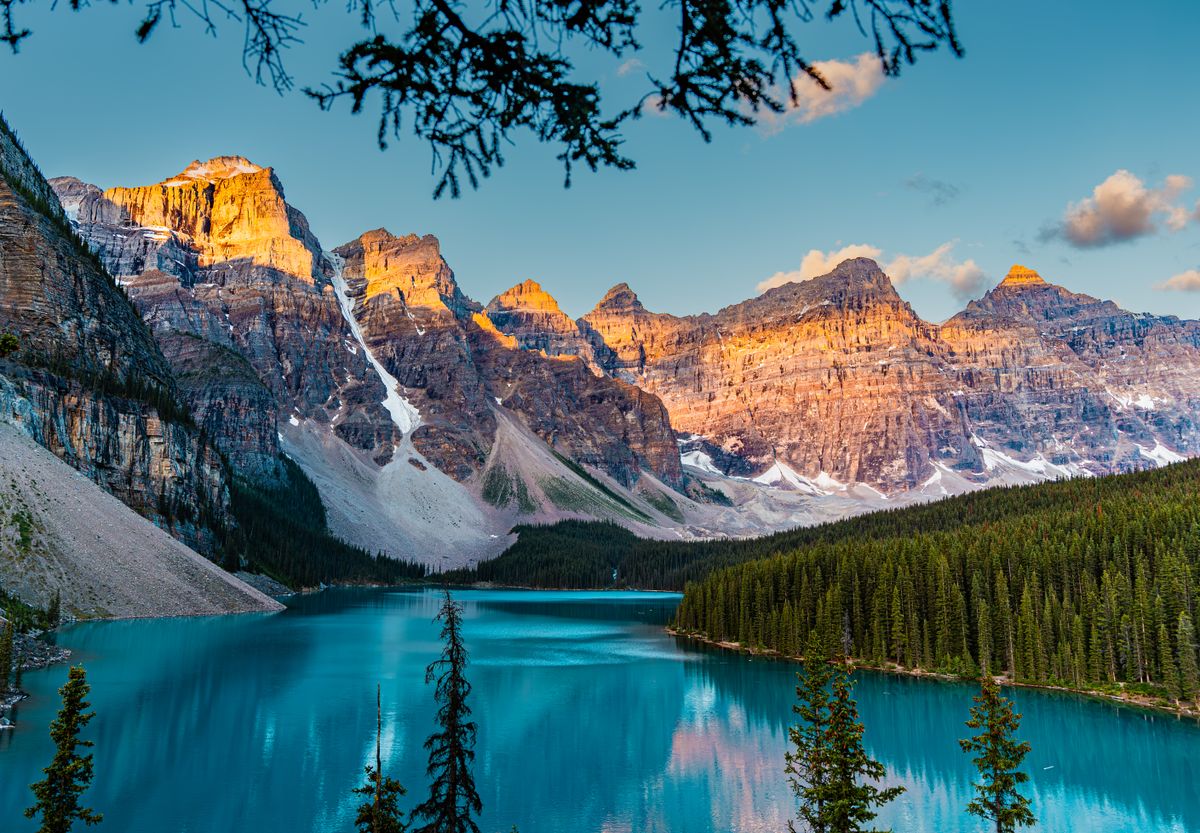
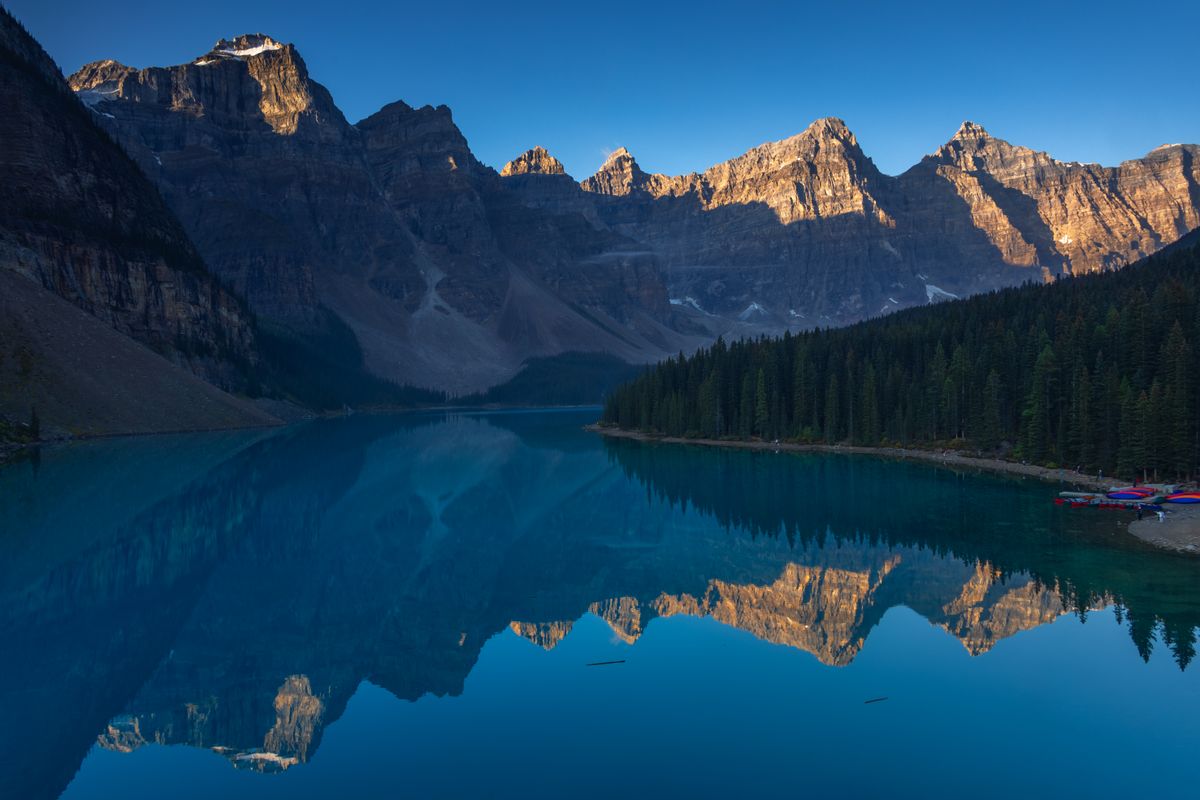
Moraine Lake sits in the Valley of the Ten Peaks, about 14 kilometres southeast of Lake Louise village in Banff National Park. The lake’s intense turquoise colour comes from glacial rock flour suspended in meltwater, and the view from the Rockpile lookout is one of the most photographed landscapes in the Canadian Rockies.
Personal vehicles have been banned from Moraine Lake Road since 2023, so reaching the lake requires advance planning: you must book a Parks Canada shuttle, use public transit or hire a licensed commercial operator. The road is open to shuttles and licensed operators from June 1 to October 12, 2026. Parks Canada released 40 percent of the season’s shuttle seats on April 15, 2026, and releases the rest at 8 a.m. MDT two days before each departure day.
Some links in this guide are affiliate links. If you book through one, Roamdusk may earn a commission at no extra cost to you. It never decides what we recommend.
Why Moraine Lake Is Famous
Moraine Lake lies at approximately 1,884 metres above sea level in the Valley of the Ten Peaks, a glacially carved basin surrounded by ten summits over 3,000 metres. The lake’s vivid blue-green water is the result of fine glacial sediment, known as rock flour, which reflects sunlight in the blue-green spectrum. This effect is strongest from July into September, once the lake has fully thawed and the meltwater carries the most sediment. The lake was once featured on the back of the Canadian twenty-dollar bill, and the Rockpile viewpoint remains one of the most recognizable scenes in North America.
The lake is relatively small: about 1.2 kilometres long, covering about 50 hectares, and about 14 metres deep at its deepest point. It is fed almost entirely by snowmelt and glacial meltwater from the Valley of the Ten Peaks, including the Fay Glacier. The name “Moraine Lake” is a misnomer: early geologists believed the rockpile at the lake’s outlet was a glacial moraine, but it is actually a rockslide deposit from the Tower of Babel, a prominent peak on the south side of the valley. Despite the error, the name has stuck for over a century.

How to Get to Moraine Lake
The nearest major airport is Calgary International Airport, approximately 220 kilometres from Moraine Lake. Driving from Calgary to Lake Louise takes about two hours under normal conditions, but personal vehicles cannot continue to Moraine Lake. From Lake Louise, you must use one of the approved transport options described below. Banff town is about 57 kilometres southeast of Lake Louise, roughly 45 minutes by car, and is connected to Lake Louise by Roam Transit Route 8X year-round.
Parks Canada Shuttle and Lake Connector
The Parks Canada shuttle is the most affordable option for most visitors. Shuttles depart from the Lake Louise Park and Ride at the Lake Louise Ski Resort, off Highway 1. When you book on the Parks Canada shuttle page, you choose a one-hour departure window and your first destination, Lake Louise or Moraine Lake; the ticket also covers the Lake Connector between the two lakes and the return trip to the Park and Ride.
Adult fare is C$12.75, seniors pay C$6, and youth aged 17 and under pay C$4. Online reservations add a C$3.50 non-refundable fee; telephone reservations add C$5.50. Reservations for 2026 opened on April 15, when 40 percent of the season’s seats were released; the remaining 60 percent are released at 8 a.m. MDT two days before each departure day. You can book up to 10 seats per reservation online or by phone at 1-877-737-3783.
The Lake Connector runs between Lake Louise and Moraine Lake on a first-come, first-served basis, so if you visit one lake first and want to move to the other, you may wait for the next available shuttle. Plan at least four to five hours for a visit to both lakes if you intend to walk the short trails and take photographs. Shuttles to Moraine Lake leave every 30 minutes from 6:30 a.m. to 5 p.m., the Lake Connector runs every 30 minutes from 7 a.m. to 6 p.m., and the last return shuttle leaves at 7:30 p.m. Parking at the Park and Ride is free, vehicles can enter between 6 a.m. and 8 p.m., and you check in at the kiosk for your departure window. The shuttle does not include the Banff National Park entry pass, which must be purchased separately.
Commercial Shuttles and Sunrise Tours
Licensed commercial operators can access Moraine Lake Road outside regular Parks Canada shuttle hours, which makes them, along with the Parks Canada Alpine Start shuttle described below, the way to reach the lake for sunrise. Operators including Moraine Lake Bus Company, Fairview Limousine, Via Via, Radventures and Discover Banff Tours offer early-morning departures as early as 4:00 a.m. from Lake Louise, Banff and surrounding areas. Prices vary widely depending on whether the service is a simple shuttle or a guided tour with hotel pickup. A daytime round-trip shuttle costs about C$40 to C$80 per person, depending on the date and time, sunrise shuttles cost about C$99 to C$120, and guided tours with hotel pickup cost more.
Sunrise tours are worth the cost if you want the lake at its calmest and most photogenic, before wind ripples the surface and crowds fill the Rockpile viewpoint. In June, sunrise is about 5:30 a.m., although the sun clears the surrounding peaks later, so aim to arrive by about 5 a.m. Parks Canada also runs an Alpine Start shuttle at 4 a.m. and 5 a.m. daily from June 1 to October 12. It leaves from the Lake Louise Lakeshore parking lot rather than the Park and Ride, so you pay for parking there, and the last return is at 6 p.m. via the Lake Connector. It is booked through the same reservation system, costs less than a commercial tour and does not include hotel pickup or guiding, and in 2026 it has no wheelchair-accessible vehicle.
Roam Transit and Regional Connections
Roam Transit Route 8X connects Banff and the Lake Louise Lakeshore year-round. Roam is not running its Moraine Lake Route 10 in 2026, so from the lakeshore you continue on the Parks Canada Lake Connector. The simplest option from Banff is the Roam Reservable Super Pass, valid June 1 to October 12, 2026: C$30 for adults and C$15 for seniors and youth, with children 12 and under free with a reservation, plus a C$3 booking fee. It includes a day of unlimited Roam travel, a reserved round trip on Route 8X and a round trip on the Parks Canada Lake Connector to Moraine Lake, and the trip must start in Banff. If you are driving, park at the Lake Louise Park and Ride and take the Parks Canada shuttle instead.
Best Things to Do at Moraine Lake
Most visitors spend two to three hours at Moraine Lake, enough time to walk the Rockpile Trail, stroll part of the lakeshore path and take photographs. If you plan to hike one of the longer alpine trails, budget a full day and check trail conditions and wildlife warnings with Parks Canada before you start.
The Rockpile Trail and Lakeshore Path
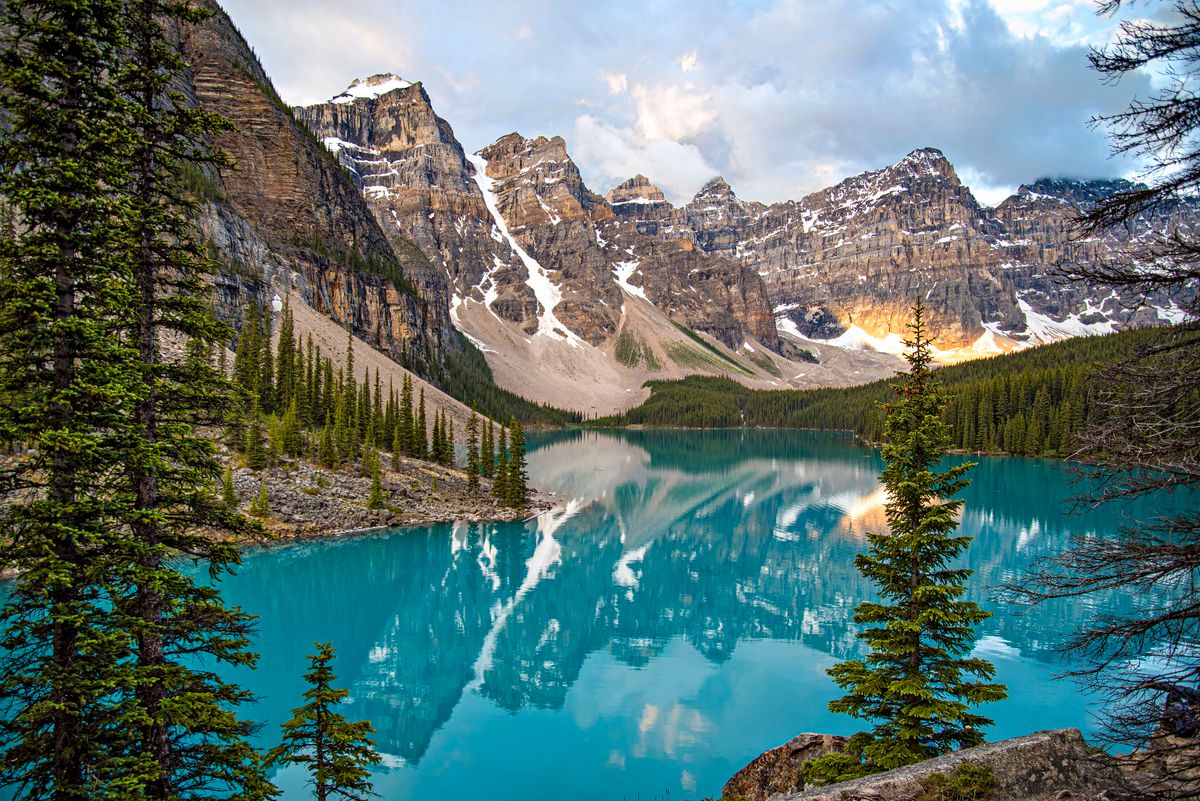
The Rockpile Trail is the shortest and most popular walk at Moraine Lake, a short loop of about 0.6 to 0.7 kilometres with roughly 35 metres of elevation gain to the famous viewpoint overlooking the lake and the Valley of the Ten Peaks. Parks Canada suggests allowing about 30 minutes. The viewpoint is often crowded from mid-morning through late afternoon in July and August, so arrive early or visit in September for a better chance of photographing the scene without people in the frame. The rockpile itself is the debris field from an ancient landslide off the Tower of Babel, not a glacial moraine as the name suggests.
The Lakeshore Trail is an easy, mostly flat walk of about 1.3 kilometres each way, about 2.6 kilometres return, along the lake’s northwest shore from the lodge to the inlet stream and waterfall at the far end. The trail offers close views of the water and the surrounding peaks, and it is accessible to most fitness levels. Allow about 45 minutes for the lakeshore return and 30 minutes for the Rockpile; both are suitable for families.
Alpine Hikes: Larch Valley and Sentinel Pass
Larch Valley is one of the most beautiful alpine hikes in the Canadian Rockies, especially from mid-September to early October when the larch trees turn gold. The trail to the Minnestimma Lakes is about 4.5 kilometres one way, about 9 kilometres return, with roughly 570 metres of elevation gain, climbing through subalpine forest before opening into a high meadow surrounded by peaks. Allow 3.5 to 4 hours, and expect snow in the upper meadow until mid-July. Parks Canada often requires hikers to travel in groups of four or more here in late summer because of grizzly bear activity, so check the Banff trail conditions page before you go.
Sentinel Pass extends beyond Larch Valley and is one of the highest hiking passes in the Canadian Rockies, reaching approximately 2,611 metres. The full hike is about 5.6 kilometres one way from the Moraine Lake trailhead via Larch Valley, about 11.5 kilometres return, with roughly 725 to 750 metres of elevation gain; allow 4.5 to 5.5 hours. Expect significant exposure to weather and steep, rocky terrain near the pass.
This route is suitable only for experienced hikers with good fitness, proper equipment and the ability to navigate in changing conditions. Snow can linger on the pass into August, and afternoon thunderstorms are common in July and August. Carry layers, rain gear, extra food, a map and bear spray, and start early to avoid being caught above treeline in bad weather.
Canoeing the Valley of the Ten Peaks
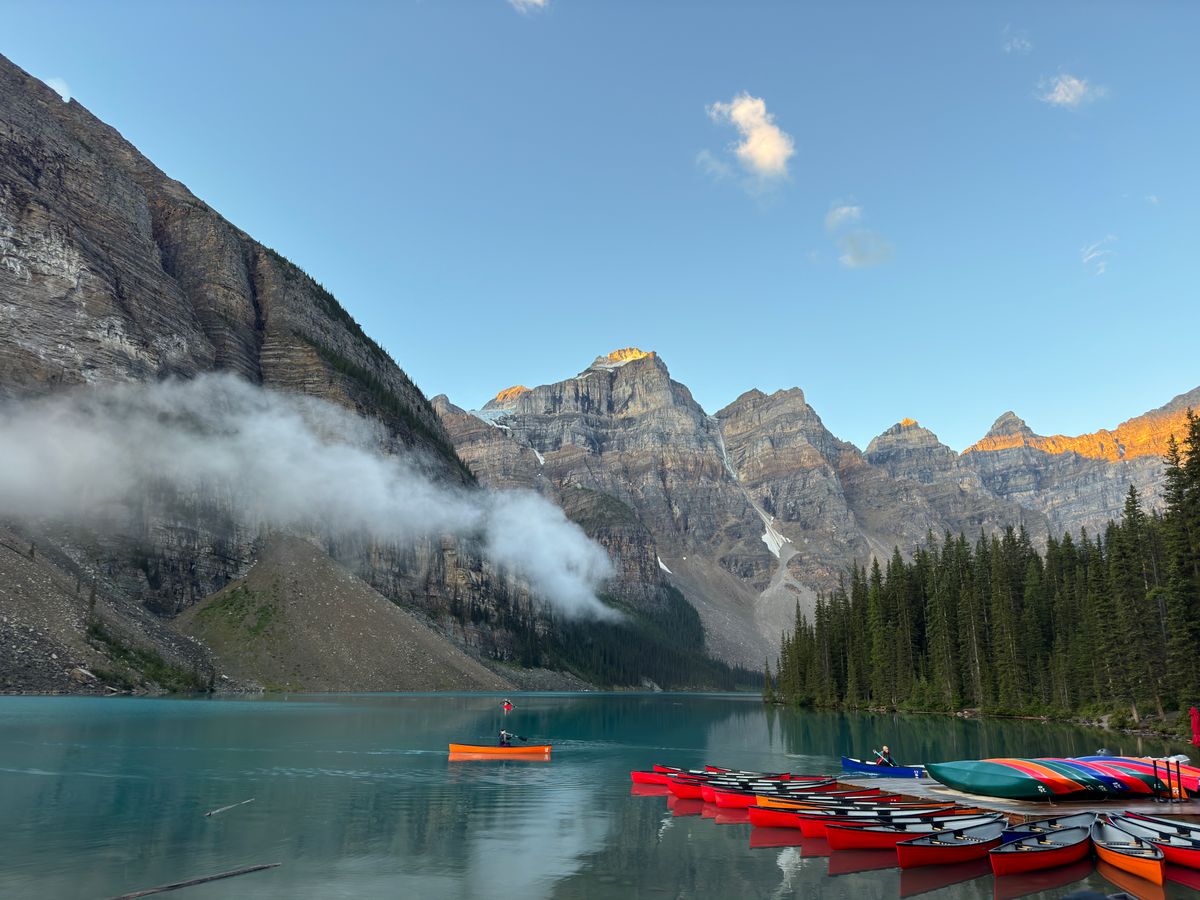
Canoe rentals are available at the Moraine Lake Lodge dock from mid-June through mid-September, weather and water levels permitting. The 2026 rate is C$170 plus 5 percent GST per canoe per hour, which works out to about C$178.50 total. A canoe holds two to three adults or two adults and two small children. Rentals are first-come, first-served with no reservations, and the dock often has a queue from mid-morning onward in July and August. If you want to paddle, arrive on an early shuttle or plan to wait.
Paddling Moraine Lake is calm and straightforward, with no current and minimal wind early in the day. The lake is small enough to paddle across and back in an hour, and the view from the water is striking, with the Ten Peaks rising directly above the far shore. The glacier-fed water stays very cold all summer, so dress warmly and keep your belongings in a dry bag. Life jackets are provided with every rental and must be worn. Bringing your own watercraft is prohibited because of invasive species regulations in effect across Banff National Park.
Comparing Moraine Lake vs. Lake Louise
Moraine Lake and Lake Louise are both glacially fed lakes in Banff National Park, and both are famous for their turquoise water and mountain backdrops. The two lakes are about 14 kilometres apart by road and are connected by the Parks Canada Lake Connector shuttle. Most visitors who travel this far into the Rockies visit both in one day, but if you can only choose one, here is how they compare.
Moraine Lake is smaller, more dramatic and less developed. The Valley of the Ten Peaks is tighter and more enclosed, so the peaks feel closer and more imposing. The Rockpile viewpoint is the single most iconic vista, and the lake is quieter overall because there is no large hotel. The downside is limited facilities: one small lodge whose dining room is reserved for overnight guests, a café and gift shop for day visitors, one canoe dock and no cell reception. If you want the classic postcard shot and a sense of remoteness, Moraine Lake is the stronger choice.
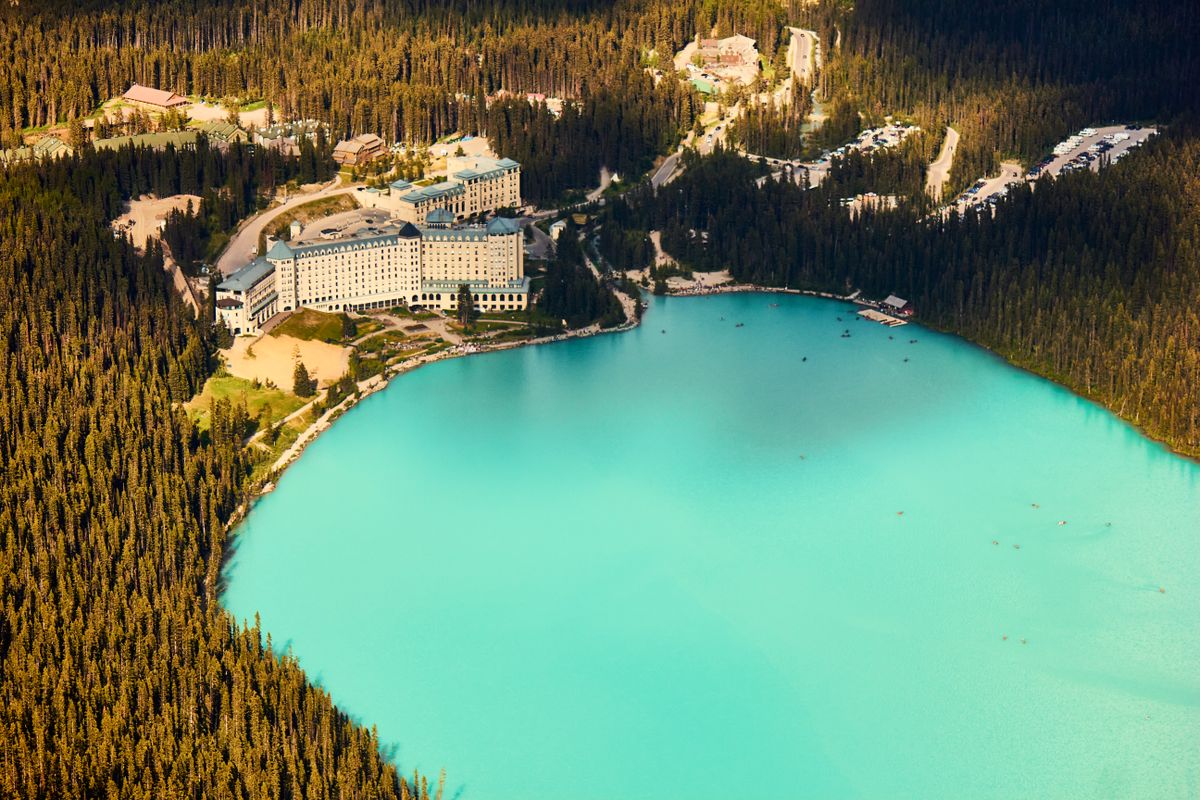
Lake Louise is larger, more accessible and more developed. The Fairmont Chateau Lake Louise sits at the lakeshore and offers dining, washrooms, a gift shop and canoe rentals. The lakeshore trail is longer and flatter than Moraine Lake’s paths, and the lake has better cell service and more amenities. The tradeoff is crowds: Lake Louise sees significantly more visitors, and the scene feels more managed and commercial. If you want a longer walk, a sit-down meal or more comfort, Lake Louise is the better pick.
In practical terms, visiting both lakes in one day is efficient and worthwhile. Start at Moraine Lake on the first shuttle, spend two to three hours walking and photographing, then take the Lake Connector to Lake Louise for lunch and a lakeshore walk. The Lake Connector runs every 30 minutes from 7 a.m. to 6 p.m., but it is first-come, first-served, so leave time for queues and do not miss the last shuttle back to the Park and Ride at 7:30 p.m.
Best Time to Visit Moraine Lake
The practical visiting season at Moraine Lake runs from June 1 to October 12, 2026, weather permitting. Outside this window the road is closed to vehicles; in winter it becomes a cross-country ski trail, and the lake itself sits in avalanche terrain. The lake is usually still mostly frozen in May, typically opens up in early to mid-June and reaches its full level by mid to late June.
July and August are the warmest and busiest months. Daytime highs average about 20 degrees Celsius, although early mornings can be near 5 degrees and Moraine Lake is cooler than Lake Louise village; the lake is ice-free and the water is at its most vivid turquoise. These months also bring the largest crowds, the highest accommodation prices and the longest queues for shuttles and canoe rentals. If you visit in July or August, book your shuttle on the April launch day or at 8 a.m. MDT two days before your visit, and choose an early departure window.
September is often the best compromise. Visitor numbers drop after Labour Day, the weather is generally stable with highs around 15 degrees Celsius and nights near freezing, and the larch trees in Larch Valley turn gold from mid-September, peaking around the last week of September and the first week of October. Snow can return to higher trails by late September, so carry extra layers and check trail conditions before you hike. Early October is quieter still, but expect cold mornings, possible snow and a higher chance of road closures as the season winds down.
June and early July can be excellent for those willing to accept variable conditions. The lake may still have ice along the edges in early June, and higher trails such as Larch Valley and Sentinel Pass often remain snow-covered until mid-July. Wildflowers begin blooming in the meadows by late June, and the crowds are lighter than in August. If you visit in June, bring layers, waterproofs and traction devices for trails, and be prepared for sudden weather changes.
Trip Planning Costs and Banff Park Pass Details
Visiting Moraine Lake requires two separate fees: transportation and park entry. The Parks Canada shuttle costs C$12.75 for adults aged 18 to 64, C$6 for seniors and C$4 for youth aged 17 and under. Online reservations add a C$3.50 non-refundable fee, so a single adult booking online pays C$16.25 total. The shuttle fare includes the Lake Connector between Lake Louise and Moraine Lake and the return trip to the Park and Ride, but it does not include the national park entry pass.
A Banff National Park daily pass costs C$12.25 for adults, C$10.75 for seniors and is free for youth aged 17 and under. A family or group pass costs C$24.50 and covers up to seven people arriving together in one vehicle.
Daily passes are valid until 4:00 p.m. the day after purchase, so a pass bought on Saturday afternoon remains valid until Sunday at 4:00 p.m. If you plan to visit several national parks or stay a week or more, an annual Discovery Pass costs C$83.50 for adults or C$167.50 for a family and provides entry to all Parks Canada sites for a full year.
Commercial shuttle and tour prices vary widely. Sunrise shuttles to Moraine Lake cost about C$99 to C$120 per person and daytime round trips about C$40 to C$80, while guided tours with hotel pickup from Banff cost more. Full-day tours that combine Moraine Lake, Lake Louise and other stops such as Johnston Canyon or Emerald Lake cost roughly C$130 to C$260 per adult before tax, and some operators add a C$35 Moraine Lake access fee at checkout, so confirm the total before you book.
Food and accommodation add significantly to the total cost. At Moraine Lake, the lodge’s Walter Wilcox Dining Room is reserved for overnight guests; day visitors can buy coffee, cold drinks and baked goods at the Snowshoe Café. Budget C$20 to C$35 per person for a casual meal in Lake Louise village and C$4 to C$8 for a coffee.
Accommodation in or near Lake Louise ranges from roughly C$150 to C$300 per night for basic lodging to C$500 or more for premium hotels. Prices rise sharply in July and August, and rooms sell out months in advance. Moraine Lake Lodge is the only accommodation at the lake itself, with limited availability and rates typically well over C$1,000 per night; its 2026 packages, which include dinner, taxes and gratuities, work out to about C$1,800 to C$2,400 per night for two.
Essential Visitor Rules and Bear Safety
Banff National Park is home to both grizzly bears and black bears, and wildlife encounters are a real possibility on every trail. Parks Canada strongly recommends carrying bear spray on all hikes year-round. Bear spray must be kept in an accessible holster on your belt or pack strap, not buried in your backpack. Before you start hiking, practise removing the safety clip so you can deploy the spray quickly if needed. Bear spray rents for about C$10 to C$12 per day in Banff and Lake Louise, holster included, and a new canister costs about C$35 to C$60, so buying is usually cheaper for a week or more. You cannot fly with bear spray, so rent or buy it locally.
Make noise as you hike, especially near running water, dense vegetation and blind corners. Talk regularly, clap your hands and call out to alert wildlife to your presence. Travel in a group and stay together, keeping no more than a few metres between people. On certain trails, Parks Canada mandates a minimum group size of four hikers because of bear activity; these restrictions are posted at trailheads and on the trail conditions page.
If you encounter a bear, stop, remain calm, speak in a calm voice and back away slowly. Do not run. If the bear approaches or behaves aggressively at close range, less than a bus length away, use your bear spray; its effective range is about 5 metres, and wind can blow it back at you.
Maintain a distance of at least 100 metres from bears, cougars and wolves, and at least 30 metres from elk, moose, deer and bighorn sheep. Never feed, approach, follow or entice wildlife; doing so is illegal in national parks and carries fines up to C$25,000. Report any bear, cougar, wolf or coyote sightings to Banff Dispatch at 403-762-1470 when it is safe to do so. Cell service is unreliable in many areas, so download offline maps and trail information before you leave, and carry a fully charged phone or a satellite communication device on longer hikes.
Stay on marked trails, pack out all waste and follow Leave No Trace principles. Trails can close suddenly because of wildlife activity, avalanche risk or weather, so check the Parks Canada trail conditions page before you start. Carry water, high-energy snacks, a first-aid kit, extra layers, rain gear, a map, a headlamp with spare batteries and any personal medication. Weather in the mountains changes quickly, and conditions at the lake can be very different from conditions on higher trails such as Larch Valley or Sentinel Pass.
Combining Moraine Lake with Nearby Destinations
Moraine Lake works well as part of a larger Banff National Park itinerary. Most visitors base themselves in Banff town or Lake Louise village and visit the lakes as a day trip. If you have two or three days, consider adding these nearby destinations to make the most of your time in the Rockies.
Lake Louise is the obvious pairing and can be visited on the same day using the Lake Connector shuttle. Spend the morning at Moraine Lake, then move to Lake Louise for lunch and a walk along the lakeshore trail or up to the Plain of Six Glaciers Tea House. The teahouse hike is about 11 to 12 kilometres return with about 370 metres of elevation gain; allow four to five hours. The cash-only teahouse usually opens in mid to late June and closes in early October.
Banff town is about 57 kilometres southeast of Lake Louise and offers a full range of restaurants, shops, outdoor gear stores and accommodation. The town also gives access to the Bow Valley Parkway, Johnston Canyon and the Banff Upper Hot Springs, and our Banff National Park guide covers them in detail. Johnston Canyon is a popular half-day walk with waterfalls and canyon viewpoints, normally open year-round with an icewalk in winter, but in 2026 Parks Canada has closed the main trail from October 13 to December 11 for rock-slope work; the Upper Falls and Ink Pots can still be reached on the longer Moose Meadows trail. The hot springs close from October 13 to early November 2026 for annual maintenance. Roam Transit Route 8X links Banff and Lake Louise year-round, making it easy to base yourself in Banff and visit the lakes as a day trip.
Yoho National Park lies just west of Lake Louise across the British Columbia border and is home to Emerald Lake and Takakkaw Falls. Emerald Lake is a smaller, quieter alternative to Lake Louise, with canoe rentals, an easy lakeshore loop and fewer crowds. Takakkaw Falls is one of the highest waterfalls in Canada, with a short walk from the parking area to the base of the falls. Both sites are accessible by car with no reservation needed, but parking is limited and fills quickly, and Yoho Valley Road to Takakkaw Falls usually opens in mid to late June and closes in early to mid-October.
Frequently Asked Questions
Can I drive to Moraine Lake?
No. Personal vehicles are banned from Moraine Lake Road year-round. You must use a Parks Canada shuttle, public transit or a licensed commercial operator. The only exception is registered guests of Moraine Lake Lodge; visitors with an accessible parking placard can use the on-demand accessible shuttle from the Park and Ride. Do not drive to the gate hoping to find parking, because enforcement is strict and there is no public parking at the lake.
When is the best time to visit Moraine Lake?
September is often the best compromise, with fewer crowds, stable weather and golden larch trees in the high meadows. July and August offer the warmest temperatures and the most vivid water colour, but they are also the busiest and most expensive months. The road is open to shuttles from June 1 to October 12, 2026. Outside this window it is closed to vehicles, and the lake itself sits in avalanche terrain in winter.
How do I book the Parks Canada shuttle to Moraine Lake?
Book through the Parks Canada Reservation Service online or at 1-877-737-3783. In 2026, 40 percent of seats were released on April 15, and the remaining 60 percent are released at 8 a.m. MDT two days before each departure day. Adult fare is C$12.75 plus a C$3.50 online reservation fee. Shuttles depart from the Lake Louise Park and Ride at the ski resort, where you check in at the kiosk for your departure window. The shuttle ticket includes the Lake Connector between Lake Louise and Moraine Lake, but it does not include the national park entry pass.
Is Moraine Lake better than Lake Louise?
Moraine Lake is smaller, more dramatic and less developed, with the iconic Valley of the Ten Peaks view from the Rockpile Trail. Lake Louise is larger, more accessible and has better facilities, including the Fairmont Chateau and longer lakeshore trails. Most visitors who travel this far visit both in one day using the Lake Connector shuttle. If you can only choose one, pick Moraine Lake for the classic postcard shot and a sense of remoteness, or Lake Louise for comfort and amenities.
Do I need bear spray at Moraine Lake?
Yes. Parks Canada strongly recommends carrying bear spray on all trails in Banff National Park year-round. Keep it in an accessible holster on your belt or pack strap, and practise removing the safety clip before you hike. Grizzly bears and black bears are active throughout the park, and wildlife encounters can happen on any trail. Make noise as you walk, travel in a group and maintain a distance of at least 100 metres from bears.
Can I rent a canoe at Moraine Lake?
Yes. Canoe rentals are available at the Moraine Lake Lodge dock from mid-June through mid-September, weather permitting. The 2026 rate is C$170 plus 5 percent GST per canoe per hour, or about C$178.50 total. Rentals are first-come, first-served with no reservations, and queues can reach 90 minutes by mid-morning in July and August. Arrive on an early shuttle if paddling is a priority. Bringing your own watercraft is prohibited because of invasive species regulations.
Planning more of the Americas? See Things to Do in Cartagena.
Before you go, book your seats through the Parks Canada Reservation Service.
Conclusion
Moraine Lake is one of the most beautiful and photographed landscapes in the Canadian Rockies, but it is no longer a drive-up attraction. The personal vehicle ban and the seasonal road closure mean that every visit requires advance planning, a shuttle reservation or a commercial tour, and flexibility with weather and trail conditions.
The effort is worth it: the view from the Rockpile Trail, the alpine hikes into Larch Valley and the chance to paddle across the lake with the Ten Peaks rising overhead are experiences that justify the logistics. Visit between June and October, book your transport as early as the system allows and pair Moraine Lake with Lake Louise for the most efficient itinerary. Carry bear spray, check trail conditions before you start and arrive early to beat the crowds and see the lake at its calmest.