

In this guide 27
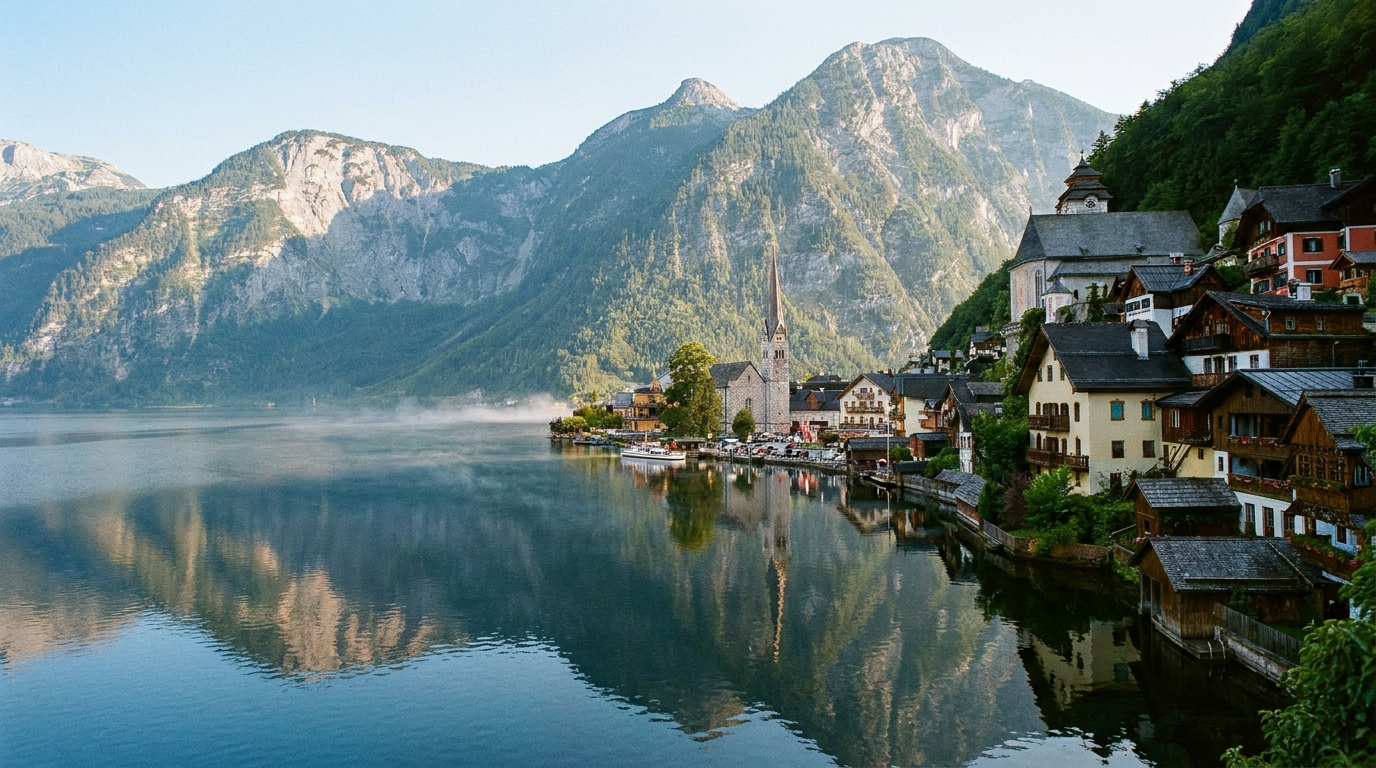
Hallstatt Austria is a lakeside village of about 700 residents inside the Hallstatt-Dachstein/Salzkammergut cultural landscape, which UNESCO inscribed in 1997. You can walk it end to end in a short while, yet it holds a salt mine with a mining history that researchers trace back about 7,300 years and a chapel full of painted skulls.
You have probably decided to go already, so the useful questions are which train and which morning. The advice below draws on the official village, parking, ferry and Salzwelten pages, and notes where they disagree on a price. Confirm anything you plan to pay for before you leave, since tariffs change.
Some links in this guide are affiliate links. If you book through one, Roamdusk may earn a commission at no extra cost to you. It never decides what we recommend.
Where Is Hallstatt Austria and How Big Is It?
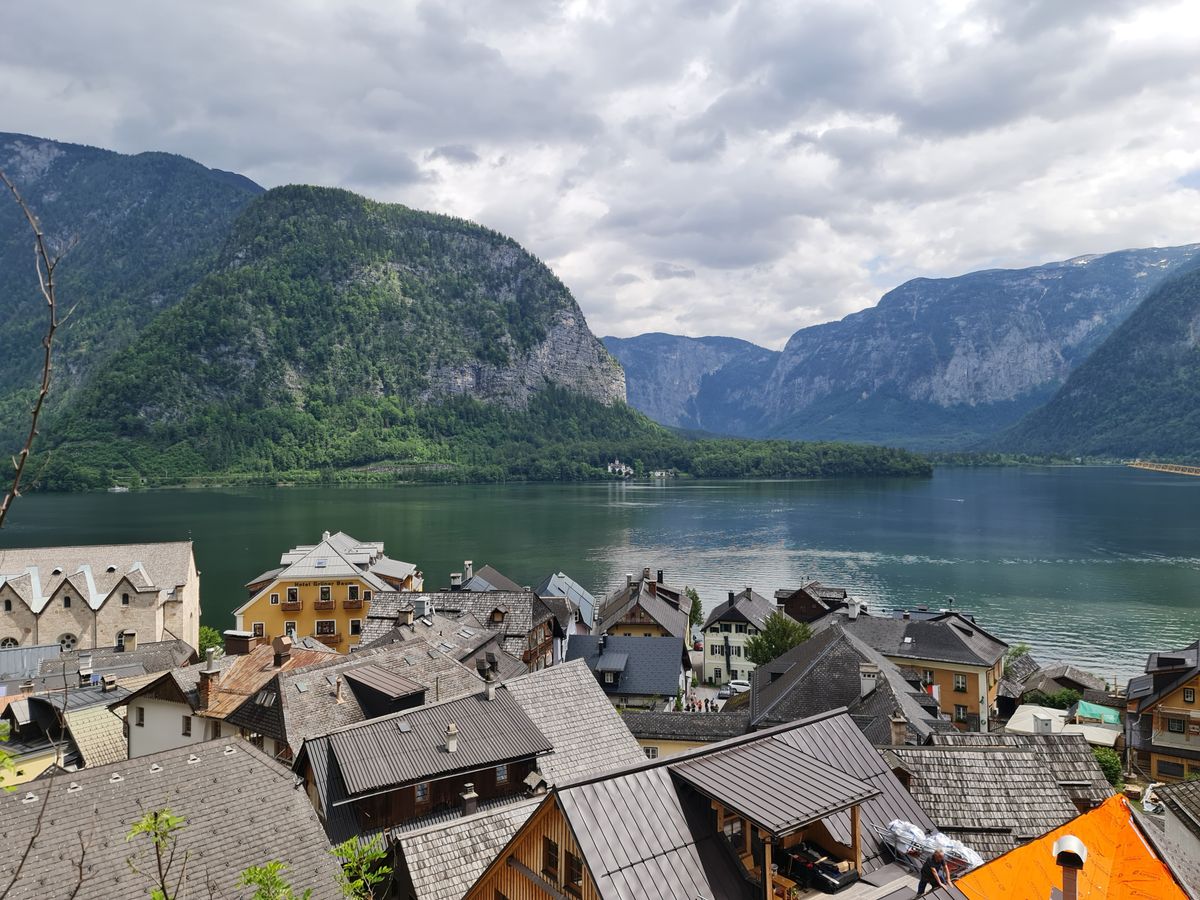
Hallstatt sits in Upper Austria, in the Salzkammergut lake district, roughly 55 km from Salzburg. Its railway station is on the east shore of Hallstätter See, on the opposite side of the water from the village, so a boat ride is part of almost every rail arrival. The lake, the cliffs behind the houses and the narrow shoreline leave very little room for anything else.
How Compact the Village Really Is
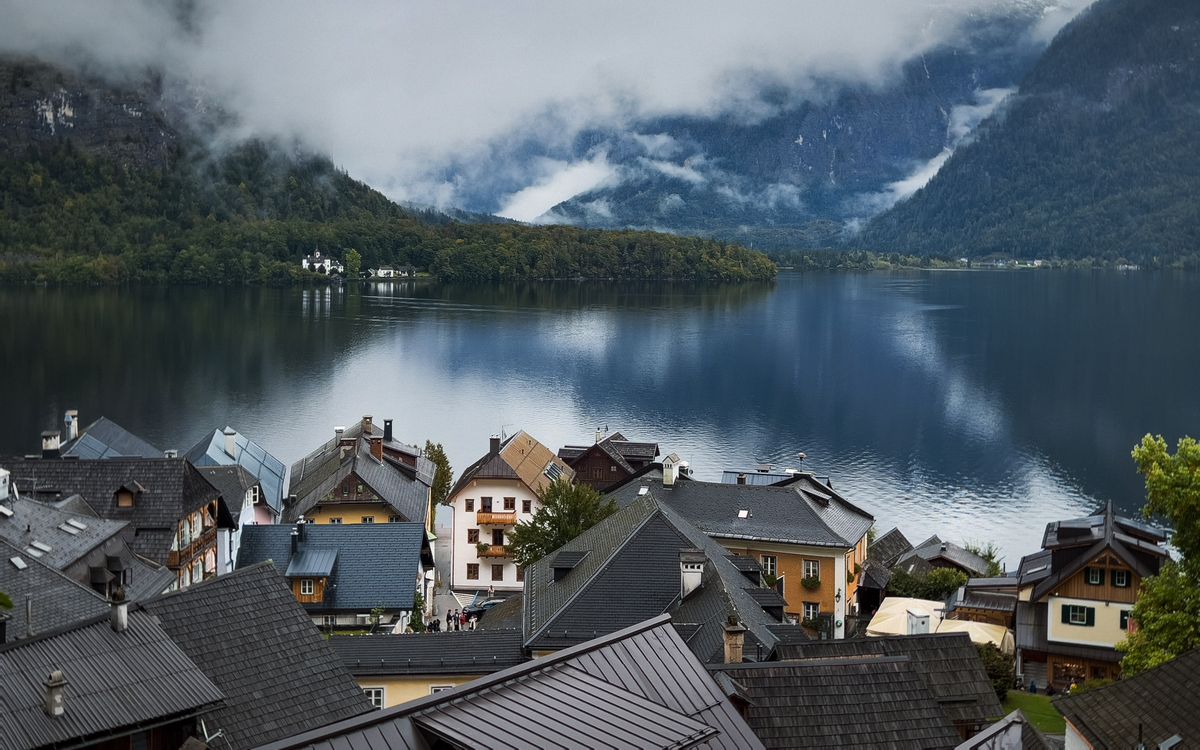
Hallstatt packs its sights into a strip between the water and the mountain, with the market square at the centre, the Charnel House up the slope behind the church and the salt mine above everything. You rarely walk far between stops, but you climb a lot of steps to reach them. Wear shoes with grip, because the church path and the lanes are steep and can be wet.
The scale will feel familiar if you have seen Slovenia’s lake town, which we cover in our Lake Bled sights guide. Hallstatt leaves less room to spread out once the day visitors arrive. That is why the timing advice later in this guide matters so much.
Things to Do in Hallstatt Austria
Almost every sight sits within a short walk of the market square, with the salt mine and Skywalk above the village and the Charnel House on the slope behind the church. Book the ticketed items first and let the lanes and the lakefront fill the gaps. A realistic day holds three or four of the stops below.
Salt Mine and Skywalk
The Salzwelten salt mine is reached by funicular, and the Salzwelten prices and opening hours page lists a combined ticket for the mine plus the funicular round trip, and a funicular-only ticket. Adults pay €49 for the combination and €29 for the funicular alone, while children aged 4 to 15 pay €23 and €14. Check the page for current times before you commit to a date, because the schedule changes with the season.
The Skywalk is a viewing platform above the village, reached with the funicular, and the price table shows no separate Skywalk charge. If you only want the view, the funicular-only ticket does the job and leaves the mine for another day. The funicular is the one bottleneck every visitor shares, so your timing decides how long you wait.
Charnel House and St. Michael’s Chapel
The Charnel House, called the Beinhaus, stands in St. Michael’s Chapel beside the Catholic parish church, and the chapel dates to the 12th century. Inside are more than 600 painted skulls out of a collection of roughly 1,200, and the painting tradition began around 1720. The painted symbols carry meanings: laurel for victory, oak leaves for glory, ivy for life and roses for love.
You reach it by the many steps or by the steeper Kirchenweg, the church path, so allow time for the climb. Tickets cost €2 for adults and €0.50 for children, sold just outside. Summer hours run from 10:00 to 18:00 between 1 May and 30 September, and they shorten in spring, October and winter, so check the village page before you go up.

The Village, the Lakefront and the Water
The market square, the lanes behind it and the lakeside path take an easy hour or two, so spend the rest of your time at the water. If you prefer someone else to handle the details, you can book a guided tour in Hallstatt and have the entry sorted before you arrive. A guide also fills in the salt and skull history that the signs only touch on.
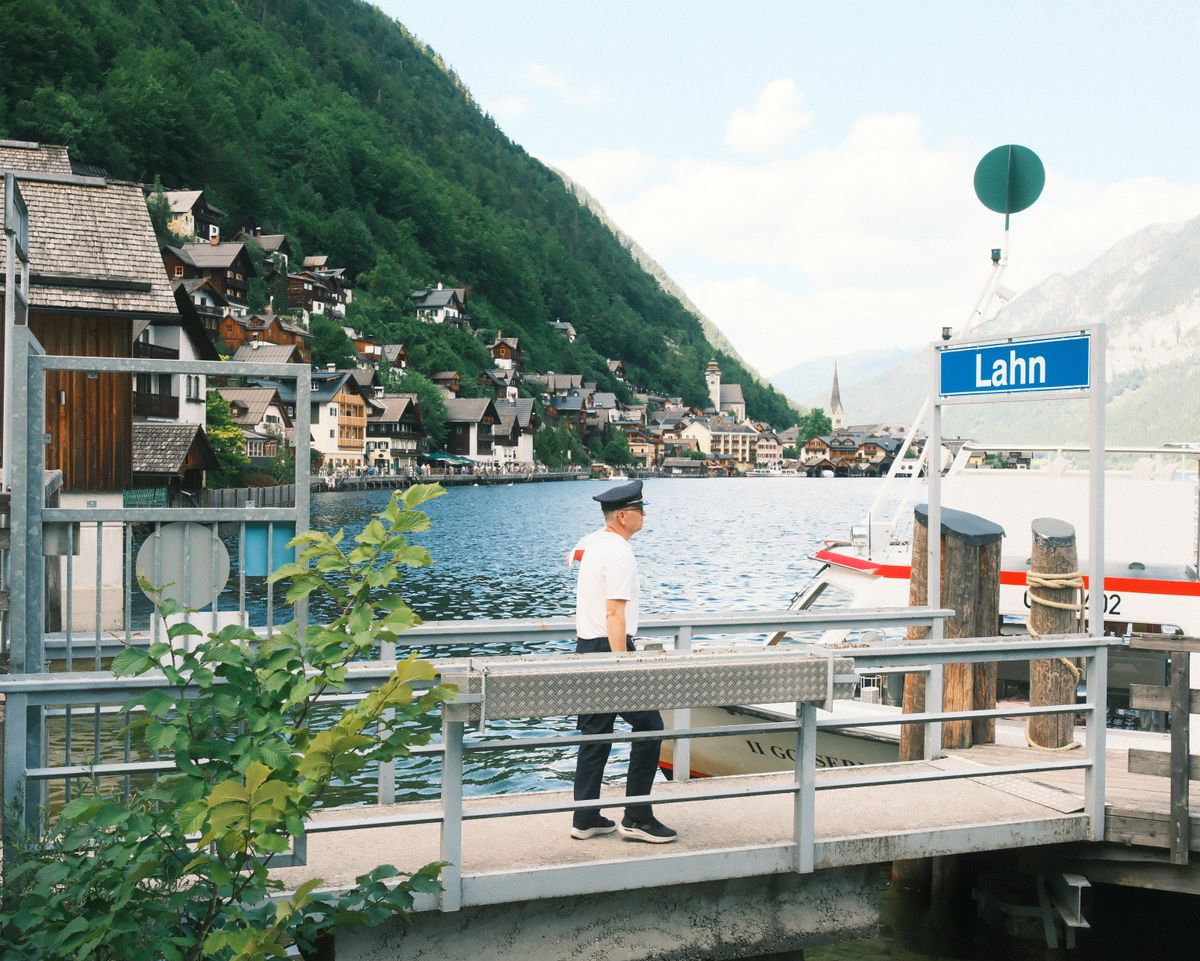
The boat company’s own page lists a lake round trip via Lahn and Obertraun in the May to September season. Rental boats are not listed on the official pages, so ask at the lakefront before you count on one. Swimming is realistic only at the peak of summer, when the water may reach 20 to 23 degrees.
Getting to Hallstatt from Salzburg and Beyond
Most people reach Hallstatt from Salzburg, and the train is the sensible choice for a day trip. A private transfer from Salzburg costs several times the train fare, so it only pays off for a group or a very early start. From Vienna you take the same line via Attnang-Puchheim, with at least one extra change.
By Train and Ferry
From Salzburg Hbf you ride an ÖBB railjet or Westbahn train to Attnang-Puchheim, which takes 47 minutes, then change to a regional train on the Salzkammergut line toward Hallstatt. The fastest journeys are listed at about 2 hours 12 minutes, and slower connections run to around 2 hours 35 minutes. Advance fares from Salzburg start from about €10, and trains run through the day.
Hallstatt station is on the east side of the lake, so you finish with a ferry of about seven minutes. A local guide reports the first boat from the station at 8:35 am (7:32 am on school weekdays) and the last at 6:30 pm, and the Hallstatt Schifffahrt site shows €4 one way and €8 return.
By Bus, Car and Parking
Bus line 150 runs from Salzburg main station past Lake Fuschl and Lake Wolfgang to Bad Ischl, and it does not enter Hallstatt itself. In Bad Ischl the bus stops in front of the train station, where you change to the Hallstatt line, a rail ride of about 37 minutes. Driving from Salzburg, you leave Thalgau on the B158 toward Bad Ischl, take the B145 toward Bad Goisern, turn right onto the B166 and turn left at the Gosaumühle junction.
Day visitors park in P1 to P4 and pay by duration, and the village parking page lists 15 minutes free, €5 for the first hour, €9 for two hours, €15 for 7 to 12 hours and a €20 day ticket. A lost ticket costs €40. Some partner pages still show older, lower tariffs, so trust the village page over a third-party listing. Hotel guests on a hotel ticket pay €20 for the first day, €18 for the second and €12 for the third, and the P1 rate includes a shuttle.
Best Time to Visit Hallstatt
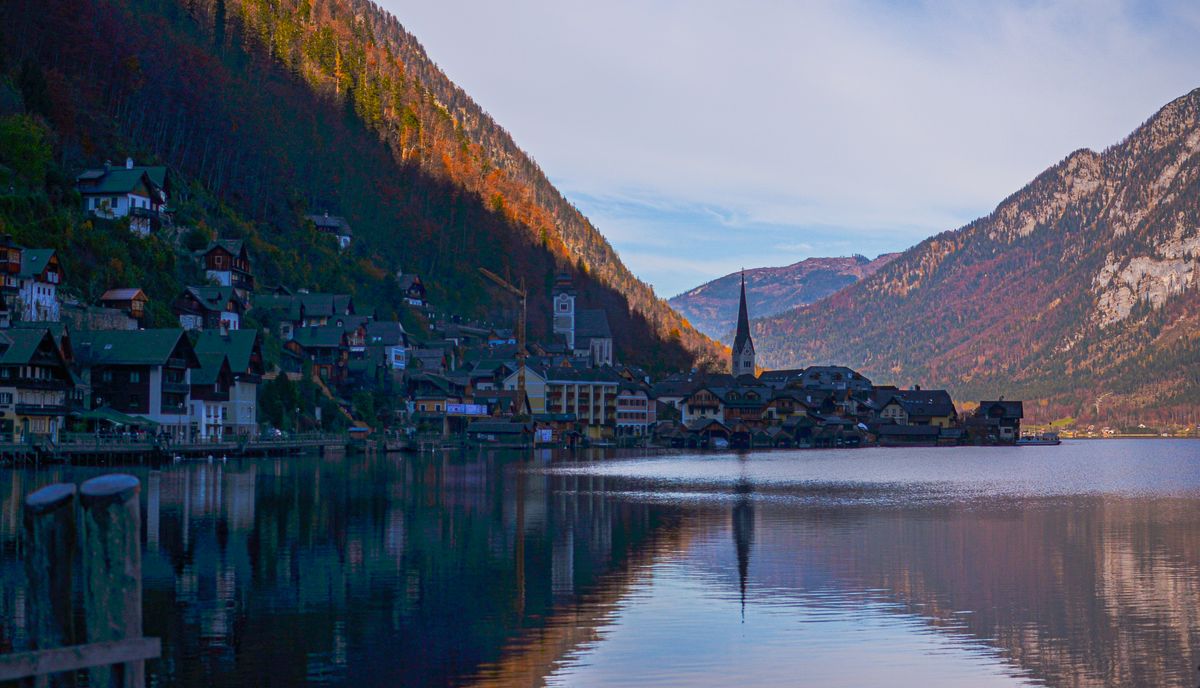
The best time to visit Hallstatt Austria for most people is late May to June or September to October, when the main attractions run and the weather is mild. July and August are the busiest months, and weekends and Austrian public holidays are worse. Winter is quieter, with a trade-off in opening hours.
Season by Season
Late May through mid-June and September give the most balanced mix: one guide reports the salt mine, the Dachstein Ice Cave, the Five Fingers platform and the lake boats all running, with daytime temperatures between 18 and 24 degrees Celsius. The same guide says day-trip coach numbers fall by roughly 40 percent compared with July and August. Treat that figure as an estimate, but the direction is consistent across sources.
The regional tourism pages promote autumn from September to November for its colour. November to February is quieter and snowy, particularly around Christmas, but some restaurants, shops and attractions keep shorter hours. April and early May are also recommended for blossoms and fewer people.
Which Day and Which Hour
Weekdays are calmer than weekends, and guides repeatedly say that the earlier you arrive, the more peaceful the village is. Being on the first ferry at 8:35 am puts you in the lanes before most day trippers. If you stay overnight, you get the village to yourself once the coaches leave.
Use the midday crowd for the salt mine, since it is underground, and keep the lakefront for early morning or evening. That sequence turns the busiest hours into the part of the day that matters least.
Budget, Tickets and Where to Stay
Hallstatt costs nothing to walk, but the ticketed sights, the ferry and parking add up quickly. Most of the big numbers are the funicular and the salt mine. The table below pulls together the figures from the official pages.
Prices at a Glance
| Item | Price |
|---|---|
| Train from Salzburg, advance fare | From about €10 |
| Ferry, station to village | €4 one way, €8 return |
| Funicular return | €29 adult, €14 child (4 to 15) |
| Salt mine plus funicular | €49 adult, €23 child (4 to 15) |
| Charnel House | €2 adult, €0.50 child |
| Day parking, P1 to P4 | €20 for 13 to 24 hours |
On a train day trip, the return ferry, the funicular return and the Charnel House come to €39 per adult before the train fare. Add the mine and that figure rises by €20.
Day Trip or Overnight Stay
A day trip from Salzburg costs less and fits one packed day, but you arrive with the coaches and leave as the light turns good. Staying overnight gives you the lanes and the lakefront early and late, and hotel guests pay a stepped P1 rate that falls from €20 on the first day to €12 on the third. For a comparison of how a one-night stop works in a small river town, see our guide to Bacharach in the Rhine Valley.
Rooms inside the village sell out fast in summer, so book well ahead. Choose your room by walking time to the market square, and ask whether parking is included. Winter guests should confirm that their chosen restaurant is open, since opening hours shrink.
One-Day and Two-Day Itineraries
A good plan for Hallstatt follows the crowd curve: ticketed sights in the middle of the day, the lakefront at the edges. The two plans below assume good weather and a May to September timetable. Both start from Salzburg.
One Day from Salzburg
Take an early train from Salzburg Hbf, change at Attnang-Puchheim and cross on the ferry, since the fastest journey is about 2 hours 12 minutes. Go straight to the funicular for the Skywalk, or the mine if you bought the combination, then return for lunch near the market square. Climb to the Charnel House in the afternoon and finish at the lakefront before your last train.
Leave the Dachstein side out of this plan. It adds a separate trip and squeezes everything else.
Two Days with the Dachstein Side
Spend the first day in the village, the Charnel House and the lakefront in the evening. On the second day, take the lake route toward Obertraun in the May to September season and head up to the Dachstein side, where the Five Fingers platform and the Dachstein Ice Cave are listed as running from late spring into early autumn.
The Dachstein Krippenstein area is a full day by itself, so check lift and cave opening times before you commit. Allow a margin for the return, and treat the last ferry as a fixed deadline.

Photography, Drone and Crowd Etiquette
Hallstatt is a living village, so etiquette matters as much as framing. Residents share the lanes with the day visitors, and the narrow shoreline funnels everyone onto the same paths. A little restraint goes a long way.
Photo Spots and Timing
The Skywalk gives the wide view of the village against the lake. The lakeside path gives you the houses stacked above the water, and early morning light is calm while the lanes are empty. Keep tripods out of narrow lanes and doorways, since people live behind them.
Inside the Beinhaus, photography is reported as prohibited, so plan your skull pictures around the information boards outside instead.
Drone Rules and Crowd Limits
Drone rules for Hallstatt are not clearly published, so ask the village office before you launch one. Individual visitors need no reservation or timed entry. The one formal charge applies to coaches, which pay a bus fee listed at €80 per day on the P1 to P4 pages.
Guides advise avoiding weekends and public holidays, arriving early and keeping noise down in residential lanes. Those habits do more for the crowd problem than any rule.
Hallstatt FAQ
These are the questions that come up most before a first visit.
How do I get to Hallstatt Austria from Salzburg?
Take a train from Salzburg Hbf to Attnang-Puchheim, then a regional train on the Salzkammergut line to Hallstatt station, which takes roughly 2 hours 12 minutes to 2 hours 35 minutes in total. The station is across the lake from the village, so finish with the ferry, listed at €4 one way. Driving, you take the B158, B145 and B166 and turn at the Gosaumühle junction.
Is one day enough for Hallstatt?
One day covers the village, the Charnel House and either the salt mine or the Skywalk comfortably, especially if you start with an early train. It does not leave room for the Dachstein side, which needs its own day. If you want empty lanes in the evening and morning, stay one night instead.
How much do the salt mine and Skywalk cost?
The official Salzwelten page lists €49 for adults and €23 for children aged 4 to 15 for the salt mine with the funicular round trip. The funicular alone costs €29 for adults and €14 for children, and the price table shows no separate Skywalk charge. Season passes are listed at €80 for adults and €55 for children.
Is Hallstatt good for solo travellers?
Yes, the village is compact, the ferry and train run on simple timetables and you can walk everywhere, so solo travel is easy to organise. Evenings are quiet once the day visitors leave. For other options, see our list of the best places for solo travel in Europe.
Official information and sources: Salzwelten prices and opening hours page, Hallstatt Schifffahrt site, village parking page.
Final Advice Before You Go
Hallstatt rewards a plan more than most small towns, because the lake, the funicular and the ferry all create queues at the same hours. Go on a weekday in late May, June, September or October if you can, take the first boat across and do the ticketed sights before the lanes fill. Buy your salt mine or funicular ticket knowing the figures in the table, and check parking tariffs on the village page rather than a third-party listing. If one day feels too tight, add a night and keep the Dachstein side for the morning after.