

In this guide 36
- Why Visit Chefchaouen
- Best Things to Do in Chefchaouen
- How to Get to Chefchaouen
- Best Time to Visit Chefchaouen
- Where to Stay in Chefchaouen
- Chefchaouen Budget and Costs
- Sample Itineraries for Chefchaouen
- Practical Tips for Visiting Chefchaouen
- Day Trips from Chefchaouen
- Frequently Asked Questions About Chefchaouen
- Conclusion
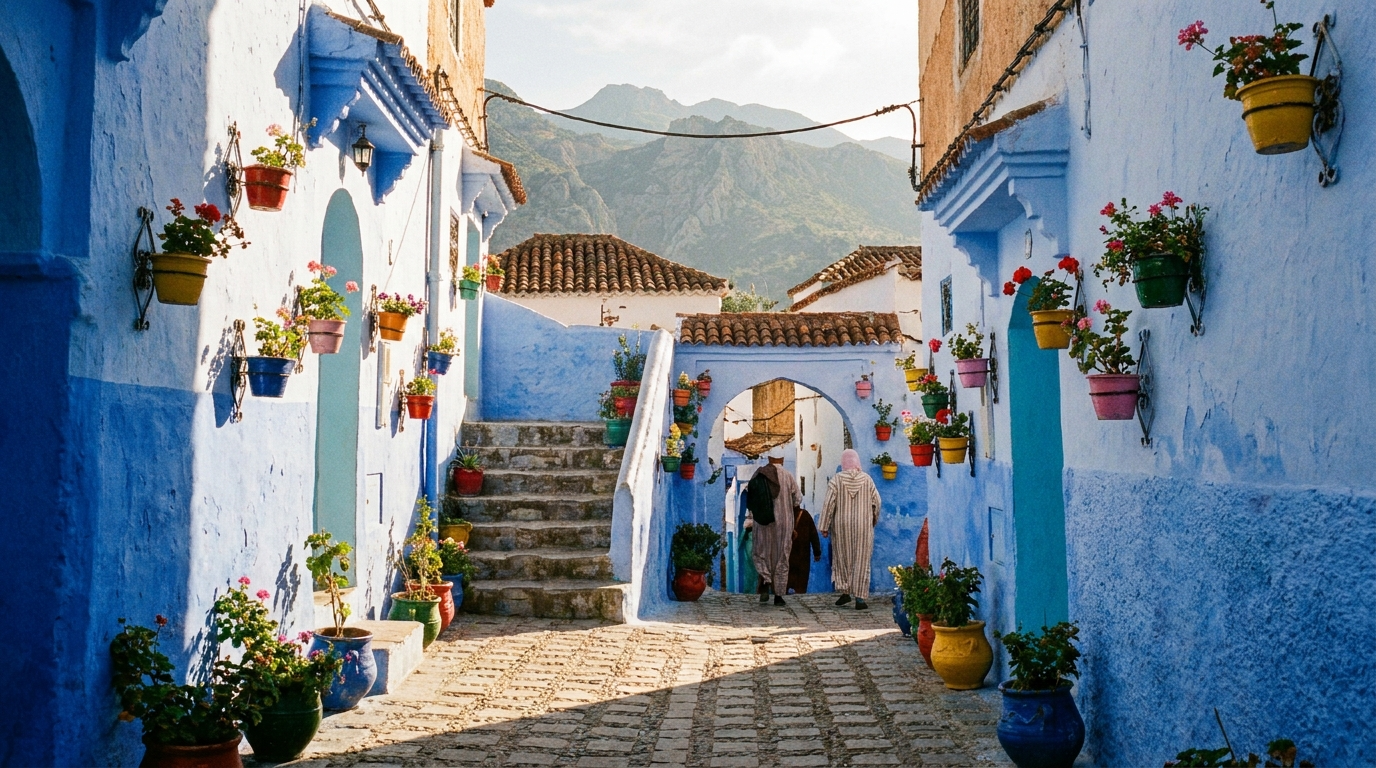
Chefchaouen sits in the Rif Mountains of northern Morocco, about two hours south of Tangier by bus, and every building in the old medina is painted in shades of blue. The town was founded in 1471 as a mountain fortress, and the blue tradition is most often linked to Jewish refugees who settled there in the 1930s, though the exact origin remains debated.
You can walk the entire medina in about twenty minutes, climb to the Spanish Mosque for sunset, and hike to Akchour waterfalls in a half day. Most visitors stay one or two nights, and that is enough time to see the main sights, eat well, and take the photos without feeling rushed.
Some links in this guide are affiliate links. If you book through one, Roamdusk may earn a commission at no extra cost to you. It never decides what we recommend.
Why Visit Chefchaouen
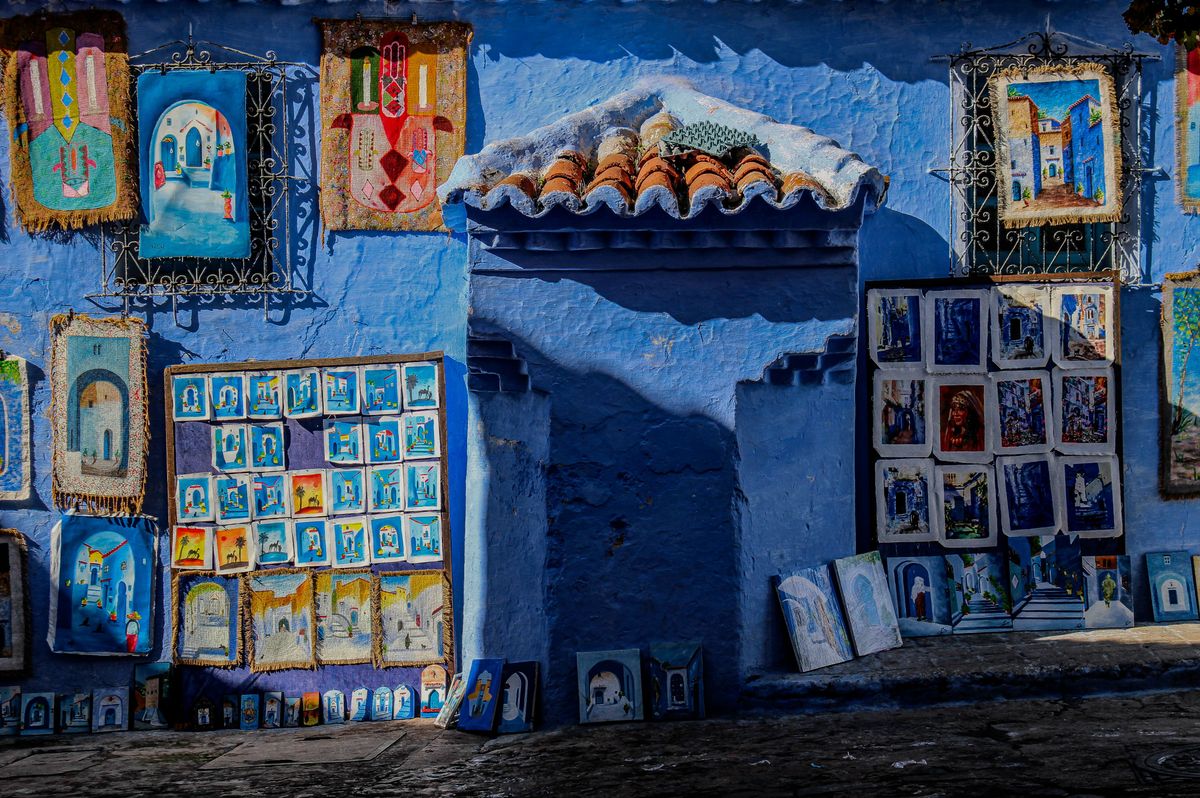
The blue medina is the main draw, and it delivers. Every alley, doorway, and staircase is washed in varying shades of blue lime paint, from pale sky tones to deep indigo. The effect is photogenic and genuinely unusual, but the town works as more than a photo stop. It is small enough to navigate without a guide, the mountain air is cooler than the plains, and the pace is slower than Fes or Marrakech. Local craft shops sell woven blankets, leather goods, and hand-dyed textiles, and the quality is higher than in the tourist-heavy cities.
Chefchaouen also serves as a base for hiking. The Akchour waterfalls and God’s Bridge trail lie about 45 minutes away by taxi, and Talassemtane National Park offers multi-day routes through cedar and pine forest. If you are travelling between Tangier and Fes, the town makes a natural overnight stop rather than a rushed day trip.
Why Is Chefchaouen Blue
The most widely repeated explanation links the blue paint to Jewish refugees who arrived in the 1930s fleeing persecution in Europe. In Jewish tradition, the color blue symbolizes the sky, heaven, and God’s presence, and it was woven into prayer shawls as a reminder of the divine. When the Jewish community settled in Chefchaouen, they are said to have painted their homes blue to continue that spiritual practice. The tradition stuck, and local residents have maintained it ever since, repainting walls every few years.
Other theories also circulate. Some say the blue helps repel mosquitoes, others claim it keeps homes cooler in summer, and a few suggest it reflects the importance of the Ras el-Maa water source. No single account is definitively proven, and the town’s Jewish population left after the creation of Israel in 1948, so the original intent is now a matter of interpretation. What is certain is that the blue has become the town’s identity, and residents take pride in keeping it that way.
Best Things to Do in Chefchaouen
Walk the Blue Medina
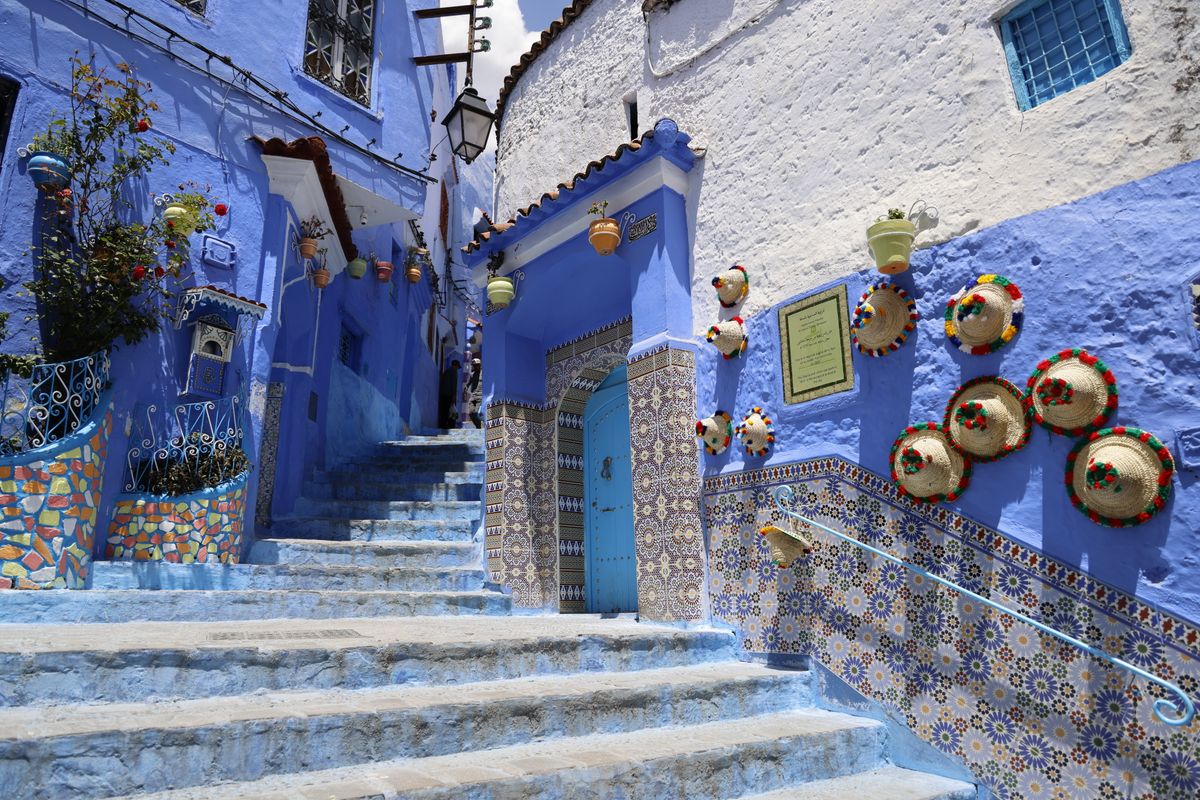
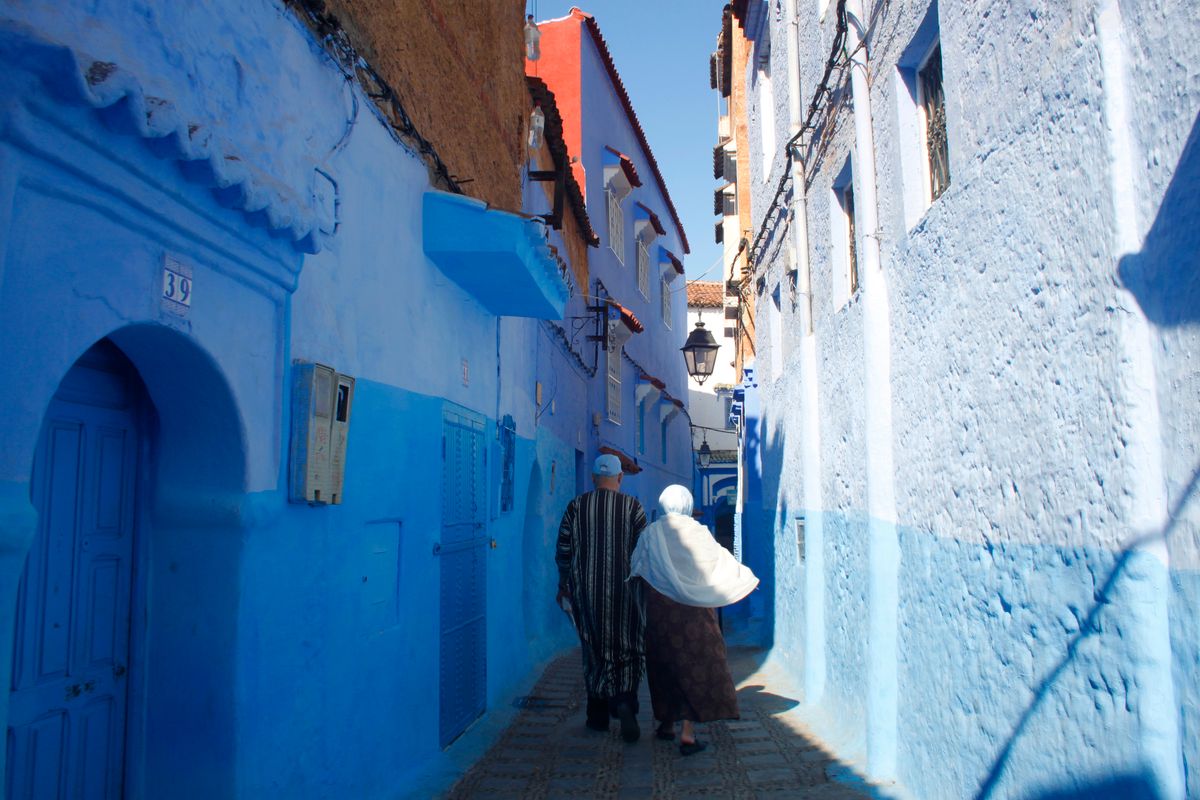
Start at Bab El Ain, the main gate, and walk uphill through the narrow lanes. The medina is compact, so you will not get seriously lost, and every turn offers a different shade of blue. The most photographed spots cluster around Rue Sidi Ahmed Boukhachba and the alleys near the kasbah, where doorways, staircases, and potted plants create ready-made compositions. Morning light is softer and the streets are quieter before 10am, so that is the best time for photos if you want to avoid other visitors.
The upper medina, beyond Plaza Uta el-Hammam, is less crowded and more residential. Locals still live and work here, so keep noise down and ask before photographing people or inside their shops. Women and children especially may not want to be photographed, and a polite request in French or Arabic goes a long way. If someone says no, move on without fuss.
Plaza Uta el-Hammam and the Kasbah
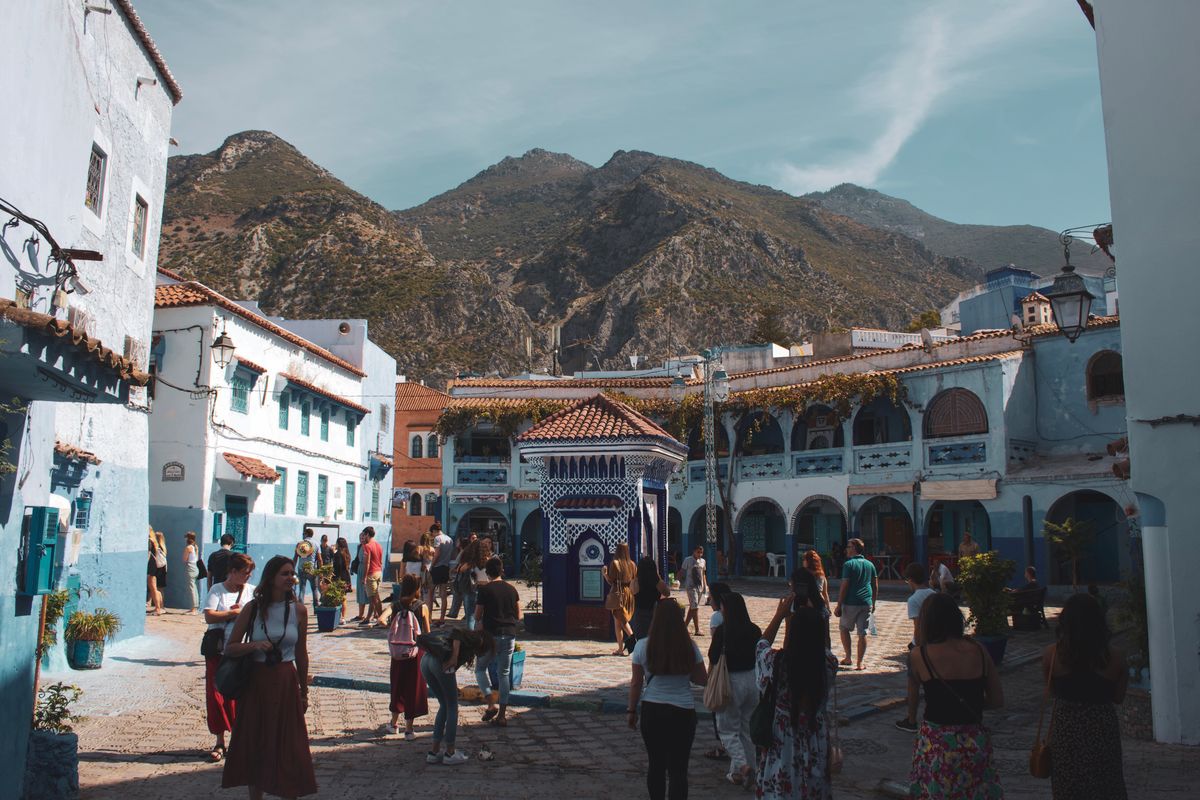
Plaza Uta el-Hammam is the main square, lined with cafes and restaurants, and it is the social center of the medina. The Grand Mosque sits on the eastern side, with a distinctive octagonal minaret, and non-Muslims cannot enter. The Kasbah occupies the western side, a restored 15th-century fortress with red-brown walls that contrast sharply with the surrounding blue. Entry to the Kasbah Museum costs 60 MAD for foreign visitors, and children under 12 enter free. Payment is cash only.
Inside the kasbah you will find an Andalusian garden, a small ethnographic museum with displays in French and Arabic, and a tower you can climb for views over the square and the medina rooftops. The museum itself is modest, but the tower view is worth the climb. The kasbah is closed on Tuesdays and takes a lunch break from around 1pm to 2:30pm on other days, so plan your visit accordingly.
Spanish Mosque Sunset Hike
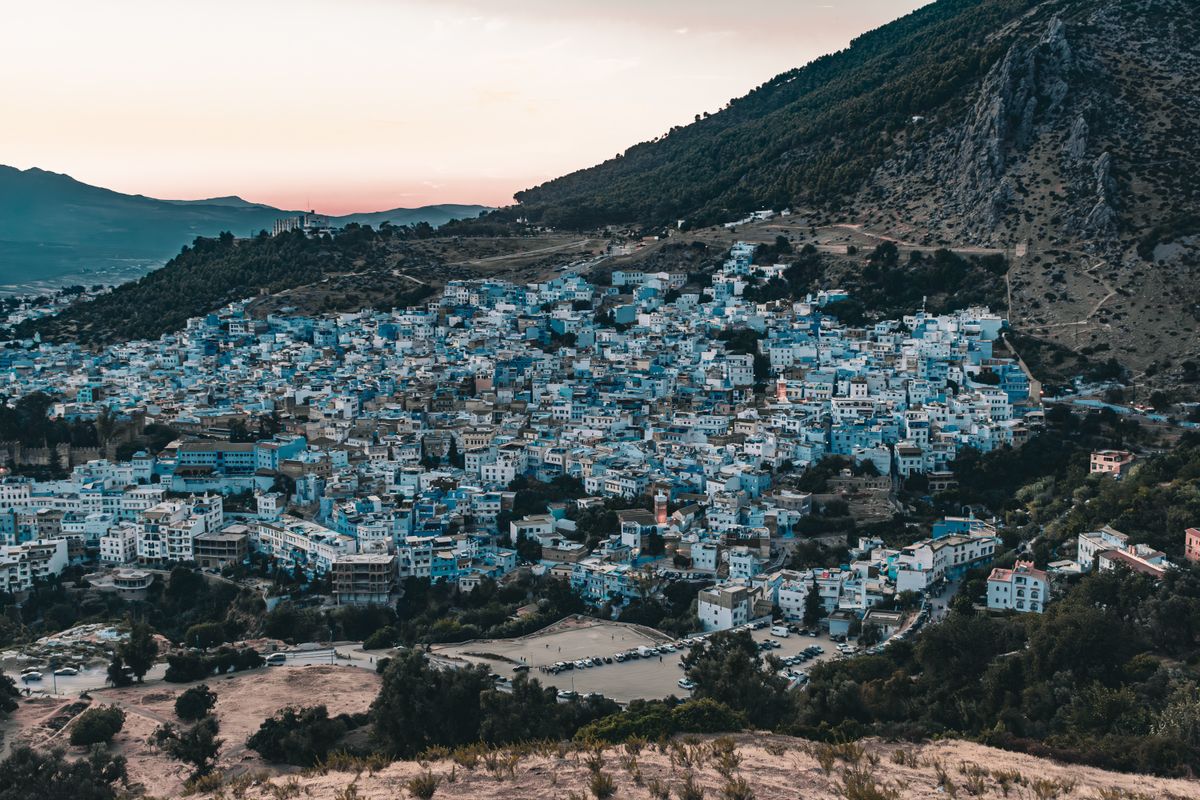
The Spanish Mosque sits on a hill above the medina, about a 20 to 30 minute walk from Bab El Ain. The mosque itself is not open to visitors, but the hilltop offers the best panoramic view of Chefchaouen, especially at sunset when the blue rooftops glow against the Rif Mountains. The trail starts near the cemetery and climbs steadily, but it is not technical and most visitors manage it without difficulty.
Go in the late afternoon and bring water, because there is no shade on the upper section. The path is well-worn and obvious, but it can be muddy after rain. The viewpoint gets crowded near sunset, so arrive 30 minutes early if you want space to set up a camera. The walk down is faster, and you can be back in the medina within 15 minutes if you keep a steady pace.
Ras el-Maa Waterfall
Ras el-Maa is a small waterfall and spring at the eastern edge of the medina, about a five minute walk from Plaza Uta el-Hammam. The water flows year-round, and locals use it for washing clothes and filling jugs. It is not a dramatic cascade, but the spot is pleasant and less crowded than the main square. A few small cafes sit along the stream, and you can stop for mint tea while watching the water.
The area is quieter before 9am and after 5pm, and it is a good place to sit and rest after walking the medina. The path continues uphill from Ras el-Maa toward the Spanish Mosque, so you can combine the two in one walk if you have the energy.
Shopping for Crafts
Chefchaouen produces high-quality woven blankets, leather bags, and wool garments, and the prices are generally lower than in Marrakech or Fes. The main shopping streets run between Bab El Ain and Plaza Uta el-Hammam, and most shops are open from mid-morning until evening. Bargaining is expected, so start at about 50 percent of the asking price and work up from there.
Look for natural dyes rather than synthetic colors, and check the weave quality on blankets by holding them up to the light. Leather goods should have even stitching and no strong chemical smell. If a shopkeeper pressures you or follows you into the street, walk away and find another shop. The best vendors are patient and happy to explain their craft without pushing for a sale.
Akchour Waterfalls and God’s Bridge
Akchour is a village about 45 minutes from Chefchaouen by grand taxi, and it is the trailhead for two popular hikes. God’s Bridge is a natural rock arch carved by the river, and the hike there is about 4.5 to 8 kilometers round trip, taking 2 to 4 hours total depending on your pace. The trail follows the river upstream, crosses a few makeshift bridges, and gains about 200 meters of elevation. The path is well-marked and suitable for most fitness levels.
The upper waterfalls, also called the Grand Cascade, lie further upstream and take about 4 to 6 hours round trip, covering 11 to 14 kilometers. You can do both in one day if you start early, but that is a full 6 to 8 hours of walking. Most visitors choose one or the other. Grand taxis from Chefchaouen to Akchour can be arranged through your riad or at the taxi stand near the bus station, and the round trip fare is negotiable but typically around 200 to 300 MAD for the car, which seats up to six passengers.
How to Get to Chefchaouen
Nearest Airports
The closest airport is Tangier Ibn Battouta Airport, about 110 kilometers north of Chefchaouen, with direct flights from European cities and connections through Casablanca. From Tangier, you can take a CTM bus or a grand taxi. Fes-Saïss Airport is about 200 kilometers to the southeast, and it has more international connections, but the journey to Chefchaouen takes longer. There is no airport in Chefchaouen itself.
By Bus from Tangier, Fes, and Other Cities
CTM and Supratours are the two main bus companies serving Chefchaouen, and both are reliable. The bus from Tangier to Chefchaouen takes about 2.5 to 3 hours and costs around 75 to 80 MAD. Buses run several times a day, and you can book tickets online at ctm.ma or at the bus station. From Fes, the journey takes about 4 hours and costs around 75 MAD. The route is scenic but involves winding mountain roads, so take motion sickness tablets if you are prone to nausea.
Chefchaouen’s bus station sits in the newer part of town, about 1.5 kilometers downhill from the medina. The walk up is steep and takes 15 to 20 minutes, so most visitors take a petit taxi from the station to Bab El Ain. The fare is 10 to 20 MAD, and you should agree on the price before getting in. If you prefer to walk, follow Avenue Mohammed V uphill and ask for directions to the medina gate.
By Grand Taxi
Grand taxis are shared Mercedes sedans that seat six passengers, and they run fixed routes between cities. From Tangier, a seat in a grand taxi to Chefchaouen costs about 50 to 60 MAD per person, and the journey takes about 2 hours. Taxis leave when full, so you may wait 30 minutes or more at the taxi stand. If you want to leave immediately, you can pay for all six seats and have the car to yourself, which costs around 300 MAD.
Grand taxis are faster than buses and drop you closer to the medina, but they are less comfortable and the driving can be aggressive on mountain roads. If you are travelling with luggage or in a group, they are a good option. If you are alone and not in a hurry, the bus is more comfortable.
No Train Service
There is no train station in Chefchaouen, and the nearest rail connection is in Tangier. If you are coming from Casablanca, Rabat, or Marrakech, you will need to take the train to Tangier and then switch to a bus or grand taxi for the final leg. For route planning and train schedules, check the ONCF website, which also integrates Supratours bus connections.
Best Time to Visit Chefchaouen
April, May, September, and October are the best months to visit Chefchaouen. Temperatures in these months sit between 15°C and 25°C during the day, the skies are usually clear, and the Rif Mountains are either green from spring rains or turning golden in autumn. July and August are the hottest months, with daytime highs reaching 32°C, and the medina fills with European tourists on summer holiday. If you dislike heat and crowds, avoid those two months.
Winter, from November to February, is cooler and wetter. Daytime temperatures range from 12°C to 18°C, and rain is frequent, especially in November. The town is quieter in winter, and accommodation prices drop, but the weather is less reliable for hiking and the Spanish Mosque trail can be muddy. If you plan to visit the Akchour waterfalls, go in spring when the water flow is strongest after winter rains.
Ramadan in 2026 runs from approximately 17 February to 18 March, and during that time most cafes and restaurants in the medina open only in the evening. If you visit during Ramadan, plan to eat breakfast at your riad and carry snacks for the day, because finding food during daylight hours is difficult.
Where to Stay in Chefchaouen
Budget Hostels and Riads
The best budget accommodation sits inside or near the medina, where you get easy access to the main sights and the most atmospheric lodging. Riad Baraka is a popular choice for backpackers, with dorm beds from around 100 MAD and private rooms from 275 MAD. The riad has a rooftop terrace with good views, and breakfast is included. Hostel Aline is another solid budget option, located on Rue Sidi Ahmed El Ouafi, about two minutes uphill from Plaza Uta el-Hammam. It offers free breakfast and Wi-Fi, and the staff speak English and French.
Riad Nila and Riad Mosaic are both well-rated budget riads with traditional Moroccan decor, central courtyards, and friendly owners. They sit in the medina and cost slightly more than hostels but offer more privacy and quieter rooms. If you want a social atmosphere and do not mind sharing a bathroom, choose a hostel. If you prefer a private room with traditional character, choose a riad.
Mid-Range and Boutique Riads
Dar Echchaouen and Casa Perleta are both boutique-style riads with higher standards of comfort and service. They are quieter than hostels, the rooms are larger, and breakfast is usually better. Prices start around 400 to 600 MAD per night for a double room, and both are located in the medina within walking distance of Plaza Uta el-Hammam. If you are travelling as a couple or want a more restful stay, these are worth the extra cost.
Where to Eat
Plaza Uta el-Hammam has the highest concentration of restaurants, and most serve the usual Moroccan standards including tagine, couscous, and grilled meats. Prices are higher on the square than in the side streets, but the people-watching is good and the setting is convenient. For cheaper meals, walk into the residential parts of the medina and look for small cafes where locals eat. A tagine in a local cafe costs around 40 to 60 MAD, while the same dish on the square costs 70 to 90 MAD.
Most restaurants in the medina are cash only, so carry small notes and coins. Card acceptance is limited to a few larger hotels and tour agencies, and even then the connection can be unreliable. There are ATMs near Bab El Ain and on Avenue Hassan II in the new town, so withdraw cash before you head into the medina for the day.
Chefchaouen Budget and Costs
Chefchaouen is cheaper than Marrakech or Fes, and you can visit comfortably on a modest budget. A dorm bed costs 80 to 120 MAD per night, a private room in a budget riad costs 200 to 350 MAD, and a mid-range riad costs 400 to 700 MAD. A meal in a local cafe costs 40 to 70 MAD, a meal on Plaza Uta el-Hammam costs 70 to 100 MAD, and a mint tea costs 10 to 15 MAD. Entry to the Kasbah Museum is 60 MAD, and a petit taxi from the bus station to the medina is 10 to 20 MAD.
If you are on a tight budget, plan for around 300 to 400 MAD per day including accommodation, food, and local transport. If you want more comfort and a few restaurant meals, budget 600 to 800 MAD per day. Guided tours and grand taxis to Akchour add extra cost, but the main sights in the medina are free to walk, so you can keep expenses low if you stick to the town itself.
Sample Itineraries for Chefchaouen
One Day in Chefchaouen
If you only have one day, arrive on an early bus from Tangier or Fes and drop your bag at your riad. Walk the blue medina for an hour, covering the main lanes between Bab El Ain and Plaza Uta el-Hammam, and stop for photos along the way.
Visit the Kasbah Museum and climb the tower for views, which takes about 45 minutes. Have lunch on Plaza Uta el-Hammam, then walk to Ras el-Maa and continue uphill to the Spanish Mosque for sunset. Walk back down to the medina, have dinner, and catch an evening bus out if you need to move on. This itinerary is tight but covers the essentials.
Two Days in Chefchaouen
Two days lets you see the town properly without rushing. On day one, arrive in the morning, settle into your riad, and spend the afternoon walking the medina at a relaxed pace. Visit the Kasbah Museum, explore the craft shops, and have lunch in a quiet side street. In the late afternoon, walk to the Spanish Mosque for sunset, then return to the medina for dinner.
On day two, arrange a grand taxi to Akchour and hike to God’s Bridge, which takes about 4 hours including travel time. Return to Chefchaouen by early afternoon, rest at your riad, and spend the evening walking the upper medina and Ras el-Maa. Leave on the morning of day three, or add a third night if you want to hike the upper waterfalls at Akchour.
Practical Tips for Visiting Chefchaouen
Carry cash in small denominations, because most shops, cafes, and taxis do not accept cards. ATMs are available near the main gates and in the new town, but they can run out of cash on weekends, so withdraw what you need in advance. The medina is compact and walkable, but the streets are steep and the cobblestones are uneven, so wear comfortable shoes with good grip. Sandals are fine for flat sections but not for the Spanish Mosque trail or the Akchour hikes.
Ask permission before photographing people, especially women, children, and shopkeepers. A simple gesture or a polite phrase in French goes a long way. If someone says no, respect it and move on. Do not photograph inside mosques or private homes unless you are explicitly invited. The best light for photos is in the early morning or late afternoon, when the blue walls are evenly lit and the shadows are softer.
If you are hiking to Akchour or the Spanish Mosque, bring water, sunscreen, and a hat, because there is little shade on the trails. The weather in the Rif Mountains can change quickly, so carry a light jacket even in summer. Mobile data coverage is good in the town center but weaker on the trails, so download maps offline before you leave.
Day Trips from Chefchaouen
Tetouan
Tetouan sits about 60 kilometers north of Chefchaouen, and the journey takes about an hour by bus or grand taxi. The medina is a UNESCO World Heritage Site, with Andalusian architecture and a less touristy atmosphere than Chefchaouen. The city also has a Spanish colonial quarter and a good archaeological museum. Tetouan works as a half-day trip if you leave early and return by mid-afternoon.
Tangier
Tangier is about 110 kilometers north, and it is the main transport hub for northern Morocco. The medina, the kasbah, and the Caves of Hercules are the main sights, and the city has a more cosmopolitan feel than Chefchaouen. If you are flying in or out of Tangier, consider spending a night there rather than rushing straight to Chefchaouen.
Talassemtane National Park
Talassemtane National Park surrounds Chefchaouen and offers multi-day hiking routes through cedar and fir forest. The park is less developed than Toubkal or the Sahara routes, so it sees fewer visitors, but the scenery is dramatic and the trails are well-maintained. If you have more than two days and want to hike, ask your riad to arrange a guide and plan a two or three day loop through the park.
More from this site: When to Go, Start Here, Destinations.
Frequently Asked Questions About Chefchaouen
Is one day enough for Chefchaouen?
One day is enough to see the main sights in the medina, visit the Kasbah Museum, and walk to the Spanish Mosque for sunset. You will get the photos and a feel for the town, but you will not have time to relax or hike to Akchour. Two days is better if you want to explore without rushing, and three days is ideal if you plan to hike the waterfalls or visit Talassemtane National Park.
How do I get from Chefchaouen to Fes?
CTM buses run from Chefchaouen to Fes several times a day, and the journey takes about 4 hours. The fare is around 75 MAD, and you can book tickets online at ctm.ma or at the bus station. Grand taxis also run the route, and they are faster but less comfortable. The road is winding and climbs through the Rif Mountains, so take motion sickness tablets if you are prone to nausea.
Is Chefchaouen safe for solo travelers?
Chefchaouen is generally safe for solo travelers, including women. The town is small, the locals are used to tourists, and serious crime is rare. As in any tourist destination, watch your belongings in crowded areas, avoid walking alone late at night, and be firm but polite if someone tries to sell you something you do not want. If you feel uncomfortable, walk into a shop or cafe and ask for help.
What is the best time of day to visit the Spanish Mosque?
Late afternoon, about an hour before sunset, is the best time to visit the Spanish Mosque. The light is warm, the blue medina glows against the mountains, and the temperature is cooler than midday. The viewpoint gets crowded near sunset, so arrive early if you want space to set up a camera. Avoid going alone after dark, because the trail is unlit and the footing is uneven.
Can I drink tap water in Chefchaouen?
Tap water in Chefchaouen is not safe to drink for most visitors. Buy bottled water from shops in the medina, and check that the seal is intact before you pay. A 1.5 liter bottle costs around 5 to 10 MAD. If you are hiking to Akchour, bring enough water for the full day, because there are no shops on the trail.
What should I wear in Chefchaouen?
Morocco is a conservative country, and Chefchaouen is no exception. Both men and women should cover shoulders and knees when walking in the medina, especially near mosques and in residential areas. Light, loose clothing is most comfortable in summer, and a hat and sunscreen are essential for hiking. In winter, bring a jacket and layers, because temperatures drop quickly after sunset.
Official information and sources: Morocco's official tourism site, Wikivoyage Chefchaouen page.
Conclusion
Chefchaouen is small, photogenic, and easy to navigate, and it offers a genuine break from the intensity of Morocco’s larger cities. The blue medina is the main attraction, but the town also works as a base for hiking, a stopover between Tangier and Fes, and a place to slow down for a day or two. If you are planning a trip to northern Morocco, include Chefchaouen on your route and give it at least two nights.