

In this guide 20
- Ha Long Bay Cruise Overview: Quick Planning Snapshot
- Choosing Your Route: Ha Long Bay vs Lan Ha Bay vs Bai Tu Long Bay
- Ha Long Bay Day Cruise vs Overnight Cruise: Which Itinerary Is Best?
- Ha Long Bay Cruise Price and Hidden Costs
- How to Get from Hanoi to Ha Long Bay
- Best Time for a Ha Long Bay Cruise: Weather and Storm Seasons
- Booking Tips and Scams to Avoid
- Frequently Asked Questions About Ha Long Bay Cruises
- Conclusion
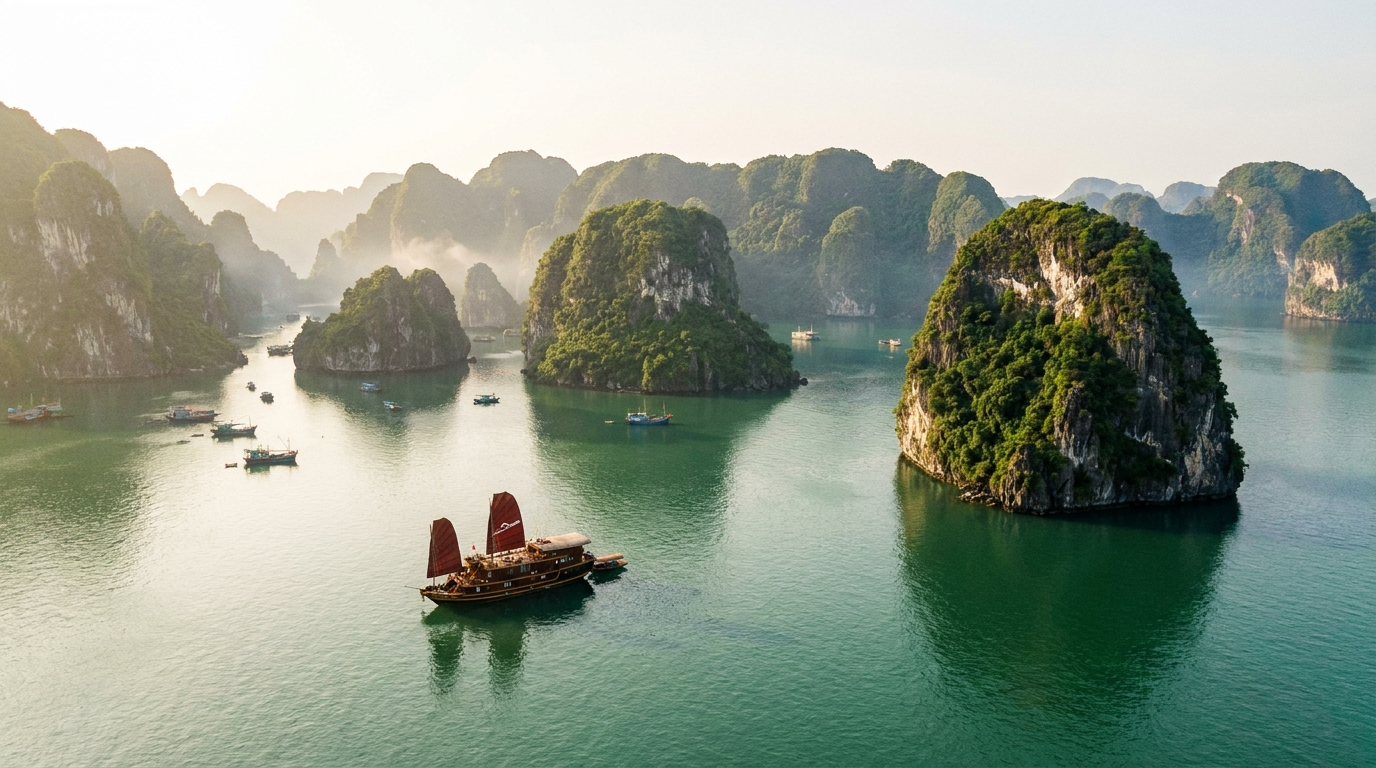
A Ha Long Bay cruise is the single best way to see the limestone karsts, floating villages and hidden caves that made this corner of northern Vietnam famous. Most visitors book a two day one night trip from Hanoi, but the choice between a day cruise, an overnight junk boat and a three day luxury voyage depends on how much time you have, which route you want and what you are willing to spend.
The official route system divides the bay into eight numbered itineraries, each with different entrance fees and different sights, and the newer VHL6 route now connects Ha Long Bay directly to the quieter waters of Lan Ha Bay. This guide walks through the practical decisions that matter: which route, which boat tier, what the real costs are, how to get there from Hanoi and how to avoid the booking scams that cluster around the Old Quarter.
Some links in this guide are affiliate links. If you book through one, Roamdusk may earn a commission at no extra cost to you. It never decides what we recommend.
Ha Long Bay Cruise Overview: Quick Planning Snapshot
Ha Long Bay sits in Quang Ninh Province about 160 kilometres east of Hanoi, and the cruise routes fan out from two main ports. Tuan Chau Marina on Tuan Chau Island handles most overnight and multi-day domestic cruises, while Ha Long International Cruise Port in Bai Chay serves international arrivals and some Bai Tu Long Bay departures. The drive from central Hanoi to Tuan Chau Marina takes between 2.5 and 3 hours via the Hanoi to Ha Long expressway, and most cruise operators include a shuttle transfer in the package price.
The bay is a UNESCO World Heritage Site, inscribed in 1994 and expanded in 2000, and it covers roughly 1,550 square kilometres of water dotted with more than 1,600 limestone islands and islets. The official route system launched in 2025 under Resolution 51/2025/NQ-HDND renamed the old numbered routes as VHL1 through VHL8, with three new routes added from May 1, 2025. Every cruise pays a per-person route fee on top of the boat fare, and the fee varies by route from 70,000 VND for the short VHL8 connector up to 600,000 VND for the combined VHL7 sightseeing package.
Choosing Your Route: Ha Long Bay vs Lan Ha Bay vs Bai Tu Long Bay
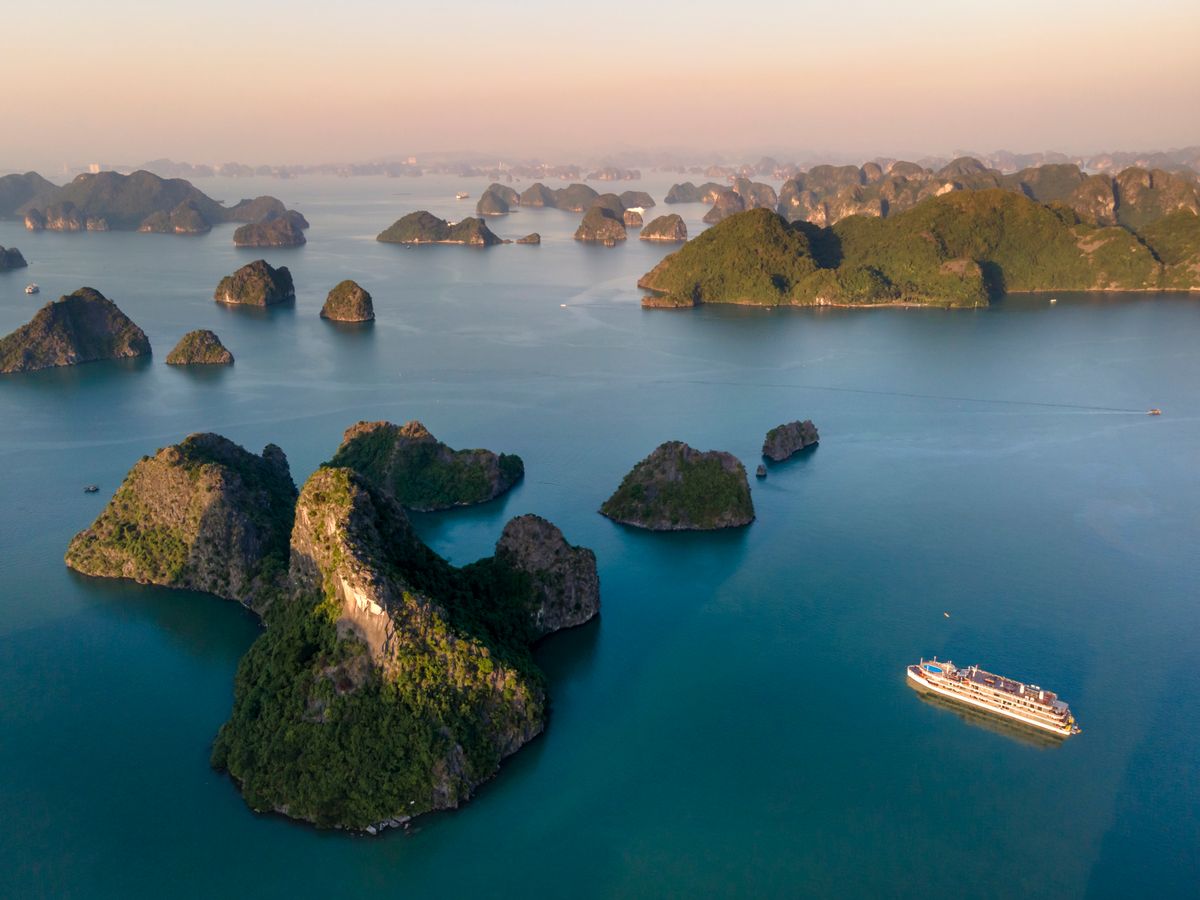
The three main cruise areas share the same limestone karst geology but differ sharply in crowd levels, activity options and regulatory frameworks. Ha Long Bay proper is the most visited, with between 8,000 and 10,000 visitors per day and around 700 boats in circulation.
Lan Ha Bay to the south, adjacent to Cat Ba Island, is less developed and offers more kayaking, swimming and island trekking. Bai Tu Long Bay to the northeast is the quietest of the three, with a daily visitor cap of around 1,000 and far fewer boats, making it the best choice for travellers who want seclusion and are willing to pay a premium for it.
Most first-time visitors choose either classic Ha Long Bay routes or a combined Ha Long and Lan Ha itinerary. Bai Tu Long Bay cruises tend to be more expensive because fewer operators hold the permits, and the transfer time from Hanoi is slightly longer. If your priority is adventure and variety, Lan Ha Bay delivers more activities and easier access to Cat Ba National Park. If your priority is peace and the feeling of having the bay to yourself, Bai Tu Long Bay is the better pick.
Official Ha Long Bay Routes Explained
The eight official routes divide the bay by geography and by the sights each itinerary covers. VHL1 runs through the western section and includes Thien Cung Cave, Dau Go Cave and the classic islets like Fighting Cocks and Stone Dog, with a route fee of 250,000 VND per person.
VHL2 covers the central bay and is the most popular route, taking in Soi Sim Beach, Ti Top Island, Sung Sot Cave, Me Cung Cave, Luon Cave and several smaller grottoes, also priced at 250,000 VND. VHL3 heads to the Cua Van Floating Culture Center, Ba Ham Lake and Tien Ong Cave in the eastern section, with a fee of 200,000 VND. VHL4 explores the quieter eastern waters around Thien Canh Son Cave, Vung Vieng and Cong Do, also at 200,000 VND.
VHL5 is an extension route that continues from VHL1 toward Gia Luan on Cat Ba Island, effectively bridging Ha Long Bay and Lan Ha Bay, and it costs 250,000 VND. VHL6 is the newest connector route, introduced in May 2025, and it runs from the passenger port through Chan Voi, Ba Cua, Tung Lam and Cap Bai toward Lan Ha Bay at a fee of 150,000 VND per person per day.
VHL7 is not a separate geographical route but a combined sightseeing package that covers VHL1, VHL2, VHL3 and VHL4 in one extended itinerary, priced at 600,000 VND and designed for three day two night luxury cruises. VHL8 is a short connector route linking Tuan Chau International Marina, Ha Long International Cruise Port and Nam Cau Trang, with a fee of just 70,000 VND.
Inter-Bay Routes: Ha Long to Lan Ha Bay
The introduction of VHL6 in May 2025 opened a formal connection between Ha Long Bay and Lan Ha Bay, and several cruise operators now offer itineraries that start in Ha Long Bay, pass through the central karsts on VHL2, then cross into Lan Ha Bay for kayaking and swimming in the quieter lagoons. The combined route gives you the iconic Ha Long scenery on day one and the more active, less crowded Lan Ha experience on day two, and it works well for travellers who want both without committing to a three day cruise.
Lan Ha Bay itself is regulated separately by Cat Hai District and has its own set of cruise routes and fees, but the VHL6 connector simplifies the logistics and removes the need for a separate boat transfer. If you book a Ha Long Bay cruise that includes Lan Ha Bay, check the itinerary carefully to confirm which bay you will sleep in, because some boats anchor in Ha Long Bay and only visit Lan Ha Bay for a few hours, while others do the reverse.
Ha Long Bay Day Cruise vs Overnight Cruise: Which Itinerary Is Best?
The choice between a day cruise and an overnight cruise comes down to time, budget and how much you want to see. A day cruise from Hanoi typically runs from around 8am to 6pm, including the three hour drive each way, which leaves about four to five hours on the water.
Most day cruises follow VHL1 or VHL2, stopping at one or two caves, one island and one kayaking spot, with a buffet lunch on board. Day cruises cost between 40 and 80 US dollars per person depending on the boat quality and whether the transfer is included, and they work well if you only have one day free or if you want a taste of the bay before committing to a longer trip.
An overnight cruise gives you more time, more sights and a much better sense of the bay’s scale and atmosphere. The standard two day one night itinerary departs from Tuan Chau Marina around midday, cruises through the afternoon with stops at two or three sights, anchors overnight in a quiet area, then continues the next morning with more activities before returning to port by 11am or noon.
You sleep on board in a private cabin, and most boats include all meals, kayaking, a cave visit and at least one island stop. The overnight format also means you see the bay at sunset and sunrise, which are the best times for photography and the moments when the karsts look most dramatic.
Classic 2 Days 1 Night Itinerary Breakdown
A typical two day one night Ha Long Bay cruise following VHL2 starts with pickup from your Hanoi hotel between 7.30am and 8.30am, followed by the drive to Tuan Chau Marina. You board the boat around noon, settle into your cabin and have lunch while the boat cruises into the bay. The first stop is usually Sung Sot Cave, the largest cave in the bay, with two massive chambers filled with stalactites, stalagmites and coloured lighting. After the cave visit, the boat continues to Luon Cave, a water level tunnel that opens into a hidden lagoon, where you can kayak or take a bamboo boat ride.
By mid afternoon the boat reaches Ti Top Island, a small island with a crescent shaped beach and a steep staircase leading to a viewpoint at the summit. You can swim at the beach, hike to the top for a panoramic view of the bay, or do both. The boat then cruises to a quieter anchorage area for the night, and the evening schedule typically includes a sunset session on deck, dinner in the dining room, and optional activities like squid fishing, karaoke or a cooking demonstration. Some boats offer spa services or a drinks package for an extra charge.
Day two starts early with Tai Chi on the sundeck at sunrise, followed by breakfast. The morning activities vary by route but often include a visit to a floating fishing village, another kayaking session, or a second cave stop. You check out of your cabin mid morning, have a final brunch on board, and disembark at Tuan Chau Marina by 11am or noon. The shuttle bus returns you to Hanoi by mid afternoon, usually between 2pm and 4pm depending on traffic.
Top Sights and Excursions
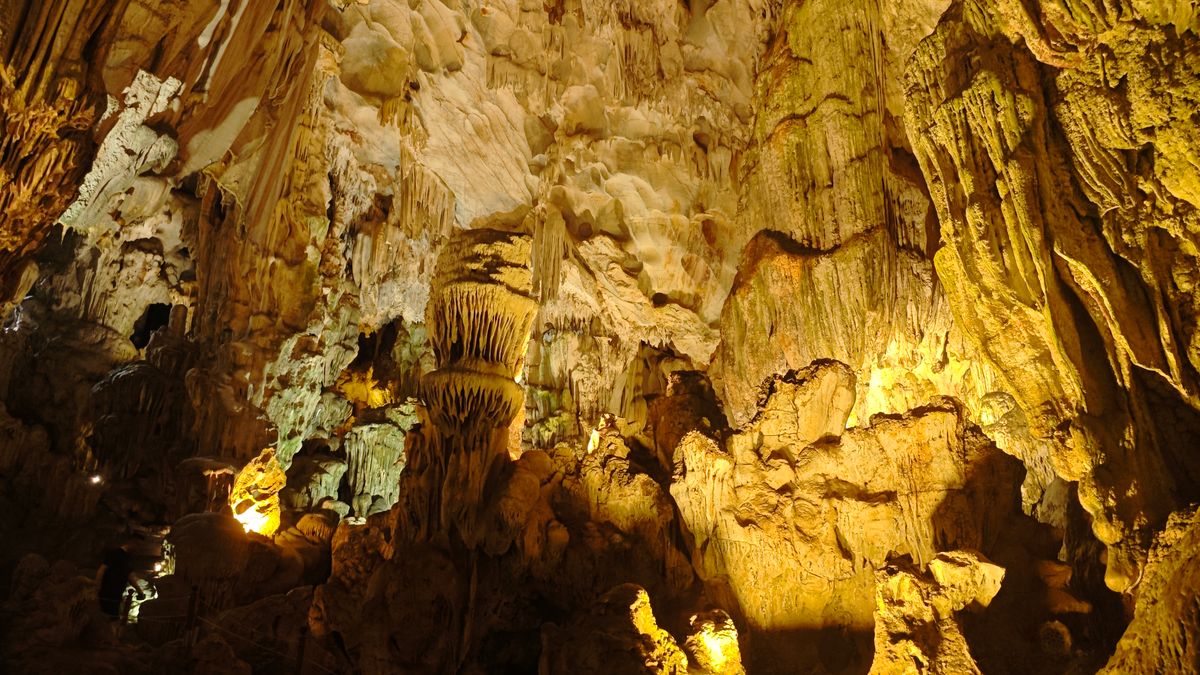
Sung Sot Cave, also called Surprise Cave, is the most visited cave in Ha Long Bay and sits on Bo Hon Island in the central section. The cave has two main chambers, the first around 10,000 square metres and the second even larger, and the path through the cave climbs steeply past rock formations that local guides point out as resembling a Buddha, a tortoise, a phallus and various animals.
The cave is well lit with coloured lights, and the viewing platform at the exit overlooks the bay. Sung Sot Cave is included on almost every VHL2 itinerary, and it is one of the few sights that justifies the hype.
Ti Top Island is named after the Russian astronaut Gherman Titov, who visited Ha Long Bay with Ho Chi Minh in 1962. The island has a small white sand beach and a stone staircase with around 400 steps leading to a hilltop viewpoint. The view from the top is one of the best panoramas in the bay, with limestone karsts stretching in every direction and the water below dotted with boats. The beach is crowded during the peak hours between 2pm and 4pm, so if you want space, swim early or late. Boats are not allowed to anchor directly at Ti Top Island, so you reach it by tender boat.
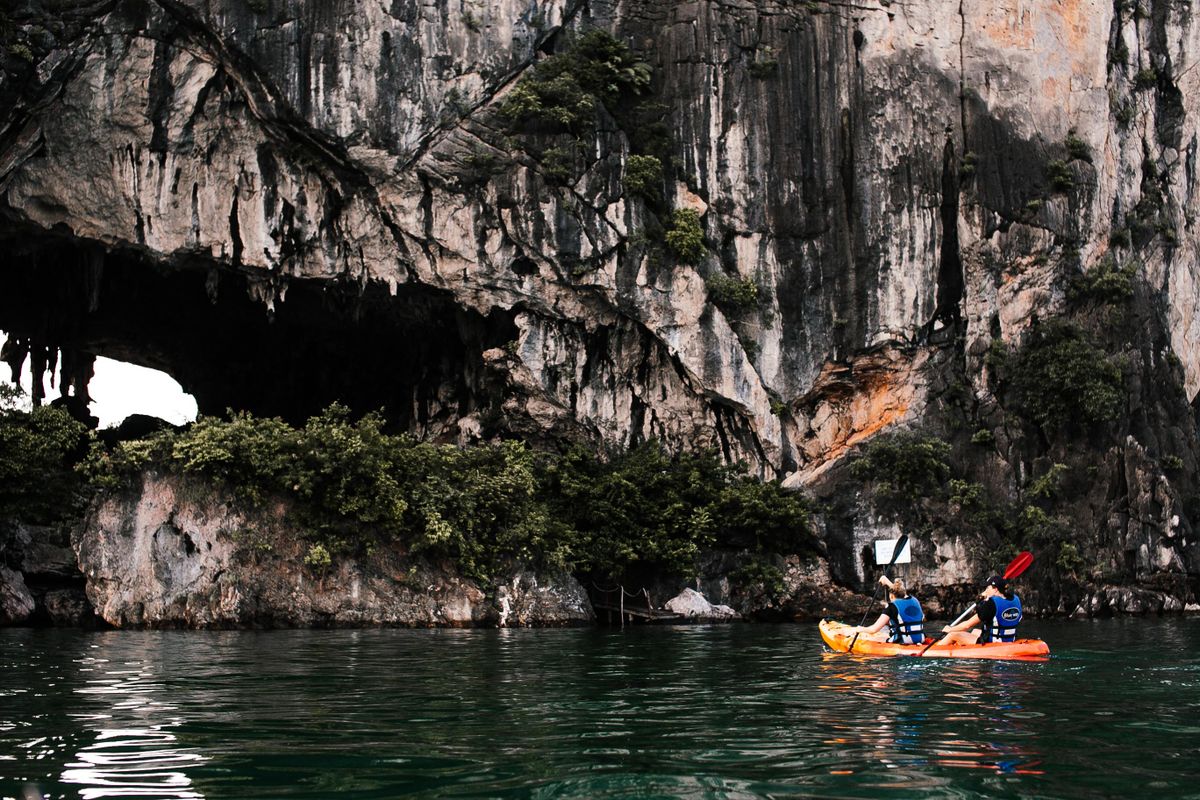
Luon Cave is not a traditional cave but a low limestone tunnel that connects the open bay to a sheltered lagoon surrounded by cliffs. The tunnel is only passable by kayak or bamboo boat at certain tides, and the lagoon inside is calm, clear and full of fish.
Kayaking through Luon Cave is one of the most popular activities on a Ha Long Bay cruise, and it gives you a close-up view of the karst walls and the vegetation clinging to the rock. Some itineraries substitute Luon Cave with a visit to Ba Ham Lake, another enclosed lagoon reached by kayak, or with a stop at Cua Van Floating Village, where you can visit a local family and see how the fishing communities live on the water.
Ha Long Bay Cruise Price and Hidden Costs
The advertised price of a Ha Long Bay cruise almost never includes everything, and the final bill can jump by 30 to 50 percent once you add the route fees, drinks, tips and optional extras.
A budget two day one night cruise on a traditional wooden junk starts around 100 to 120 US dollars per person, a mid range cruise on a modern steel boat runs between 150 and 250 dollars, and a luxury cruise on a five star vessel can cost 350 to 600 dollars or more per person. Day cruises are cheaper, typically 40 to 80 dollars, but the per-hour cost is often higher than an overnight trip because you are paying for the transfer and the boat time without the accommodation component.
The route fee is the largest hidden cost and is always charged separately. For a VHL2 cruise, the route fee is 250,000 VND per person, which is about 10 US dollars at current exchange rates. If your cruise crosses into Lan Ha Bay, you may pay an additional Lan Ha Bay entrance fee, which varies by route but is usually between 100,000 and 150,000 VND. Some cruise operators collect the route fee on board during the first day, while others ask you to pay it at the port before boarding. Either way, it is never included in the advertised cruise price.
What Is Included vs Excluded
A standard two day one night cruise package includes your cabin, all meals from lunch on day one through brunch on day two, the shuttle transfer from Hanoi, kayaking equipment, life jackets, cave entrance fees and onboard activities like Tai Chi, cooking demos and squid fishing.
The package does not include drinks, tips, spa treatments, the route fee, or any optional excursions like a visit to a pearl farm or a private boat to a less visited cave. Some boats include free drinking water and tea but charge for soft drinks, beer, wine and spirits, while others offer an all-inclusive drinks package for an extra 15 to 30 dollars per person per day.
Tipping is expected but not mandatory, and the usual amount is around 5 to 10 dollars per person for the crew and 3 to 5 dollars for the tour guide, collected in a shared tip box at the end of the cruise. If you book a luxury cruise, tips are sometimes included in the fare, but you should check the booking confirmation to be sure. Dietary restrictions like vegetarian, vegan, gluten free and Halal can usually be accommodated if you notify the operator at least 48 hours in advance, and most boats handle these requests well because the meals are cooked to order rather than mass produced.
How to Get from Hanoi to Ha Long Bay
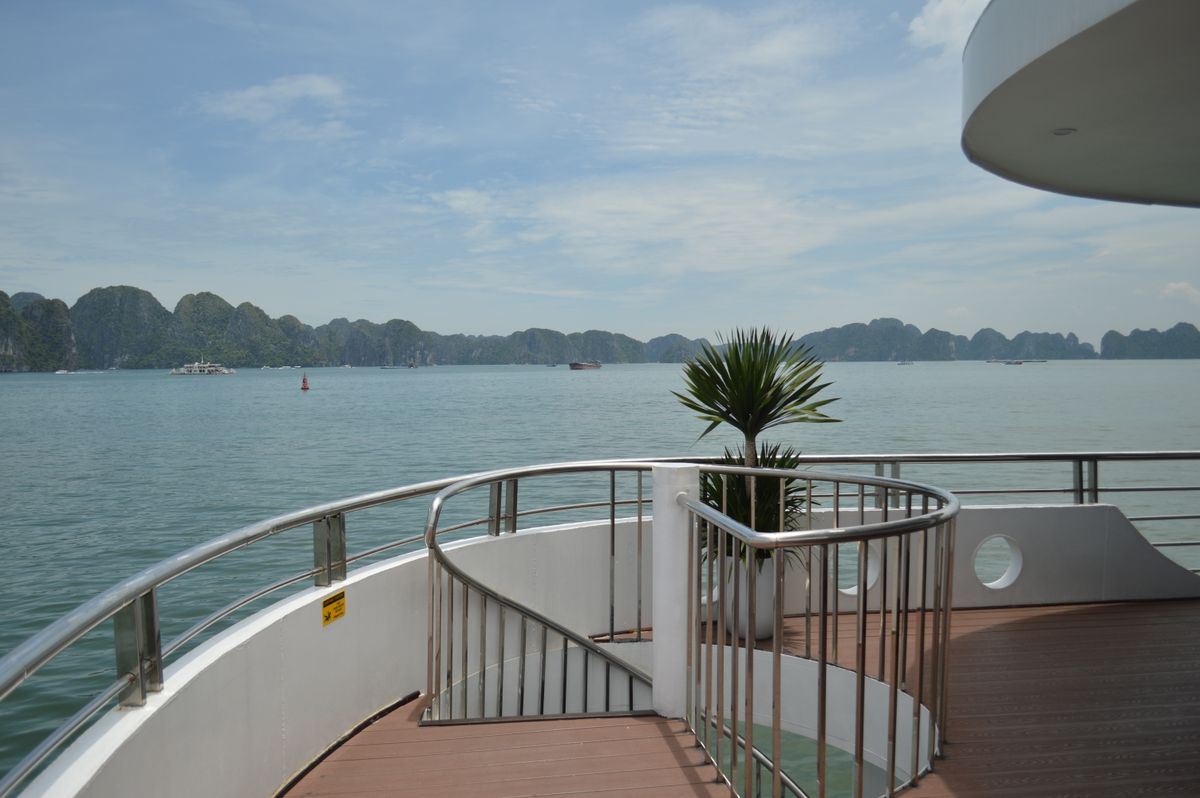
The most common way to reach Ha Long Bay from Hanoi is by shuttle bus included in your cruise package. The operator picks you up from your hotel in the Old Quarter or the city centre, usually between 7.30am and 8.30am, and the bus drives directly to Tuan Chau Marina or Ha Long International Cruise Port.
The journey takes 2.5 to 3 hours via the Hanoi to Ha Long expressway, with one rest stop about halfway. The shuttle is almost always a comfortable minibus or coach, and it is included in the cruise fare for overnight trips, though some day cruise operators charge an extra 10 to 15 dollars for the transfer.
If you prefer to travel independently, you can take a public bus or a private car. Public buses run from My Dinh Bus Station in Hanoi to Bai Chay Bus Station in Ha Long City, with departures roughly every 30 minutes from early morning until late afternoon. The fare is around 100,000 to 120,000 VND per person, and the journey takes about 3 hours.
From Bai Chay Bus Station, you need a taxi or a Grab to reach Tuan Chau Marina, which is another 15 minutes and costs around 80,000 to 100,000 VND. A private car from Hanoi to Tuan Chau Marina costs between 1,200,000 and 1,800,000 VND depending on the car type and whether you book through your hotel or a ride sharing app.
A third option is the train, but it is slower and less convenient than the bus. The train from Hanoi to Ha Long runs once per day, departing Hanoi Railway Station in the early morning and arriving at Ha Long Railway Station around four hours later. From Ha Long Railway Station, you still need a taxi to reach the cruise port, and the total journey time is longer than the bus route. The train makes sense only if you are combining Ha Long Bay with other destinations along the northern coast and you want the experience of travelling by rail.
Best Time for a Ha Long Bay Cruise: Weather and Storm Seasons
The best months for a Ha Long Bay cruise are March, April, May, September, October and November, when temperatures are comfortable, rainfall is low and visibility is excellent. March to May is late spring, with daytime temperatures between 20 and 28 degrees Celsius, calm seas and clear skies, making it one of the most popular windows for cruising. September to November is autumn, with similar conditions and slightly cooler evenings, and many travellers consider this the single best season because the summer storms have passed and the winter mist has not yet arrived.
June, July and August are the hottest and wettest months, with daytime temperatures often above 30 degrees Celsius, high humidity and frequent afternoon thunderstorms. July and August are the peak of typhoon season, and cruise cancellations are more common during these months. If a typhoon warning is issued, the port authority closes the bay to all cruise traffic, and operators either reschedule your trip or offer a refund. The storms are unpredictable, so if you book a cruise in July or August, build some flexibility into your Hanoi schedule in case the departure is delayed by a day or two.
December, January and February are the coolest months, with daytime temperatures between 15 and 20 degrees Celsius and occasional drizzle. The bay is often misty during winter, which softens the views and gives the karsts a moody, atmospheric look that some photographers prefer. The water is too cold for swimming, and the sundeck is less appealing, but the boats are less crowded and the prices are lower. If you are travelling in winter, pack layers and a waterproof jacket, and choose a boat with good indoor spaces rather than one that relies on outdoor activities.
Booking Tips and Scams to Avoid
The majority of Ha Long Bay cruise scams originate in Hanoi, particularly in the Old Quarter, where unlicensed agents operate out of shopfronts that look legitimate but have no connection to the boats they are selling. The classic scam involves a too-good-to-be-true price, usually 40 to 70 dollars for a two day one night cruise, paid in cash or by bank transfer to a personal account.
A day or two before departure, the agent contacts you to say the boat is fully booked and offers an alternative, which is always a lower quality vessel than the one you thought you were buying. By that point you have already paid, and the agent either refuses a refund or offers a partial refund with heavy deductions.
To avoid this, book directly with the cruise operator through their official website, or use a verified platform like Klook that offers buyer protection. If you book through a travel agent in Hanoi, ask for the exact name of the boat, the operator’s company registration number and a written confirmation by email that lists every inclusion and exclusion. Legitimate operators always provide this information, and they accept card payments rather than insisting on cash or a personal bank transfer. If the agent cannot name the boat or says the boat will be assigned closer to the date, walk away.
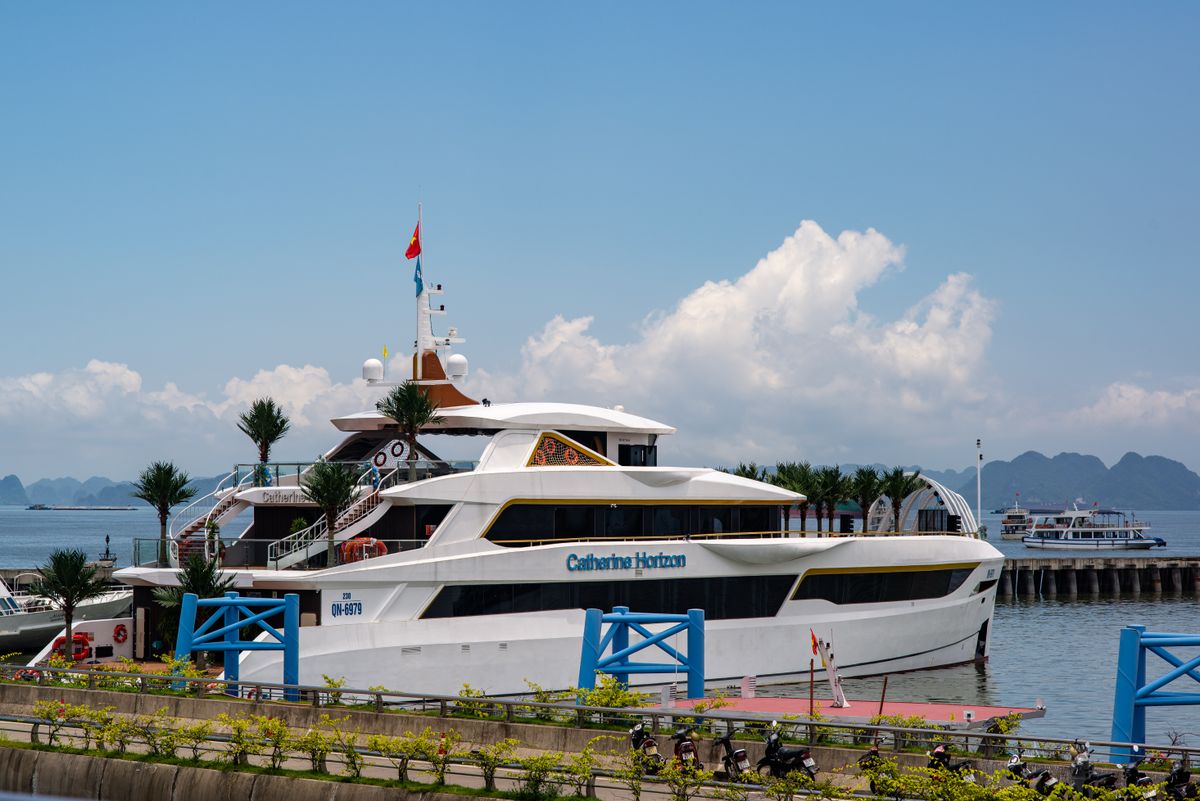
Another common scam is the fake photo. Many low budget operators use stock images or photos of luxury boats on their brochures and websites, then put you on a much older, more basic vessel. To check, search the boat name on TripAdvisor, Google Images and cruise review sites, and compare the photos uploaded by recent passengers with the photos on the agent’s website. If the boat has no reviews, no social media presence and no independent photos, it is either brand new or it does not exist. A real boat with a good reputation will have dozens of recent reviews and hundreds of photos from multiple sources.
The drinks scam is subtler but still expensive. Some cruise packages advertise all-inclusive pricing but then charge separately for every drink except tap water, and the onboard prices are two or three times the normal Hanoi rate. A bottle of local beer that costs 20,000 VND in a Hanoi bar might cost 60,000 or 80,000 VND on the boat. Check the drinks policy before you book, and if drinks are not included, bring a few bottles of water or soft drinks in your luggage to avoid paying inflated prices on board. Most boats allow this, though some luxury operators discourage it.
Finally, watch out for the bait and switch on cabin types. You book a balcony cabin, but when you board, the crew tells you the balcony cabins are all taken and offers you a standard cabin instead. This happens when operators oversell or when agents sell cabins they do not control.
The solution is the same as above: get the cabin type in writing, book directly or through a protected platform, and if the boat does not match the booking, refuse to board and demand a full refund on the spot. The port is full of alternatives, and operators know that bad reviews hurt their business, so they usually resolve the issue quickly if you push back immediately.
Frequently Asked Questions About Ha Long Bay Cruises
How much does a Ha Long Bay cruise cost?
A budget two day one night cruise costs between 100 and 120 US dollars per person, a mid range cruise costs 150 to 250 dollars, and a luxury cruise costs 350 to 600 dollars or more. Day cruises cost 40 to 80 dollars per person. These prices do not include the route fee, drinks, tips or optional extras, so the final cost is usually 30 to 50 percent higher than the advertised fare. If a two day one night cruise is advertised below 100 dollars, it is almost always a scam or a bait and switch deal.
Is Lan Ha Bay better than Ha Long Bay?
Lan Ha Bay is quieter, less crowded and better for activities like kayaking, swimming and island trekking, because it is adjacent to Cat Ba Island and has more open lagoons. Ha Long Bay has the most famous sights, the widest choice of boats and the best infrastructure. If you want iconic scenery and convenience, choose Ha Long Bay. If you want fewer boats and more adventure, choose Lan Ha Bay or a combined itinerary that covers both.
Should I choose a day cruise or an overnight cruise?
An overnight cruise is better if you have the time and budget, because you see more sights, experience the bay at sunrise and sunset, and avoid the rushed feeling of a day trip. A day cruise works if you only have one day free or if you want to test the experience before committing to a longer trip, but the four to five hours on the water feel short once you subtract the time spent eating lunch and transferring between stops.
Can I visit Ha Long Bay without a cruise?
You can visit Ha Long City and see the bay from the shore, but you cannot reach the caves, islands and karsts without joining a cruise or hiring a private boat. Private boat hire is possible but expensive, usually starting around 300 dollars for a half day, and it only makes sense for groups of six or more. For most travellers, a cruise is the only practical way to see the bay.
What should I pack for a Ha Long Bay cruise?
Pack light, breathable clothing, a swimsuit, water shoes, sunscreen, a hat, sunglasses, insect repellent and a light waterproof jacket. If you are cruising between November and February, bring a fleece or a warm layer for the evenings. Most boats provide towels, toiletries and life jackets, but water shoes are not always supplied, and the surfaces in caves and on kayaks are slippery. A dry bag is useful if you plan to kayak, because spray and splashes are common.
Are Ha Long Bay cruises safe?
Reputable cruises are safe, and serious accidents are rare. All licensed boats carry life jackets, fire extinguishers and first aid kits, and the crew are trained in basic safety procedures. The main risks are rough weather, which can cause seasickness or force a route change, and the occasional mechanical breakdown. To minimise risk, book with an operator that has strong recent reviews, avoid the cheapest boats, and check that the boat has a valid safety certificate issued by the Quang Ninh authorities.
More from this site: When to Go, Start Here.
Official information and sources: Vietnam National Administration of Tourism.
Conclusion
A Ha Long Bay cruise delivers one of the most distinctive landscapes in Southeast Asia, and the experience improves sharply when you match the route, the boat tier and the itinerary length to your own priorities. The two day one night format on a mid range boat following VHL2 is the most popular choice for good reason, because it covers the best sights without exhausting your time or your budget.
If you want fewer crowds, the combined Ha Long and Lan Ha Bay route introduced in 2025 gives you the iconic karsts and the quieter lagoons in one trip. If you want total seclusion, Bai Tu Long Bay is worth the premium. Book directly, verify the boat name, read the fine print on inclusions and exclusions, and build a day of flexibility into your Hanoi schedule in case the weather forces a delay.